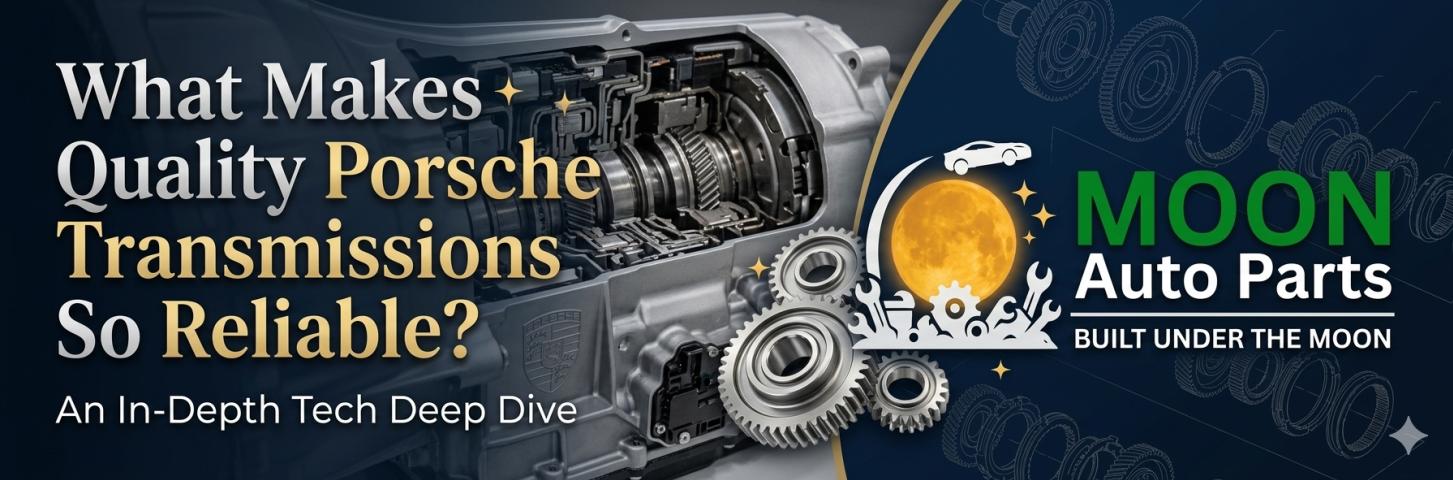
Porsche
has built its legendary reputation on engineering precision, and nowhere is
that more evident than in the transmissions they design. From the iconic
Porsche Doppelkupplung (PDK) to the buttery 6-speed manual found in the 911,
Porsche gearboxes are engineered to deliver performance that most automakers
can only dream of. But when one fails or when you're looking for a quality
replacement knowing what to look for matters enormously.
What Makes Porsche Transmissions Different?
Porsche
does not treat the transmission as an afterthought. Every gearbox is developed
to handle the specific power output and driving dynamics of the vehicle it's
paired with. Key features that set Porsche transmissions apart include:
•
PDK (Porsche
Doppelkupplung): A dual-clutch transmission that executes gear changes in
milliseconds faster than any human-operated manual — while offering fuel
efficiency in comfort mode
•
Tiptronic: Porsche's
sport-tuned automatic, offering smooth shifts with the option of paddle-shifted
manual control
•
6-speed and 7-speed
manuals: Available in models like the 911, Boxster, and Cayman, these
transmissions are built for driver engagement and high-rev performance
•
Porsche Torque Vectoring
(PTV): Some transmission-integrated systems actively distribute torque to
individual wheels for enhanced cornering
The
precision tolerances and high-quality materials used in Porsche transmission
manufacturing mean these units can last 150,000+ miles with proper maintenance
— but they are not immune to wear.
Common Porsche Transmission Problems
Even
the finest engineering has its limits. Owners and mechanics report the
following issues across various Porsche models:
•
PDK hesitation or jerking
at low speeds due to clutch pack wear
•
Manual transmission synchro
wear causing difficulty engaging 2nd or 3rd gear
•
Tiptronic solenoid failure
resulting in erratic or delayed shifting
•
Transfer case issues on AWD
models like the Cayenne and Macan
•
Fluid contamination due to
deferred service intervals
New vs. Used Porsche Transmissions: The Real Cost
A
new OEM Porsche transmission is one of the most expensive drivetrain components
you can buy. Prices vary by model, but a PDK unit for a 911 or Panamera can
cost $8,000–$15,000 or more before labor. Remanufactured units offer better
pricing but still run $3,500–$7,000.
A
quality used Porsche transmission pulled from a low-mileage donor vehicle
offers the best value, particularly for older models (2006–2015). When sourced
from a reputable supplier with full inspection and a meaningful warranty, used
units provide genuine performance at 40–60% less than a remanufactured
alternative.
What to Look for in a Quality Porsche Replacement Transmission
Whether
you're a Porsche enthusiast doing your own restoration or a shop handling a
customer's prized 911, these criteria separate a quality used Porsche
transmission from a risky gamble:
•
Verified donor mileage
(ideally under 60,000 miles)
•
No signs of overheating,
cracks, or fluid leaks
•
VIN verification to ensure
the unit is compatible with your exact trim level, engine, and production year
•
Warranty coverage — any
reputable supplier should offer at minimum 1 year; the best offer 3–4 years
•
Clean service history
documentation, if available
Final Thoughts
A
Porsche is only as exceptional as its drivetrain. If your transmission is
failing, cutting corners on the replacement is simply not an option. Whether
you're driving a Boxster on weekends or commuting in a Cayenne, a properly
sourced, inspected, and warrantied used Porsche transmission delivers the
performance and reliability your vehicle was designed for — at a price that
makes financial sense. Moon Auto Parts also provide affordable used Porsche engine for your vehicles.
Read more -