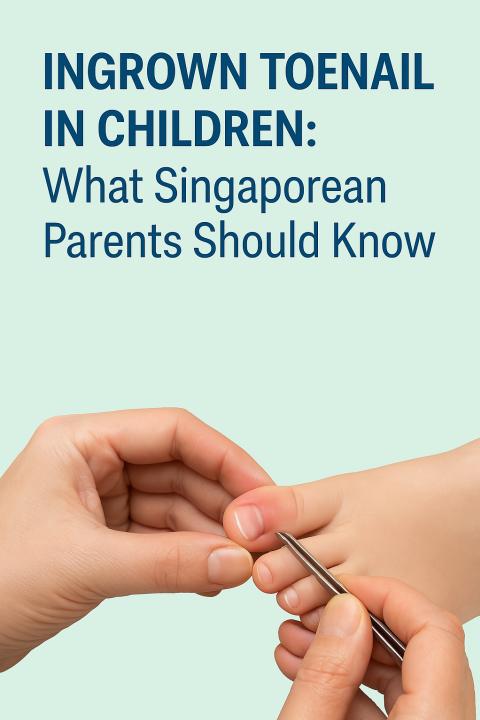
As a parent, nothing is more worrying than seeing your child in pain—especially when that pain is caused by something as small (but mighty) as a toenail. If your child has been limping, complaining of toe pain, or avoiding shoes altogether, they might be dealing with an ingrown toenail.
This common condition can cause a surprising amount of discomfort, especially in active kids who love to run, jump, and play. But don’t worry—ingrown toenail treatment is safe, effective, and readily available here in Singapore.
Let’s break it all down in simple terms, so you know exactly what to do if this happens to your little one.
What Is an Ingrown Toenail?
An ingrown toenail occurs when the edge of a toenail—usually the big toe—grows into the skin instead of over it. This leads to redness, swelling, pain, and sometimes infection.
In children, this can happen more often than you might expect. Their feet are growing rapidly, and sometimes their toenails don’t keep up. Tight shoes, improper nail cutting, and even sweaty socks can make matters worse.
Common Causes of Ingrown Toenails in Children
Understanding what causes an ingrown toenail can help you prevent it in the future. Here are some of the most common reasons it happens in kids:
1. Improper Nail Cutting
One of the biggest culprits is trimming toenails too short or rounding the edges. This encourages the nail to grow into the skin.
Pro tip: Always cut toenails straight across and not too short.
2. Tight Shoes or Socks
Children outgrow their shoes quickly. Tight footwear presses the nail into the skin, increasing the risk of ingrown nails.
Solution: Check their shoe fit every few months.
3. Foot Sweat and Poor Hygiene
Active kids tend to sweat more, especially in Singapore’s humid climate. Constant moisture softens the skin, making it easier for the nail to penetrate.
Tip: Dry their feet thoroughly after baths and encourage good foot hygiene.
4. Injury or Repetitive Trauma
Stubbing a toe or wearing shoes that cause repeated friction can lead to an ingrown toenail.
5. Genetics
Some kids naturally have curved or thick toenails that are more prone to growing inwards.
Signs and Symptoms to Watch For
How do you know if your child has an ingrown toenail? Look out for these signs:
- Pain or tenderness along the side of the toenail
- Redness or swelling
- Pus or discharge (a sign of infection)
- Limping or avoiding shoe
- Crying or complaints after walking or playing
When Should Parents Seek Help?
If you notice any of the above symptoms, it’s important to act early. While some mild cases can be managed at home, others need professional care.
🚨 You Should See a Podiatrist If:
- The pain lasts more than a few days
- There is pus or signs of infection
- The toe becomes increasingly red or swollen
- Your child has diabetes or other medical conditions that affect healing
At My FootDr Singapore, our podiatrists specialise in ingrown toenail treatment for children and adults. We provide safe, gentle care designed specifically for young feet.
Ingrown Toenail Treatment Options in Singapore
Here’s what treatment might look like, depending on how severe the case is:
1. Home Care for Mild Cases
For minor discomfort without signs of infection, try:
- Soaking the foot in warm salt water (2–3 times a day)
- Applying a mild antiseptic and bandaging the toe
- Gently lifting the edge of the nail using a cotton wick (only under guidance)
Avoid trying to cut or dig into the nail yourself—this can make things worse.
2. Professional Ingrown Toenail Treatment
If the ingrown toenail is more serious or keeps coming back, professional help is needed.
At My FootDr Singapore, we offer:
1. Painless Nail Bracing
This non-invasive option gently corrects the nail's growth direction over time. Ideal for children as it doesn’t involve surgery.
2. Partial Nail Removal (Partial Nail Avulsion)
A small part of the nail is carefully removed under local anaesthetic. It’s a quick, safe procedure with minimal discomfort.
3. Antibiotic Management
If there’s an infection, antibiotics may be prescribed alongside nail treatment.
4. Custom Footwear Advice
Our podiatrists in Singapore can also help you choose better-fitting shoes and teach you the right way to cut toenails to prevent recurrence.
Why Early Treatment Is Important
Leaving an ingrown toenail untreated can lead to:
- Worsening pain and infection
- Missed school or sports
- Spread of infection to the surrounding skin or even the bone (in rare cases)
By seeking early ingrown toenail treatment, you’re helping your child get back to their daily activities faster—and with less pain.
Preventing Ingrown Toenails in Children
Here’s how to keep your little one’s toes healthy and pain-free:
- Check their shoe size regularly
- Change socks daily, especially after sports
- Cut nails straight across, not rounded
- Encourage daily foot washing and drying
- See a podiatrist for any recurring issues
Good foot habits start early. Teaching your child to care for their feet can prevent future problems.
Why Choose My FootDr Singapore?
At My FootDr Singapore, we understand that children’s feet need special care. Our experienced podiatrists use kid-friendly, evidence-based treatments to manage and prevent ingrown toenails with minimal discomfort.
Whether it's their first visit or a recurring issue, we provide customised care that puts your child's comfort first.
- Child-focused, gentle care
- Non-surgical and surgical options available
- Safe, effective ingrown toenail treatment
- Convenient clinic locations across Singapore
You don’t need to wait for the pain to get worse. Let us help your child get back on their feet—literally.
Final Thoughts
Ingrown toenails might seem like a minor issue, but for your child, it can be a big source of pain and stress. The good news is that ingrown toenail treatment is simple, safe, and effective—especially when done by trained professionals.
By knowing the signs, acting early, and choosing the right care, you can help your child heal quickly and avoid future issues.
Disclaimer
This article is for general informational purposes only and does not constitute medical advice. If your child is experiencing symptoms of an ingrown toenail or any other foot-related condition, please consult a qualified podiatrist for an accurate diagnosis and personalised treatment plan.