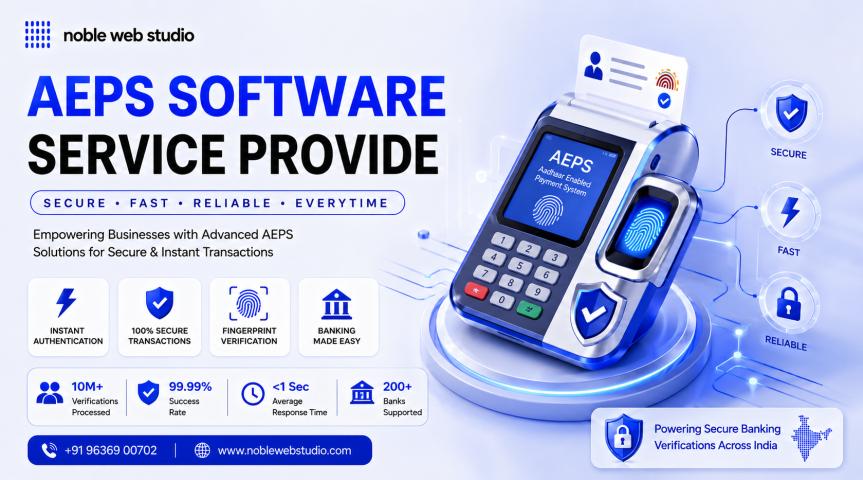
AEPS (Aadhaar Enabled Payment System) banking software is changing how digital payments and banking services reach millions of people across India. It uses modern technology to make banking easy, fast, and secure, especially for those in rural and remote areas. Understanding the architecture of AEPS software helps us see how innovation supports financial inclusion and reliable digital payments.
What Is AEPS Banking Software Architecture?
AEPS banking software architecture refers to the structure and design of the system that allows users to make transactions using their Aadhaar number and biometric data. This software connects banks, Aadhaar servers, and service providers through a secure network to enable smooth and safe payment services.
Key Components of AEPS Banking Software Architecture
1. User Interface (UI)
The UI is what agents or customers use to access AEPS service. It is usually simple and user-friendly, designed to work on mobile devices or micro-ATMs. The interface guides users through steps like entering Aadhaar number, scanning fingerprint, and confirming the transaction.
2. Biometric Authentication Module
This component is responsible for capturing and verifying biometric data such as fingerprints or iris scans. It sends the biometric information securely to the Aadhaar server for authentication, ensuring only authorized users can perform transactions.
3. Aadhaar Authentication Server
The backbone of AEPS, the Aadhaar server verifies the biometric or OTP details with the central UIDAI (Unique Identification Authority of India) database. It confirms the identity of the user in real time to approve or reject the transaction.
4. Bank Integration Layer
Once the Aadhaar authentication is successful, the software communicates with the respective bank’s server to perform the requested transaction. This layer handles tasks such as balance checking, cash withdrawal, fund transfers, and mini statements.
5. Transaction Processing System
This system processes the request, updates accounts, and generates transaction receipts. It ensures accuracy and speed, maintaining records for auditing and reporting.
6. Security Layer
Security is a critical part of AEPS software architecture. This layer includes encryption, secure data transmission, and fraud detection measures to protect user data and prevent unauthorized access.
How Technology and Innovation Improve AEPS Banking Software
1. Cloud-Based Infrastructure
Modern AEPS software often uses cloud technology, allowing flexible scalability, better uptime, and quick disaster recovery. This means services remain available even during high demand or technical issues.
2. API Integration
APIs (Application Programming Interfaces) help AEPS software connect with banks, Aadhaar servers, and other service providers efficiently. API integration reduces manual work and speeds up transaction processing.
3. Real-Time Monitoring and Alerts
Innovative AEPS platforms include real-time monitoring tools to track transactions and detect suspicious activities immediately. Alerts help agents and banks respond quickly to potential fraud.
4. User-Friendly Design
Advanced AEPS software focuses on ease of use, supporting multiple languages and simple steps so even first-time users can complete transactions without difficulty.
Why Choose noblewebstudio for AEPS Banking Software?
noblewebstudio offers a reliable and advanced AEPS banking software solution built on strong architecture and the latest technology. Their software provides fast authentication, secure transaction processing, and seamless bank integration. With noblewebstudio, businesses can serve customers better while ensuring safety and compliance.
Conclusion
AEPS banking software architecture combines biometric technology, secure networks, and innovative features to deliver safe and efficient banking services. Understanding this architecture shows how technology helps bring banking to every corner of India. Choosing expert providers like noblewebstudio ensures you get a modern, trustworthy AEPS solution that supports financial inclusion and digital growth.