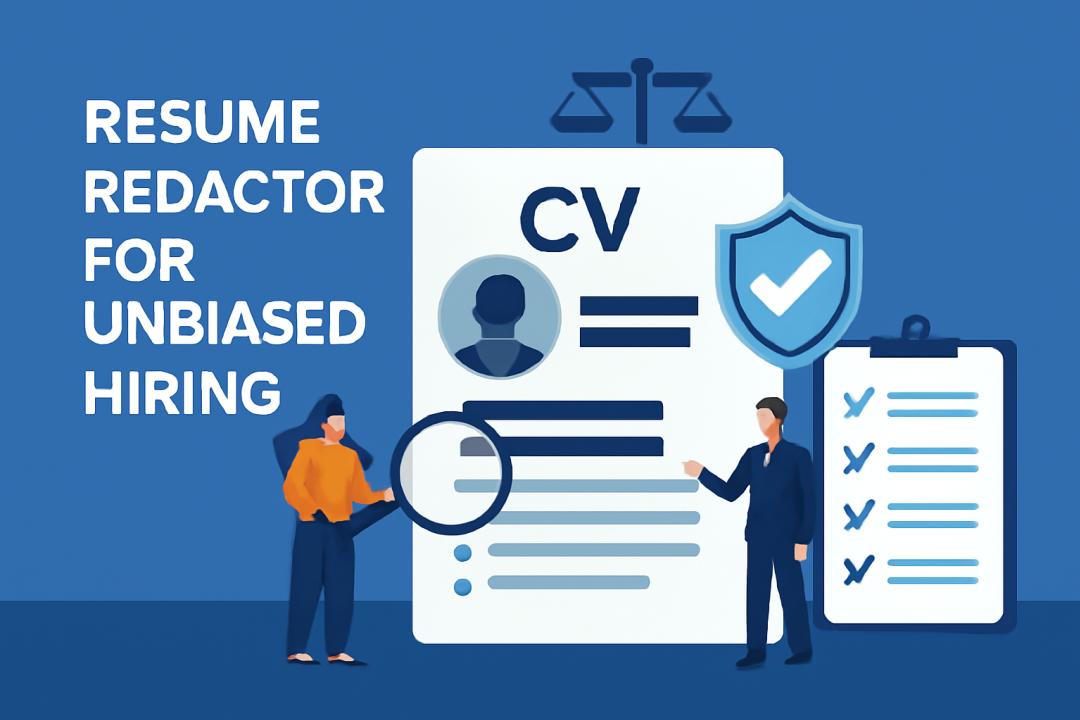

In today’s competitive hiring landscape, organizations are striving to build diverse and inclusive workforces. However, unconscious biases during the recruitment process can unintentionally exclude qualified candidates. That’s where CV redaction—also known as resume redaction or blind recruitment—comes into play. By removing personally identifiable information from candidate resumes, CV redaction promotes fairness, compliance, and better hiring outcomes.
This article explores what CV redaction is, why it is essential, its benefits, and how cutting-edge tools like RChilli’s Resume Redactor are transforming recruitment by enabling unbiased hiring.
What Is CV Redaction? Understanding Resume Redaction for Fair Hiring
CV redaction is the process of concealing or removing sensitive personal information from resumes and CVs to prevent bias during candidate evaluation. This typically includes redacting details such as:
-
Name
-
Age or date of birth
-
Gender
-
Address or location
-
Ethnicity or nationality
-
Photographs
-
Marital status or family information
Unlike traditional resume screening, which exposes hiring managers to this personal information, resume anonymization through CV redaction ensures that candidates are assessed purely on their skills, experience, and qualifications.
Why Is CV Redaction Crucial in Modern Recruitment?
Incorporating CV redaction into recruitment processes helps organizations:
-
Mitigate unconscious bias: Hiring managers often unknowingly favor candidates who share similar backgrounds or demographics.
-
Promote diversity and inclusion: Removing demographic indicators fosters a more level playing field for candidates from all walks of life.
-
Ensure compliance with data privacy laws: Regulations like GDPR require responsible handling of personal data.
-
Enhance the candidate experience: Candidates feel reassured that their applications are evaluated fairly.
Blind recruitment, facilitated by CV redaction, is fast becoming a standard best practice in ethical hiring.
Benefits of CV Redaction in Recruitment
Implementing CV redaction offers numerous advantages:
-
Enhanced Fairness and Equality
By anonymizing resumes, recruiters focus on merit and relevant experience, leading to more equitable hiring decisions. -
Reduction of Discrimination and Bias
Eliminating personal identifiers helps reduce biases related to gender, age, ethnicity, or socio-economic status. -
Improved Data Privacy and Security
Redaction complies with data protection laws by limiting access to sensitive personal information during early screening stages. -
Streamlined and Efficient Hiring Process
Automated CV redaction tools enable quick and consistent anonymization, saving time and reducing manual errors.
Legal and Ethical Considerations in CV Redaction
Organizations must align their CV redaction practices with applicable legal frameworks, such as:
-
General Data Protection Regulation (GDPR) in the EU, mandating strict data privacy standards.
-
Equal Employment Opportunity (EEO) laws in many countries, requiring non-discriminatory hiring.
Ethically, CV redaction reinforces organizational commitment to diversity and inclusion, helping to build employer brand reputation and trust.
How Does RChilli’s Resume Redactor Enable Unbiased Hiring?
RChilli’s Resume Redactor is an AI-powered tool designed to automatically redact personally identifiable information from resumes without compromising data quality or candidate evaluation.
Key features include:
-
Automated redaction of sensitive information such as names, contact details, age, gender, and photos.
-
Compatibility with Applicant Tracking Systems (ATS) to seamlessly integrate into existing recruitment workflows.
-
Customizable redaction parameters allowing organizations to tailor what information is redacted.
-
Maintains the integrity of skills, qualifications, and experience data for accurate candidate matching.
By deploying RChilli’s Resume Redactor, HR teams can focus on skills and qualifications, ensuring fair, bias-free shortlisting and better hiring decisions.
Best Practices for Effective CV Redaction
To maximize the benefits of CV redaction, organizations should:
-
Define clear redaction policies aligned with legal and ethical standards.
-
Use automated redaction software for consistency and efficiency.
-
Train hiring managers on the importance of blind recruitment and how to evaluate redacted CVs.
-
Monitor and review hiring outcomes to assess the impact on diversity and inclusion.
Challenges in CV Redaction and How to Overcome Them
While CV redaction offers many advantages, organizations may face challenges such as:
-
Balancing redaction with preserving meaningful candidate information.
-
Integrating redaction tools with existing ATS or HR systems.
-
Managing candidate expectations and communicating the purpose of redaction.
These challenges can be addressed through:
-
Selecting advanced tools like RChilli’s Resume Redactor that maintain data quality.
-
Collaborating with ATS providers for smooth integration.
-
Transparent communication about the fair hiring practices enabled by redaction.
Future Trends in CV Redaction and Unbiased Hiring
Looking ahead, CV redaction will continue to evolve with advancements in:
-
Artificial Intelligence and Machine Learning, providing smarter anonymization and candidate insights.
-
Integration with broader HR tech ecosystems, enabling end-to-end bias mitigation.
-
Expansion beyond CVs to include interview assessments and reference checks for holistic unbiased recruitment.
The future promises more efficient, inclusive, and data-compliant hiring processes powered by innovation.
Frequently Asked Questions (FAQs)
Q1: What is the main purpose of CV redaction?
A1: The main purpose is to remove personally identifiable information from resumes to reduce bias and promote fair candidate evaluation.
Q2: How does CV redaction improve hiring fairness?
A2: By anonymizing sensitive data, CV redaction prevents unconscious bias related to gender, age, ethnicity, or other personal factors.
Q3: Are there automated tools available for CV redaction?
A3: Yes, tools like RChilli’s Resume Redactor use AI to automate the redaction process efficiently and accurately.
Q4: Is CV redaction mandatory for all companies?
A4: It is not mandatory everywhere but is increasingly recommended or required to comply with diversity, inclusion, and data privacy standards.
Final Thoughts
Incorporating CV redaction into your recruitment workflow is a strategic step toward fostering diversity, reducing bias, and complying with data privacy laws. With powerful tools like RChilli’s Resume Redactor, organizations can automate this process, ensuring a fair and efficient hiring experience for candidates and recruiters alike. Embracing unbiased hiring practices today sets the stage for a more inclusive and successful workforce tomorrow.
If you want to learn more about how RChilli’s Resume Redactor can help your organization achieve unbiased hiring, visit RChilli Resume Redactor.