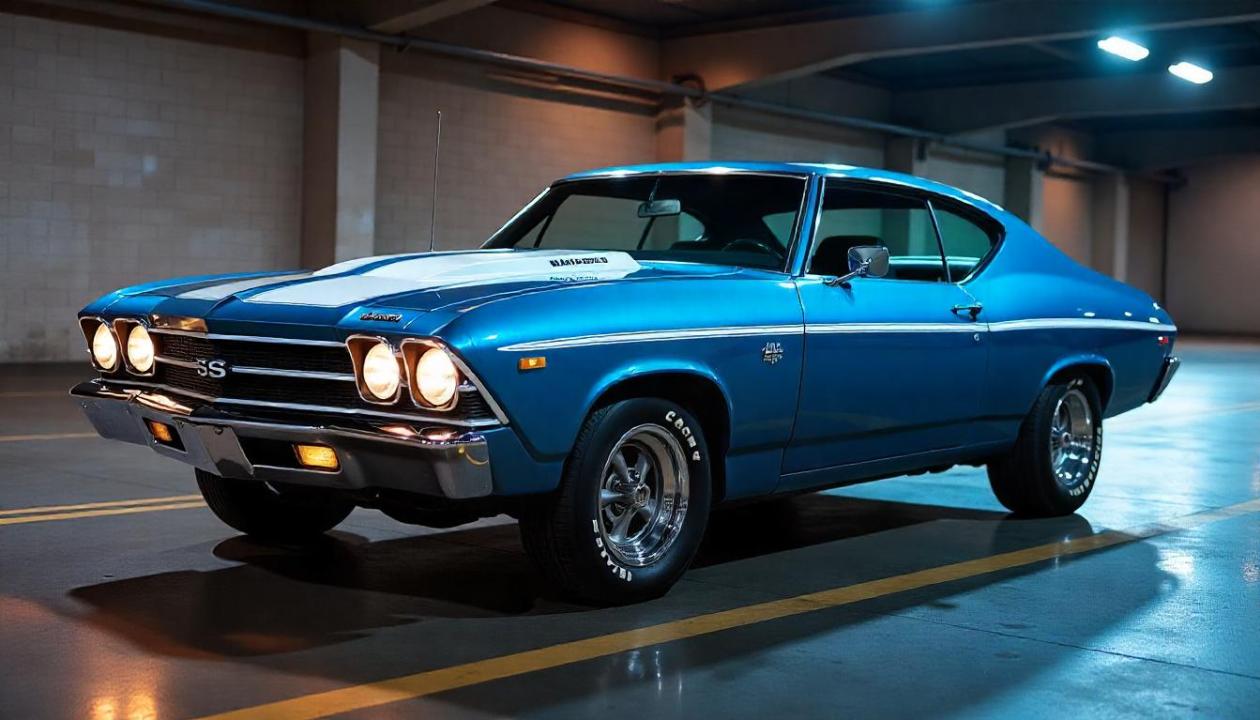
The late 1960s were a golden era for American muscle cars, a time when raw power, bold designs, and a rebellious spirit defined the automotive landscape. Among the titans of this era, the 1969 Chevrolet Chevelle SS 396 stands tall as a quintessential muscle car, blending aggressive styling with formidable performance. As a flagship of Chevrolet’s performance lineup, the Chevelle SS 396 offered an irresistible combination of brute force, iconic design, and versatility, making it a favorite among enthusiasts and a symbol of the muscle car zenith. This article delves into the origins, design, performance, and enduring legacy of the 1969 Chevrolet Chevelle SS 396, a car that captured the heart of a generation and remains a legend today. Explore more about the fastest muscle cars of the 60s here.
Origins: A Muscle Car Powerhouse
By the late 1960s, the muscle car wars were in full swing, with manufacturers like Pontiac, Dodge, and Ford battling for supremacy. Chevrolet, a dominant player in the automotive industry, had already established its credentials with the Camaro and Corvette, but the Chevelle offered a different proposition: a midsize car with the heart of a supercar. Introduced in 1964 as part of Chevrolet’s A-body platform, the Chevelle quickly became a platform for high-performance variants, with the Super Sport (SS) package elevating it to muscle car stardom.
The 1969 Chevrolet Chevelle SS 396 was the pinnacle of this evolution, building on the success of earlier SS models. Designed to compete with rivals like the Pontiac GTO and Plymouth Road Runner, the Chevelle SS 396 was offered as a standalone model in 1969, with a focus on delivering maximum performance at a reasonable price. Its combination of power, >
Design: Muscular Elegance
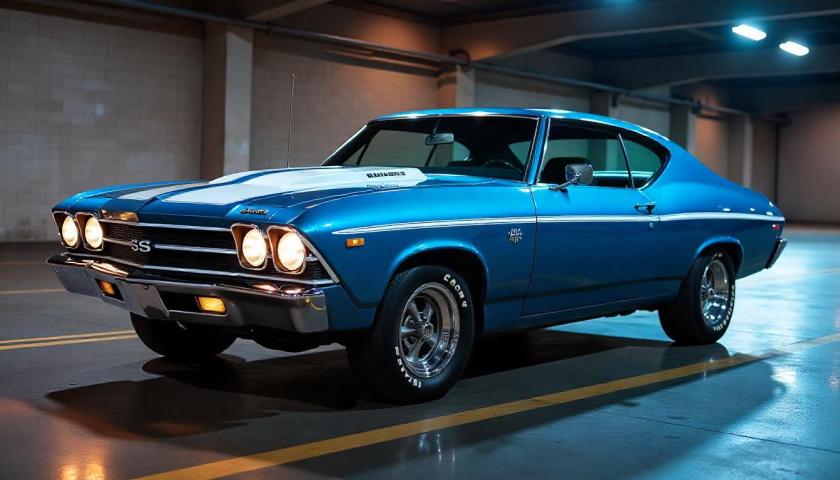
The 1969 Chevrolet Chevelle SS 396 was a visual masterpiece, blending aggressive styling with a timeless aesthetic. Its design was a refined evolution of the Chevelle’s second-generation platform, introduced in 1968. The car featured a long hood, a wide stance, and a subtle “Coke bottle” shape, with flared fenders and a tapered waistline that gave it a muscular, athletic look. The SS 396 stood out with distinctive features like a blacked-out grille, SS badging, and functional hood vents that hinted at the power within. Optional hood stripes, chrome trim, and rally wheels added a touch of flair, making the Chevelle a head-turner on the street.
The Chevelle SS 396 was available in multiple body >
Inside, the Chevelle SS 396 offered a driver-focused cockpit with a blend of performance and comfort. Standard features included bucket seats, a sporty steering wheel, and a functional dashboard, while options like a center console, tachometer, and premium upholstery added a touch of refinement. The interior was spacious enough for five passengers, and the large trunk made the Chevelle practical for daily use, setting it apart from smaller pony cars like the Camaro or Mustang. This versatility, combined with its aggressive styling, made the Chevelle SS 396 a car that could do it all.
Performance: The Big-Block Beast
The heart of the 1969 Chevrolet Chevelle SS 396 was its 396-cubic-inch V8 engine, a big-block powerhouse that defined the car’s performance credentials. The SS 396 was offered in three power levels: the base L35 version produced 325 horsepower, the L34 delivered 350 horsepower, and the top-tier L78 churned out an impressive 375 horsepower. All variants produced substantial torque—up to 415 lb-ft—making the Chevelle a torque monster capable of shredding tires with ease. For those seeking even more power, the rare COPO 427 option, equipped with a 425-horsepower 427-cubic-inch V8, was available through special orders, primarily for drag racing.
Transmission options included a three-speed or four-speed manual, or a three-speed Turbo-Hydramatic automatic, paired with a heavy-duty rear axle. The Chevelle SS 396’s performance was electrifying: the 375-horsepower L78 version could hit 0-60 mph in approximately 5.8 seconds and run the quarter-mile in the low 13-second range, with a top speed exceeding 130 mph. Even the base 325-horsepower model was no slouch, achieving 0-60 mph in around 6.5 seconds and quarter-mile times in the mid-14s. These figures made the Chevelle SS 396 a formidable competitor on the drag strip and the street.
The car’s performance was enhanced by a heavy-duty suspension, featuring stiffer springs and shocks, and optional upgrades like a limited-slip differential and power disc brakes. While the Chevelle’s handling was not as agile as smaller pony cars, its suspension tuning provided respectable road-holding for a midsize muscle car. The combination of explosive acceleration, a thunderous V8 soundtrack, and a planted stance made the Chevelle SS 396 a favorite among drag racers and street enthusiasts alike.
Cultural Impact: A Muscle Car Icon
The 1969 Chevrolet Chevelle SS 396 was more than just a car; it was a cultural phenomenon that embodied the spirit of the muscle car era. Its combination of affordability, power, and >
The Chevelle SS 396 also made its mark in motorsports, particularly in drag racing, where COPO 427 models dominated NHRA competitions. Its appearances in automotive magazines, car shows, and pop culture further solidified its status as an icon. The Chevelle’s timeless design and performance credentials have made it a staple in films, TV shows, and video games, where it continues to represent the raw energy of the 1960s.
Challenges and Collectibility
Owning a 1969 Chevrolet Chevelle SS 396 came with challenges. Its big-block engines were gas-guzzlers, often achieving less than 12 mpg, which became a significant drawback during the 1970s fuel crises. Maintenance could be demanding, especially for high-output models like the L78 or COPO 427, which required specialized parts and expertise. The Chevelle’s popularity also made it a target for theft, and its lightweight construction offered limited crash protection compared to modern vehicles.
Today, the 1969 Chevelle SS 396 is a collector’s prize, with well-preserved or restored examples commanding premium prices. L78 and COPO 427 models are particularly rare and valuable, often fetching upwards of $150,000 at auctions, while base 325-horsepower models remain highly sought after. The car’s iconic design, historical significance, and connection to the muscle car era make it a centerpiece of any classic car collection. For enthusiasts transporting their Chevelles to car shows or new homes, services like AmeriFreight provide specialized vehicle shipping to ensure these classics arrive in pristine condition.
Legacy: A Timeless Muscle Car Legend
The 1969 Chevrolet Chevelle SS 396 remains one of the most celebrated muscle cars of all time, a testament to Chevrolet’s ability to blend power, >
Whether dominating the drag strip, cruising Main Street, or stealing the spotlight at a car show, the 1969 Chevrolet Chevelle SS 396 embodies the heart and soul of the muscle car era. Its roar, its >