Artificial Intelligence (AI) is no longer a futuristic concept it’s part of our everyday lives. From voice assistants to personalized recommendations and self-driving technology, AI is revolutionizing industries. As more professionals seek to enter this exciting field, a common question arises: Is prior experience required to enroll in an artificial intelligence certification online?
The short answer is: No, prior experience is not mandatory. Let’s explore what that really means, who can benefit, and how you can succeed with an Artificial Intelligence course for beginners, even without a tech background.
Introduction: The Rising Demand for AI Knowledge
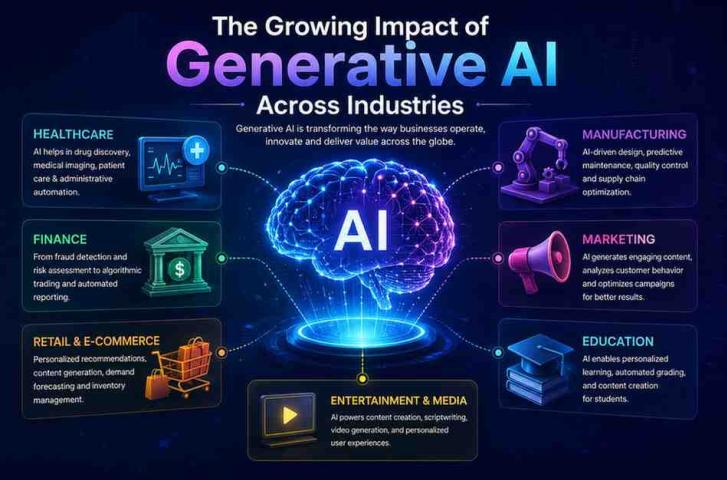
The global AI market is projected to reach $407 billion by 2027, highlighting the massive demand for AI professionals across industries like healthcare, finance, retail, logistics, and manufacturing. Employers seek candidates who can analyze data, build intelligent systems, and solve problems using AI tools and frameworks.
But entering the field doesn’t always require you to be a software engineer or data scientist. Today, artificial intelligence certification online programs are tailored for learners from diverse educational and professional backgrounds.
Can Beginners Start AI Training Without Prior Experience?
Yes, and here’s why:
1. AI Training Courses Are Tiered by Skill Level
Most online courses clearly differentiate between beginner, intermediate, and advanced content. You can enroll in an Artificial Intelligence course for beginners designed with no technical prerequisites. These programs typically cover:
Basics of AI and machine learning
Foundational mathematics (basic algebra, statistics)
Key algorithms explained in simple terms
Practical examples using visual tools
Guided hands-on exercises with templates
This structure ensures that even someone with zero programming knowledge can learn AI from scratch.
2. Tools Have Become More User-Friendly
Modern AI platforms offer drag-and-drop interfaces, visual model builders, and step-by-step automation. These allow beginners to build AI models without writing complex code. With proper instruction, learners can focus on AI logic and business use cases, rather than technical details.
3. AI Certification Courses Offer Guided Learning Paths
Online certification programs often start with modules like:
What is Artificial Intelligence?
AI vs. Machine Learning vs. Deep Learning
Real-world use cases in different industries
These foundational modules help new learners build confidence before diving into technical tools and projects.
Who Should Consider an AI Certification Without Prior Experience?
You don’t need to be a tech professional to start learning AI. These types of learners can greatly benefit:
● Working Professionals from Non-Tech Backgrounds
People from fields like marketing, finance, healthcare, HR, and education are turning to AI to improve workflows, automation, and decision-making.
Example: A marketing manager learns AI-based customer segmentation to personalize email campaigns using predictive models.
● Students and Career Changers
College students or mid-career professionals looking to shift into tech can leverage AI training courses as a launching pad.
Example: A recent graduate in economics takes a beginner AI course and transitions into an entry-level data analyst role.
● Entrepreneurs and Business Owners
Understanding AI helps decision-makers streamline operations, optimize marketing, or develop new AI-powered products.
Example: A small business owner uses AI tools to automate customer support with a chatbot, without needing a software developer.
What Will You Learn in an AI Certification for Beginners?
An artificial intelligence course online designed for beginners typically includes:
1. Introduction to AI Concepts
What is AI?
History and evolution
Applications across industries
2. Mathematics for AI (Simplified)
Understanding datasets
Mean, median, mode, and variance
Introduction to probability and statistics
3. AI Algorithms and Logic
Supervised vs. unsupervised learning
Basic neural networks
Regression, classification, and clustering (visually explained)
4. Tools and Frameworks
Introduction to Python (optional)
Using no-code/low-code tools for building models
Overview of data visualization libraries
5. Real-World Applications
AI in healthcare: disease detection
AI in finance: fraud detection
AI in e-commerce: recommendation engines
6. Capstone Project
Many AI certification courses wrap up with a practical project. For beginners, these projects often include:
Building a recommendation system
Predicting customer churn
Creating a chatbot for customer support
These projects reinforce learning and prepare students for real-world scenarios.
How AI Courses Online Make Learning Easy for Beginners
Modular Lessons
Courses are broken down into small, manageable topics. You can revisit lessons, pause videos, or practice as needed.
Mentorship and Support
Many certification courses offer community forums, live sessions, or one-on-one mentoring, helping learners get unstuck.
Interactive Tools
Simulations, quizzes, and visual dashboards make complex AI ideas easy to understand, even for non-coders.
Real-Time Feedback
Instant feedback on assignments or mini-projects helps learners see what works and what needs improvement.
How to Prepare Yourself for AI Certification Without a Tech Background
If you’re ready to dive in, here are some easy ways to start:
Brush Up on Basics
Basic algebra and statistics
Logical reasoning and problem-solving
Start with Beginner-Friendly Tools
Use visual platforms or AI sandboxes that help you experiment with models without coding.
Practice with Real Data
Use open datasets (like weather, customer reviews, or product sales) to apply concepts practically.
Read Case Studies
Understand how businesses are using AI to automate tasks or predict behavior. It boosts contextual understanding.
Industry Insights: Why AI Learning Matters
Here’s what the data says:
AI-related job postings have grown 74% annually over the past four years.
Entry-level AI roles are open to candidates with certifications, especially those with projects to showcase.
A 2024 LinkedIn report listed AI literacy as a top skill for the next decade across industries.
This means that by enrolling in a beginner-friendly AI course now, you could be setting yourself up for a future-proof career.
Conclusion: You Can Learn AI Without Prior Experience
You don’t need to be a programmer or tech wizard to enter the world of Artificial Intelligence. Whether you're in marketing, HR, sales, or just curious about the future, an artificial intelligence course for beginners is your gateway to unlocking powerful career opportunities. With guided projects, simplified concepts, and industry-ready skills, artificial intelligence certification online programs make AI learning accessible for everyone.
Kickstart your AI journey with H2K Infosys today, where beginners become certified professionals. Enroll now for real-time learning and future-ready skills!