Artificial Intelligence and Machine Learning are no longer just buzzwords for tech giants or research labs. They're transforming industries, job roles, and even everyday products. From virtual assistants to smart security systems, AI is all around us. But here’s the question many aspiring learners ask: Can a complete beginner learn Artificial Intelligence and Machine Learning online?
The short answer is yes, and now is the best time to get started.
This blog explores how beginners can successfully learn Artificial Intelligence and Machine Learning through online programs, what skills and tools they’ll need, what to expect in an AI training program, and how these skills translate into real-world career opportunities.
Introduction to Artificial Intelligence and Machine Learning
Artificial Intelligence (AI) refers to the development of computer systems that can perform tasks normally requiring human intelligence, such as visual perception, speech recognition, decision-making, and language translation. Machine Learning (ML) is a subset of AI that enables machines to learn from data and improve their performance without being explicitly programmed.
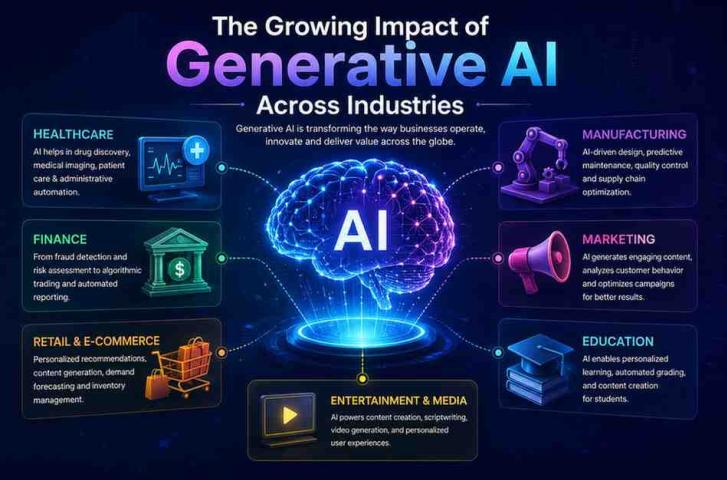
Today, industries like healthcare, finance, e-commerce, and transportation all rely on AI to improve decision-making, automate repetitive tasks, and enhance customer experiences.
Why Online Learning is Ideal for Beginners
1. Accessibility and Flexibility
One of the biggest advantages of an Artificial Intelligence course online is the flexibility to learn at your own pace. Whether you're a student, a working professional, or someone transitioning careers, online learning lets you plan your schedule around existing commitments.
2. Structured Learning Paths
Modern AI training programs are designed to guide beginners step by step. Courses often start with foundational concepts like statistics, linear algebra, and programming before diving into machine learning algorithms and practical AI applications.
3. Immediate Hands-On Practice
Unlike traditional classrooms, online courses often integrate coding exercises, simulations, and real-world mini-projects. This approach helps beginners connect theory to practice instantly.
What Beginners Need to Get Started
While prior experience helps, beginners can learn Artificial Intelligence and Machine Learning effectively by focusing on these core prerequisites:
1. Basic Programming Skills
You don’t need to be an expert coder, but familiarity with programming, especially Python, will help you understand AI concepts quickly.
Example:
python
# A simple Python example: Linear regression using sklearn
from sklearn.linear_model import LinearRegression
model = LinearRegression()
model.fit([[1], [2], [3]], [2, 4, 6])
print(model.predict([[4]])) # Output will be close to 8
2. Math Foundations
Concepts like linear algebra, probability, and calculus form the backbone of many AI algorithms. Don’t worry, online courses break these down with simple examples and visualizations.
3. Logical Thinking
AI and ML involve solving real-world problems using logical steps. Beginners who enjoy puzzles, strategy games, or problem-solving will find this field particularly engaging.
What You’ll Learn in an AI Training Program
An effective AI training program for beginners includes both theoretical and hands-on components. Here's a structured overview of typical modules:
1. Introduction to AI and ML
Understanding the AI ecosystem
Differences between AI, ML, and Deep Learning
Applications in various industries
2. Programming and Tools
Python programming for AI
Introduction to libraries like NumPy, pandas, and matplotlib
Using tools like Jupyter Notebooks for coding practice
3. Data Handling and Preprocessing
Collecting, cleaning, and preparing datasets
Visualizing data for insights
Understanding missing values and outliers
4. Core Machine Learning Concepts
Supervised vs Unsupervised learning
Regression, classification, and clustering
Overfitting and underfitting models
5. Algorithms and Model Building
Linear regression
Decision trees and random forests
Support Vector Machines (SVM)
k-means clustering
6. Model Evaluation
Accuracy, precision, recall, and F1 score
Cross-validation techniques
Confusion matrix interpretation
7. Introduction to Deep Learning
Neural networks and activation functions
Feedforward and backpropagation
Building a basic neural network
Can a Beginner Really Learn This Online? Absolutely!
Let’s look at a real-world example.
Case Study:
An entry-level data analyst with no background in AI completed an Artificial Intelligence certification online and used their final project predicting customer churn using machine learning to secure a promotion. They applied regression and decision tree algorithms covered during the course and used visualization tools to present insights.
Benefits of Learning Artificial Intelligence and Machine Learning Online
1. Career Opportunities
Once you learn AI and ML basics, multiple career paths open up:
AI Engineer
Data Scientist
Machine Learning Engineer
NLP Specialist
Computer Vision Developer
2. Project-Based Learning
Online courses often include real-world projects like:
Fraud detection using classification models
Movie recommendation systems
Handwritten digit recognition using neural networks
3. Certification for Credibility
Completing an Artificial Intelligence certification online not only boosts your resume but also demonstrates to employers that you possess relevant skills and are committed to continuous learning.
Challenges Beginners Might Face And How to Overcome Them
1. Intimidation by Terminology
Terms like “gradient descent” or “backpropagation” can seem confusing. But most beginner-friendly courses use visuals and analogies to simplify learning.
2. Fear of Coding
Even if you're new to programming, learning Python is easier than you think. Start with small scripts and gradually build up to complex models.
3. Time Management
Consistency is key. Just 1–2 hours of focused learning daily is enough to build solid AI skills over time.
Tips for Beginners Learning AI and ML Online
Start with the Basics
Before jumping into neural networks, ensure you understand foundational ML algorithms.
Use Visual Aids
Flowcharts, graphs, and diagrams can simplify concepts that seem difficult when only explained in text.
Practice with Mini Projects
Apply what you learn through simple projects like spam detection, loan eligibility prediction, or house price forecasting.
Join Learning Communities
Engaging with peers through forums or live Q&A sessions boosts motivation and allows you to learn from others’ questions.
Set Milestones
Break your learning journey into weekly goals. For example:
Week 1–2: Learn Python basics
Week 3–4: Understand supervised learning
Week 5–6: Build your first ML model
Common Tools You’ll Use in Online Learning
Tool | Purpose |
Python | Core programming language |
Jupyter Notebook | Interactive coding environment |
pandas | Data manipulation |
NumPy | Numerical computation |
Scikit-learn | Machine learning models |
matplotlib & seaborn | Data visualization |
TensorFlow / PyTorch | Deep learning frameworks |
Real-World Applications of AI and ML You Can Build
Chatbots for Customer Service
Train models using historical chat data.
Stock Price Prediction
Use time series forecasting and regression techniques.
Healthcare Diagnosis Assistant
Detect diseases using classification models on patient data.
Sentiment Analysis
Build models to interpret customer feedback or social media posts.
FAQs: Artificial Intelligence and Machine Learning for Beginners
Q1: Do I need a computer science degree to learn AI and ML?
No. With the right online AI training program, anyone with basic math and logical skills can learn.
Q2: How long does it take to learn AI and ML online?
Typically 3 to 6 months with consistent learning and practice.
Q3: Will I get job-ready after completing an AI course online?
Yes, especially if your course includes hands-on projects, assignments, and a final portfolio.
Conclusion
Yes, beginners can learn Artificial Intelligence and Machine Learning online. With the right guidance, tools, and mindset, even someone with zero experience can build real-world AI solutions and launch a tech career.
Ready to start your journey in AI? Enroll in H2K Infosys' AI courses today for expert-led learning and practical career-building skills.