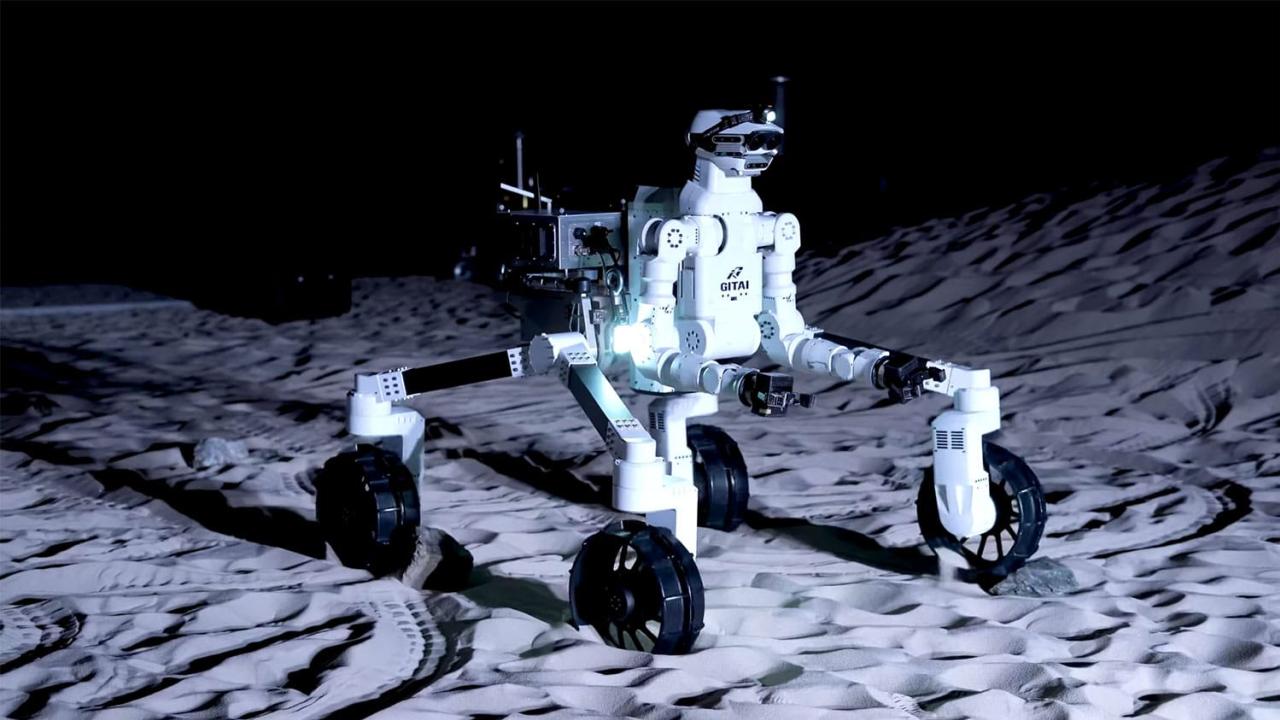
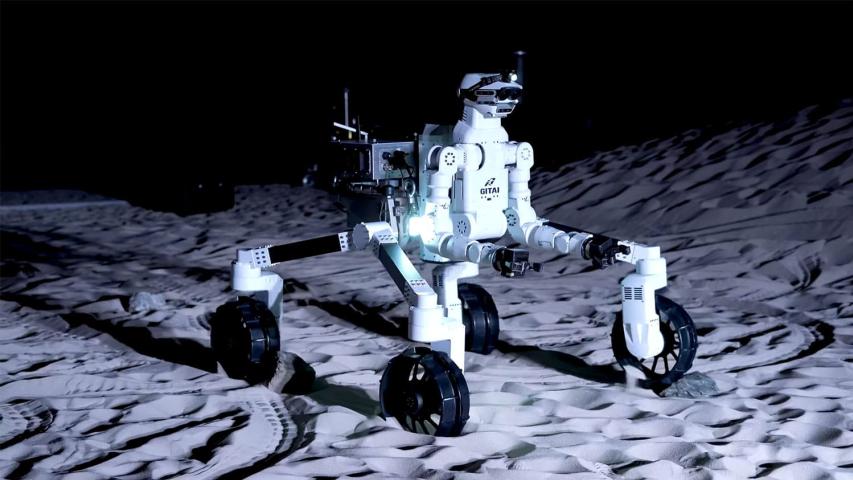
Space robotics is revolutionizing the exploration, maintenance, and utilization of outer space by providing autonomous and teleoperated robotic solutions that reduce human risk, extend mission capabilities, and optimize resource use. These versatile systems, including robotic arms, rovers, inspection drones, and autonomous platforms, are powering a new era of space activities—from satellite servicing and debris removal to lunar exploration and in-space manufacturing. In 2025, innovations in AI, autonomy, sensor technology, and international collaborations are driving robust global growth and competition in the space robotics field.
According to Straits Research, the global space robotics size was valued at USD 5.41 billion in 2024 and is estimated to grow from USD 5.69 billion in 2025 to USD 8.46 billion by 2033, expanding at a compound annual growth rate (CAGR) of 5.1% during the forecast period (2025–2033).
Emerging Trends and Technological Advances in Space Robotics
-
Artificial Intelligence and Autonomous Operations: AI-powered autonomous robots now conduct complex tasks such as extraterrestrial surface navigation, real-time decision-making, and adaptive system repair with minimal human intervention. Machine learning enhances space situational awareness, enabling robots to identify and react to dynamic environments including space debris hazards.
-
Modular and Collaborative Robots: Modular robotic systems facilitate in-orbit assembly, repair, and upgrades. Collaborative robots (cobots) partnered with astronauts enhance human-robot interaction during space missions, increasing efficiency and reducing astronaut workload and exposure.
-
Advanced Sensor and Imaging Technologies: Incorporation of LiDAR, hyperspectral imaging, and multispectral sensors enables precise environmental mapping, resource identification (e.g., lunar ice deposits), and structural inspection critical for habitat construction and maintenance of orbiting assets.
-
Robotic Arms and Manipulators: High-precision robotic arms with dexterous manipulation capabilities are essential for satellite servicing, space station maintenance, and debris mitigation tasks. Innovations in lightweight materials and flexible joints provide improved versatility in microgravity.
-
Swarm Robotics and Multi-Agent Systems: Deployments of multiple smaller robotic units working collaboratively to cover large surface areas, such as lunar or Martian terrain, enable efficient data collection, resource extraction, and infrastructure construction with redundancy and fault tolerance.
Country-Wise Updates and Leading Players
-
United States: The US remains the dominant leader in space robotics innovation, driven by NASA programs and private aerospace firms. Industry leaders such as SpaceX, Northrop Grumman, and Honeybee Robotics provide cutting-edge robotic solutions for satellite servicing, launch vehicle inspection, and planetary exploration. Companies like Motiv Space Systems develop robotic arms used in harsh extraterrestrial environments, while Intuitive Machines and Astrobotic Technology advance autonomous lunar landers and rovers under NASA’s Commercial Lunar Payload Services (CLPS).
-
Europe: European players including Airbus Defence and Space and Thales Alenia Space are notable for contributions in robotic payloads and space station maintenance systems. European Space Agency (ESA) initiatives prioritize robotic debris removal, with partners like ClearSpace pioneering missions to capture and deorbit space junk using robotic arms.
-
China: China is rapidly expanding its space robotics capabilities, focusing on lunar and orbital robotics including rover development and satellite servicing. Domestic firms benefit from government-backed programs aligned with the China National Space Administration's (CNSA) lunar exploration and space station construction projects.
-
Japan: Japanese firm iSpace focuses on lunar exploration and surface robotics, while agencies like JAXA emphasize robotic systems for sample return missions and orbital platform servicing. Japan integrates robotics deeply into its space science and commercial space strategies.
-
India: Indian Space Research Organisation (ISRO) drives development of robotic arms for satellite servicing and lunar exploration. Startups such as BigDipper Exploration Technologies provide modular autonomous lunar robots focused on resource extraction and surface operations, showcasing rapidly growing indigenous capabilities.
-
Other Notable Players: Canadian company MDA (MacDonald, Dettwiler and Associates) is renowned for developing Canadarm robotic systems; Astroscale leads in space debris removal technologies; and Boston Dynamics is adapting terrestrial robotics expertise for autonomous inspection and maintenance tasks in space applications.
Impact of Global Tariffs on Space Robotics Industry
The space robotics sector faces indirect challenges from global tariffs primarily targeting raw materials such as high-performance alloys, semiconductors, and essential electronic components used in robotic systems and spacecraft hardware. Tariffs imposed especially between major trade partners since 2024 have increased manufacturing costs and complicated global supply chains. Many space robotics manufacturers are strategically diversifying suppliers, increasing vertical integration, and investing in regional production hubs to reduce dependencies. Governments in key aerospace nations offer incentives to support domestic production of advanced materials and electronic components, partly offsetting tariff pressures. Although tariff-related complexities add short-term cost pressures, they stimulate innovation in supply chain resilience, advanced manufacturing techniques, and cost-effective design optimization.
Recent Industry Developments and News Highlights
-
SpaceX continues advancing its robotic drone ships and autonomous inspection drones for reusable rockets, enhancing turnaround times between launches.
-
Astroscale’s debris removal spacecraft successfully completed a robotic capture demonstration, representing a milestone in active debris removal capability.
-
Intuitive Machines deployed autonomous lunar robots capable of subsurface exploration and payload delivery in NASA’s Artemis program.
-
BigDipper Exploration Technologies introduced a cooperative swarm of lunar rovers powered by solar energy with modular payload capabilities.
-
ClearSpace, in partnership with ESA, is gearing up for a pioneering robotic debris removal mission projected for launch by 2026.
-
Multiple startups and research institutions are commercializing AI-driven robotic systems optimized for complex tasks like in-space assembly, autonomous docking, and habitat construction.
Growth Outlook and Future Directions
The space robotics segment is forecasted to expand steadily through 2033, underpinned by intensified space exploration, satellite servicing demand, and space infrastructure development initiatives. Integration of AI and improved autonomy will further reduce human intervention needs and operation costs. International cooperation and competitiveness will fuel innovation in robotic debris mitigation, in-orbit manufacturing, and planetary surface operations. Emerging economies with growing space ambitions, such as India and China, will contribute to a diversifying space robotics ecosystem. Advances in material science and onboard computing will produce more capable, lightweight, and energy-efficient space robots, enabling ambitious missions to the Moon, Mars, and beyond.
Summary
Space robotics is spearheading humanity’s expanding presence in space by delivering innovative autonomous, modular, and intelligent systems. Driven by global exploration programs and commercial demand, the industry continues to grow robustly despite supply chain challenges induced by tariffs. The future of space robotics promises safer, more efficient extraterrestrial operations empowering sustainable space utilization and exploration.