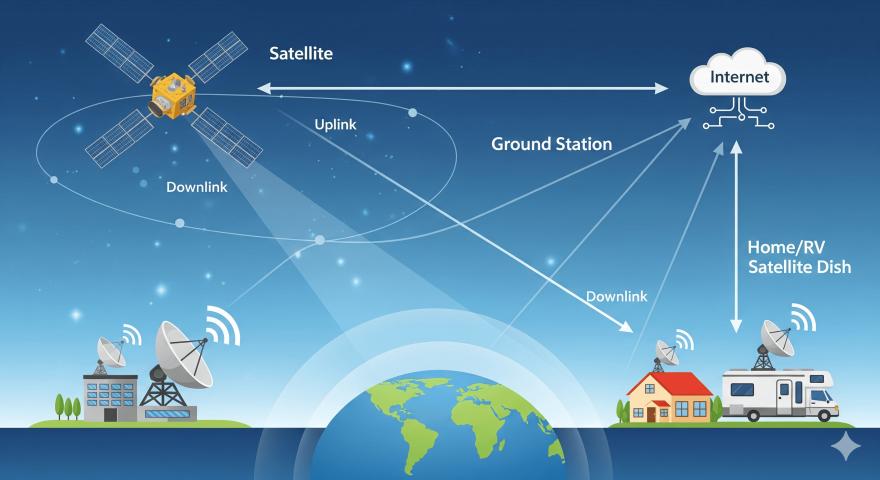
The satellite communication market in the defense sector is witnessing significant growth driven by the increasing need for reliable, secure, and real-time communication capabilities in military operations. Satellite communication systems offer critical advantages such as global coverage, enhanced data transmission, and robust connectivity in harsh and remote environments where conventional communication infrastructure is limited or unavailable. As governments around the world enhance their defense capabilities and invest in technological advancements, the demand for advanced satellite communication solutions continues to rise, supporting various defense applications such as surveillance, reconnaissance, command and control, and tactical communications.
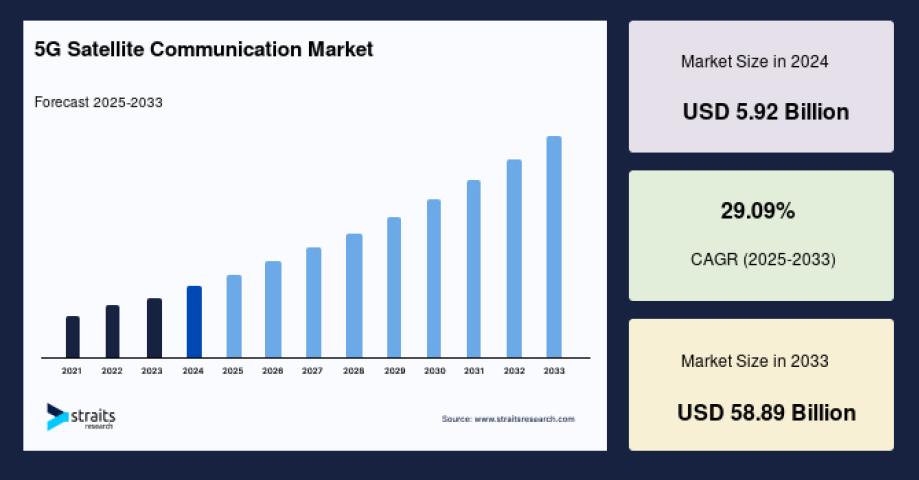
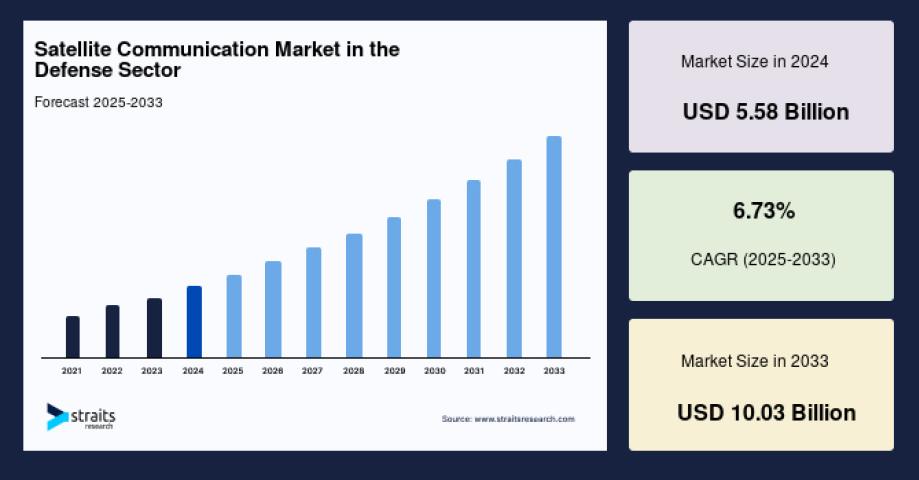
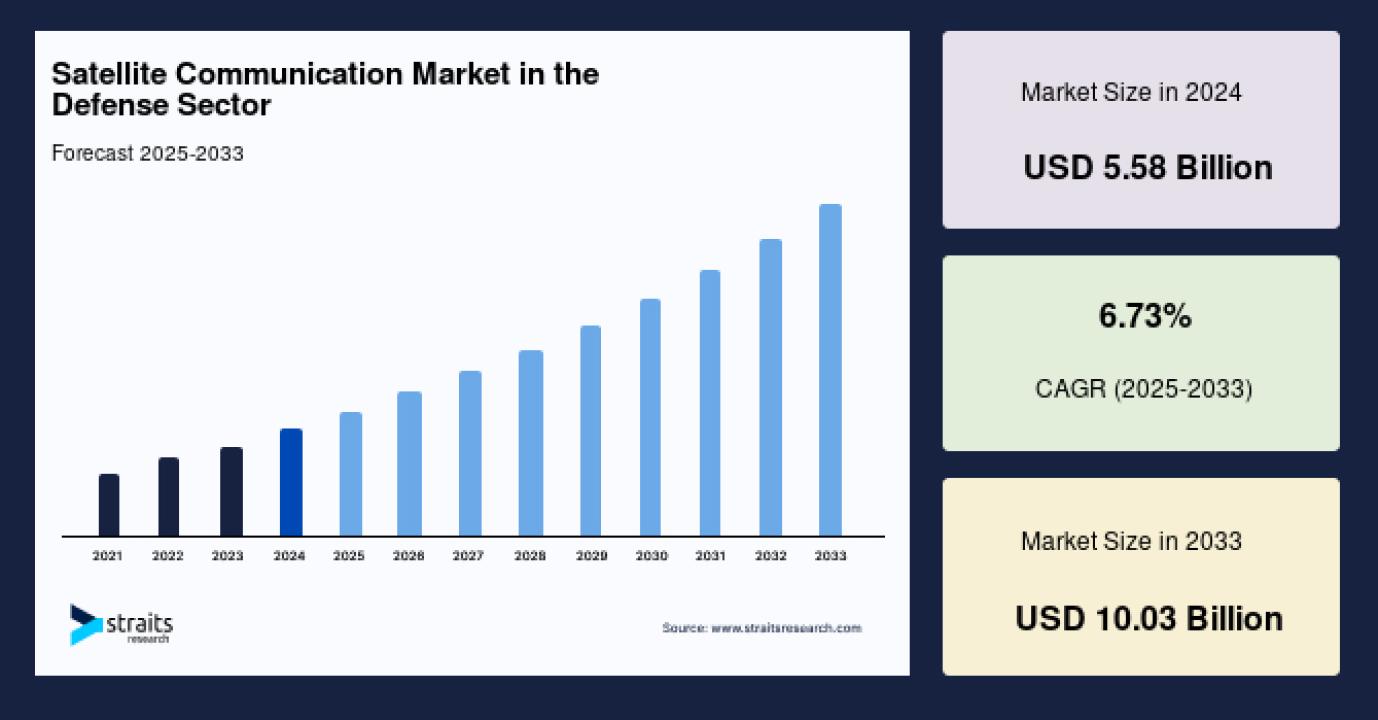
Market Size 2024 – USD 3.52 Billion.
Market Size 2025 – USD 4.41 Billion.
Market Size 2033 – USD 41.45 Billion.
CAGR (2025-2033) – 19.6%.
Request Sample – https://straitsresearch.com/report/satellite-communication-market-in-the-defense-sector/request-sample
Market Drivers
The growth of the satellite communication market in the defense sector is primarily propelled by the following drivers:
The increasing militarization of space and the growing strategic importance of space-based assets for national security have accelerated investments in satellite communication infrastructure. Robust satellite networks enable uninterrupted military communication in geographically dispersed battlefields.
The rising need for real-time data transfer and situational awareness in defense operations emphasizes the adoption of advanced satellite communication systems capable of supporting high-data-rate transmissions and secure networks.
The rising demand for network-centric warfare and digital battlefield solutions encourages defense forces to deploy satellite communication systems to ensure effective command, control, communications, computers, intelligence, surveillance, and reconnaissance (C4ISR).
Innovations in satellite technology such as High Throughput Satellites (HTS), Low Earth Orbit (LEO) satellite constellations, and advancements in encryption and cybersecurity are enhancing the capabilities and reliability of defense satellite communication systems.
Increasing defense budgets and government initiatives worldwide aimed at modernizing military communication infrastructure further fuel market expansion.
Market Challenges
Despite the promising growth, the market faces certain challenges:
High costs associated with the development, launch, and maintenance of defense satellite systems can constrain investments, particularly in countries with limited defense budgets.
Technical complexities and the need for continuous upgrades to secure satellite communication networks pose operational challenges to defense agencies.
Increasing threats of cyberattacks and electronic warfare targeting satellite communication systems highlight the necessity for robust security measures, requiring constant innovation and investment.
Regulatory and geopolitical concerns, including spectrum allocation issues and international defense cooperation complexities, can affect market dynamics.
Market Segmentation
The satellite communication market in the defense sector is segmented based on system type, platform, frequency band, application, and region to cater to diverse requirements.
1. By System Type
Geostationary Earth Orbit (GEO) Satellites: Provide broad coverage and are widely used for strategic communication.
Medium Earth Orbit (MEO) Satellites: Offer reduced latency with moderate coverage, suitable for medium-scale defense applications.
Low Earth Orbit (LEO) Satellites: Increasingly preferred for tactical and high-speed communication due to lower latency and enhanced connectivity.
2. By Platform
Ground Stations: Essential for satellite communication operations, including mobile and fixed terminals.
Space Satellites: Encompasses satellites launched for defense communication purposes.
Communication Terminals: Portable and vehicle-mounted terminals used in field operations for real-time data transmission.
3. By Frequency Band
C-Band: Widely used for secure and interference-resistant communication.
X-Band: Specifically allocated for military use, offering high resistance to jamming and interception.
Ku-Band and Ka-Band: Provide high throughput for data-heavy military transmissions and advanced communication applications.
4. By Application
Command and Control: Facilitates strategic decision-making and battlefield management with uninterrupted communication links.
Intelligence, Surveillance, and Reconnaissance (ISR): Supports real-time data sharing from reconnaissance satellites and unmanned platforms.
Tactical Communications: Enables frontline forces to communicate effectively and coordinate operations.
Navigation and GPS: Satellite communication is integrated with navigation systems for precision targeting and logistics support.
5. By Region
North America leads due to advanced defense infrastructure, significant defense spending, and technological innovation.
Asia-Pacific is the fastest growing market, driven by rising defense expenditure and increasing space programs.
Europe’s market growth is supported by modernization initiatives and collaborative defense projects.
Middle East & Africa and Latin America show gradual growth fueled by military modernization efforts.
For detailed insights on market players and competitive landscape, Buy Now this report – https://straitsresearch.com/buy-now/satellite-communication-market-in-the-defense-sector
Top Players Analysis
Leading players in the satellite communication market in the defense sector provide comprehensive product portfolios and are involved in strategic partnerships, boosting market development. The key companies include:
Lockheed Martin Corporation: A leader in defense satellite systems offering secure communication solutions, advanced terminals, and space-based assets. Their extensive government contracts ensure a strong market position.
The Boeing Company: Provides a wide range of satellite communication products, including GEO and LEO satellite platforms, with a focus on secure tactical communication.
L3Harris Technologies, Inc.: Known for its communication terminals and ground station technologies, serving multiple defense applications globally.
Thales Group: Specializes in satellite communication solutions that integrate cybersecurity and advanced encryption methods for military use.
Airbus SE: Offers satellite systems and services with a strong footprint in European defense satellite communication programs.
Honeywell International Inc.: Develops advanced communication technologies including secure radios and satellite terminals for defense forces.
ViaSat, Inc.: Provides high capacity satellite communication equipment with a focus on secure and reliable defense applications.
SES S.A.: Operates a comprehensive satellite fleet supporting defense, government, and intelligence communication needs.
Inmarsat plc: Delivers global mobile satellite communication solutions tailored for defense and security operations.
General Dynamics Corporation: Engages in producing defense communication systems and satellite network services for military applications.
Conclusion
The satellite communication market in the defense sector is poised for exponential growth fueled by technological innovation, rising defense budgets, and strategic imperatives across nations. As the global defense landscape becomes increasingly digitized and network-centric, secure and efficient satellite communication systems will be critical enablers of defense readiness and operational superiority. Investment in advanced satellite technologies and cybersecurity will dictate the future success of this market.
Straits Research is a market intelligence company providing global business information reports and services. Our exclusive blend of quantitative forecasting and trends analysis provides forward-looking insight for thousands of decision-makers. Straits Research Pvt. Ltd. provides actionable market research data, especially designed and presented for decision making and ROI.