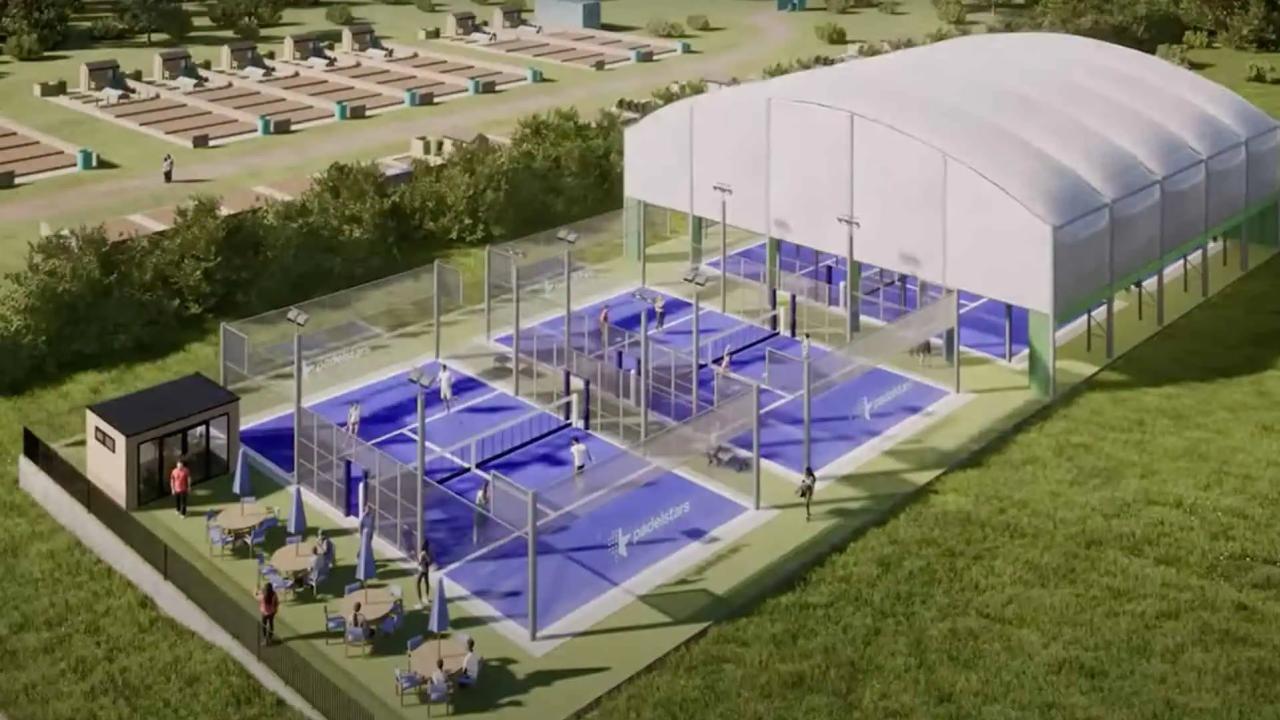
Demand for padel court construction in London has surged, driven by rapid growth in participation and strong venue utilisation. The Lawn Tennis Association (LTA) reports that Great Britain has passed 1,000 courts across 325 venues by July 2025—up from just 68 in 2019—making padel one of the UK's fastest-growing sports. London and the South East account for a significant share of that infrastructure.
This guide by Lofthouse Padel Court Specialists, London's best padel court construction company, explains the end-to-end process of delivering compliant, profitable, and community-supported padel facilities in London.
It covers planning risk, site engineering, lighting and noise design, surface drainage and SuDS, sustainability (BNG), and court/structure specifications—with links to current national and London-specific guidance.
Why Padel, Why London—And Why Engineering Matters
- Utilisation & growth: At the end of 2024, more than 400,000 adults and juniors in Great Britain had played padel at least once in the previous 12 months, up from 15,000 in 2019. London's density and club ecosystems create outsized demand relative to available courts.
- Footprint efficiency: A regulation padel court uses a 20 m × 10 m internal playing area and thrives in urban infill or rooftop settings when structure allows. Correctly engineered enclosures, ring beams, and acoustics unlock sites that standard tennis cannot.
- Revenue resilience: High occupancy, doubles format, and social "stickiness" support robust bookings. But planning objections around floodlighting and noise are increasingly common across the UK, so technical mitigation is essential from day one.
Planning Permission in London: What to Expect
1) The policy context
Local authorities must balance new sports provision with amenity protection. The London Plan encourages increasing or enhancing sports facilities in accessible locations, typically assessing impact on neighbours and open space.
Sport England is a statutory consultee for proposals affecting playing fields and applies its "Planning for Sport" principles to protect provision and quality. Engaging their guidance early helps align with national expectations.
2) Lighting and "obtrusive light”
While "light" itself isn't generally controlled, external sports lighting installations require careful design and often planning permission, particularly where new masts/fittings are proposed.
The Institution of Lighting Professionals (ILP) GN01:2021 sets out environmental zone limits (pre- and post-curfew) for illuminance, glare, and sky glow; many councils' condition schemes are in conflict with GN01 values.
3) Noise: the critical risk driver
Padel produces distinct ball-on-glass and racket acoustics that can trigger objections. Planning cases and inspectors' decisions frequently reference Sport England's design guidance, which states that noise outside a residential property should not exceed 50 dB LAeq(1hr) (context-dependent). Early Noise Impact Assessments (NIA) and acoustic design are therefore vital.
4) Biodiversity Net Gain (BNG)
From 12 February 2024, most permissions in England must deliver at least 10% Biodiversity Net Gain, calculated with the Statutory Biodiversity Metric (with limited exemptions for very small, non-priority habitat impacts). London boroughs now expect BNG statements in planning packs; padel projects on greenfield or landscaped sites should budget for habitat enhancements or off-site units.
Site Selection and Layout Engineering
Footprint and clearances
- Court size: Internal playing area 20 m × 10 m; out-of-court play and perimeter zones vary by model and venue design.
- Multiple courts: Allow 1.5 m separation as a starting point (check your enclosure supplier and circulation strategy).
- Ring beam: LTA guidance highlights a ~400 mm-wide surface ring beam for the enclosure; depth and reinforcement are site-specific and must be engineered to substrate conditions.
Ground conditions and drainage
- Commission a geotechnical investigation to design the reinforced ring beam, slab build-up, and drainage.
- London requires robust SuDS. Use permeable build-ups, sub-base storage, and controlled discharge in line with the National SuDS Standards (2025) and the London Sustainable Drainage Action Plan. Borough flood officers and LLFAs expect compliance with the SuDS hierarchy.
Accessibility and circulation
- Provide step-free access, 900–1200 mm clear widths (project-specific), and safe interfaces at entries where glazing meets walkways. DDA/Equality Act compliance should be embedded in early plans.
Enclosure, Structure, and Surface Specifications
Enclosure system and glass
- Standard courts combine tempered glass panels and powder-coated steel mesh. Back walls typically 3 m high with localised 4 m side extensions in many configurations; confirm with the selected homologation/spec. (Dimensions per LTA/FIP guidance.)
Playing surface
- High-quality synthetic turf systems for padel require certified pile heights, shock pads where specified, and consistent ball-rebound characteristics. Specify UV stability, infill grading, drainage performance, and maintenance regimes; reference relevant standards in tender documents (e.g., supplier compliance to LTA/SAPCA recommendations).
Structural design & fixings
- The ring beam must transfer enclosure loads to ground with adequate bearing and frost protection, and accommodate anchorage systems for frames to prevent micro-movement (a noise contributor). LTA and SAPCA guidance emphasise the use of a structural engineer to determine depth, reinforcement, and expansion jointing.
Lighting Design: Performance Without Nuisance
Modern LED systems allow excellent uniformity at lower spill, but compliance documentation is essential:
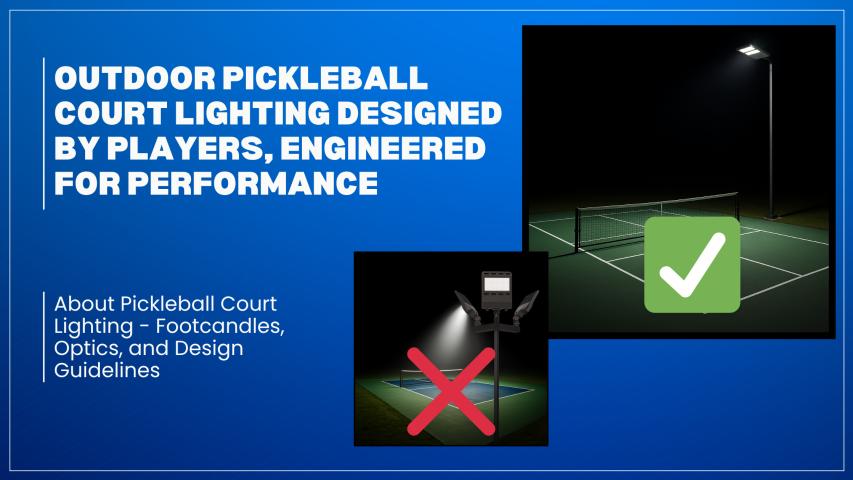
- Target standards: Design to meet sport-appropriate illuminance and uniformity while honouring ILP GN01 obtrusive light limits for the site's environmental zone (E0–E4). Provide pre-/post-curfew calculations, vertical illuminance at windows, and glare controls. Many boroughs have curfew conditions (e.g., 21:00).
- Controls: Curfew timers, step-dimming, and scene setting reduce nuisance and save energy.
- Masts and aiming: Optimise mast heights and luminaire aiming to minimise spill and sky glow. Where sensitive receptors exist, including louvres/visors, careful selection of optics, and shielding.
- Planning reality: Floodlights usually constitute development requiring permission; engage lighting specialists early and submit full photometry to the LPA.
Sustainability & Compliance: From SuDS to BNG
- SuDS: London authorities expect permeable surfacing, sub-base storage, and controlled discharge aligned with the London SuDS Action Plan and National SuDS Standards. Incorporate oil separators only where required; favour vegetated conveyance (raingardens, bioswales) where space allows.
- BNG 10%: Unless exempt, projects must deliver ≥10% Biodiversity Net Gain, measured with the Statutory Biodiversity Metric and secured via planning condition/obligation over 30 years. On constrained urban sites, consider green roofs, native planting, and habitat units; demonstrate deliverability in the BNG Plan.
- Construction management: London sites often demand Construction Management Plans (CMP), logistics routing, and dust/noise controls—build these into programme risk.
Programme, Procurement, and Cost Controls
Feasibility & engagement (0–8 weeks): Site survey, utilities search, pre-app dialogue with planning, early NIA and lighting strategy, LLFA SuDS pre-consult where applicable, Sport England engagement (if playing fields affected).
Detailed design & planning (8–20+ weeks): Planning application with drawings, Photometric report, NIA, Drainage strategy, BNG statement/metric, management plan, and community engagement pack.
Procurement (in parallel): Tender only to SAPCA members and LTA-experienced suppliers; seek 3+ like-for-like quotes covering ring beam, enclosure, turf system, fencing, lighting, and commissioning.
Construction (6–12+ weeks per cluster): Groundworks/ring beam, enclosures, surfacing, lighting, and M&E commissioning—sequenced to minimise double handling and weather risk.
Handover: O&M manuals, lighting and acoustic validation (where conditioned), and PPM schedules for turf/brushing/infill top-ups.
Court Counts, Heights, and Key Specs (At a Glance)
- Playing area: 20 m × 10 m; net 0.88 m at centre, 0.92 m at posts.
- Walls: Predominantly glass; back walls ~3 m with ~4 m side sections per design.
- Separation: 1.5 m typical between adjacent enclosures (confirm model).
- Ring beam: ~400 mm width; depth/rebar per structural design.
- Lighting: LED with ILP GN01 limits for the site’s environmental zone; curfew and dimming controls.
- Noise: Design to meet local authority requirements; NIAs commonly reference ≤50 dB LAeq,1hr near residences (context specific).
Community Acceptance: How to De-Risk Objections
London planning committees are increasingly familiar with padel cases and media coverage around “gunshot-like” impacts. Early, transparent engagement pays dividends:
- Pre-application neighbour briefings with visualisations and headline acoustic/lighting controls.
- Trial sessions at existing venues for local reps to experience typical noise.
- Manage hours (e.g., 09:00–21:00) and cap late-evening play; demonstrate compliance with GN01 post-curfew limits.
- Offer monitoring: Post-completion lighting and noise verification with triggers for remedial action.
Costs, Revenue, and Operational Considerations
The LTA highlights the need for early operational planning and funding (including costed maintenance). Robust business cases align court count with demand, operating hours, and coaching programmes. Where demand is strong, clusters of 3–6 courts improve economics—shared circulation, lighting zones, and staffing.
Why Choose Lofthouse Padel Court Specialists (London)
Lofthouse delivers turnkey padel facilities for clubs, schools, universities, developers, and hospitality operators:
- Planning-led design with in-house and partner specialists for NIA, photometry to ILP GN01, SuDS & BNG packs, and neighbour engagement.
- Engineering assurance: Structural ring beams, enclosure anchorage, and surface systems aligned to LTA / SAPCA guidance and local ground conditions.
- Quality & aftercare: Commissioning, post-build validation, maintenance schedules, and performance monitoring.
FAQ
Do I need planning permission for floodlights?
Yes. Sports floodlighting is generally development and typically needs full planning permission with photometric evidence aligned to ILP GN01. Expect hours-of-use conditions.
What are the official padel court dimensions?
The internal playing area is 20 m × 10 m, with specific wall heights and net geometry per LTA/FIP guidance.
How do I handle drainage and flooding in London?
Provide permeable systems, attenuation, and controlled discharge per National SuDS Standards and the London SuDS Action Plan; submit a drainage strategy at planning.
Will I need to deliver Biodiversity Net Gain?
In most cases, yes —> 10% BNG is mandatory in England (subject to limited exemptions). Include the Statutory Biodiversity Metric and a BNG Plan with your application.Ready to build?
Lofthouse Padel Court Specialists can manage the entire journey—from feasibility and neighbour engagement to planning, engineering, and delivery—so you open with confidence and community support.