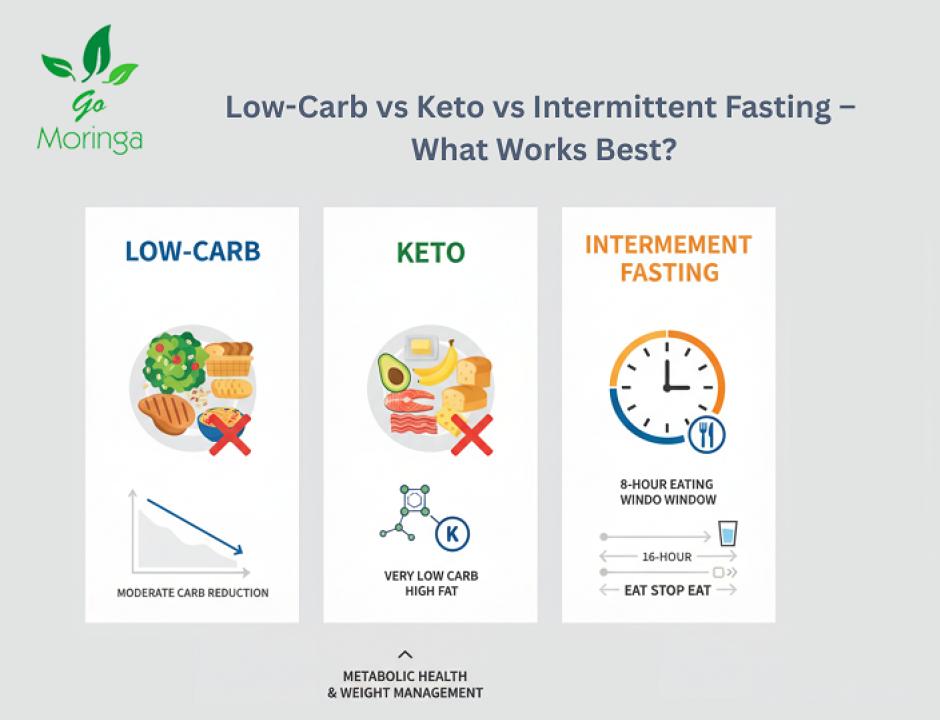
Diversity of diets that help metabolic health exists, and it is quite difficult to choose the right one among them. For example, low-carb, Keto, and intermittent fasting all claim that you can lose weight and get a boost of energy; however differentiating among them and determining which one is going to support your goals and accommodate your life> metabolic health diet for you.
Differentiating Between Low-Carb, Keto, and Intermittent Fasting
1. Low-Carb Diet: A Non-Stop Way (to Lose Weight)
The low-carb diet for weight loss helps in losing weight by cutting down on carbohydrates and at the same time increasing the protein and healthy saturated fat intake. The foundation of this diet is the perception that fewer carbs mean infrequent blood sugar spikes, which in turn allows for the body to tap into the fat it has stored for energy.
Staple foods would include whole eggs, lean meats,. leafy greens, nuts, seeds, and low carb vegetables. By reducing the processed sugar, bread and pasta you eat, you are training your metabolism to overly depend on a quick energy source.
The reason the low carb diet is sustainable, is because of flexibility to eat many foods, without added pressure of measuring everything. This diet is great for someone that wants to lose weight steadily while avoiding extremes.
2. Keto Diet: The Fat-Fueled Fat Burner
The low-carb diet might be labeled as a moderate strategy, but the ketogenic diet goes the other way to maximize and extremes. Liver ketones will be generated which will be used by the brain instead of glucose as its energy source. This will, of course, result in fat loss as well as greater mental clarity.
As noted, the keto diet can produce extremely effective results and has great benefits, and should not be assumed that it is the right diet for everyone. Individuals can experience the keto flu and have fatigue in their body and brain fog aggressively upon entering ketosis. And the keto diet can also become more challenging to sustain and follow for individuals over the long haul. The keto diet is very effective for short-term transformation, but may also require supervision from dietician or other qualified professionals for individuals with significant questions about metabolism and hormones.
3. Intermittent Fasting: Emphasizing Time Rather Than Restriction
Intermittent fasting (IF) does not limit what foods you can eat like Keto and low-carb diets do, but rather reestablishes when you eat and cycles you in and out of a fasting period. While Keto vs intermittent fasting have similar metabolic benefits such as fat burning and insulin sensitivity, intermittent fasting is much more likely to be a better fit for you because of the flexibility it provides. You can also use intermittent fasting with a balanced diet and even a low carb diet for an even greater metabolic effect.
Which Is the Best Diet for Weight Loss?
Keto diets produce quicker results; however, Keto diets require you to be extremely disciplined.
Intermittent fasting diets offer liberal, metabolic benefits but are still restrictive and do not require you to abstain from food for an extended period of time.
For many people, a combination eg: low carb intermittent fasting diet can be effective and easy to sustain for the long term.
Conclusion
These are the noticeable differences between low-carb diet, keto diet, and intermittent fasting. If you are looking forward to choosing any one of them. A dietician in Gurgaon will be able to help you in the best way possible. Look for their online presence, check out reviews, seek recommendations, and reach out to them with just a few clicks.