Plugging in a device seems simple, right? You just grab any cord and connect it. But using the wrong power cord can damage your equipment or create safety hazards. Let me show you how to match your power cord correctly to your device.
Why Matching Matters
Using the wrong power cord isn't just about whether it fits. The cord needs to deliver the right amount of electricity safely. Too much power can fry your device. Too little power means your device won't work properly. Some cords can even overheat and create fire risks if they're not rated for the job.
I've seen people try to force connections that don't fit or use adapters without checking if they're safe. Don't be that person. Taking a few minutes to check compatibility saves you from expensive repairs or replacements later.
Check Your Device's Power Requirements
Start by looking at your device. You'll find a label or sticker somewhere on it. This label tells you everything you need to know about power requirements.
Look for these key numbers:
Voltage (V): This shows how much electrical pressure your device needs. In the US, most household items use 120V. Larger equipment might need 208V or 240V.
Amperage (A): This tells you how much electrical current flows to your device. Common ratings are 15A, 20A, or 30A.
Wattage (W): Some devices list watts instead. You can calculate amps by dividing watts by volts if needed.
Frequency (Hz): In North America, this is usually 60Hz. This number matters less for matching cords, but it's good to know.
Write these numbers down. You'll need them when shopping for a cord.
Understanding Plug and Outlet Types
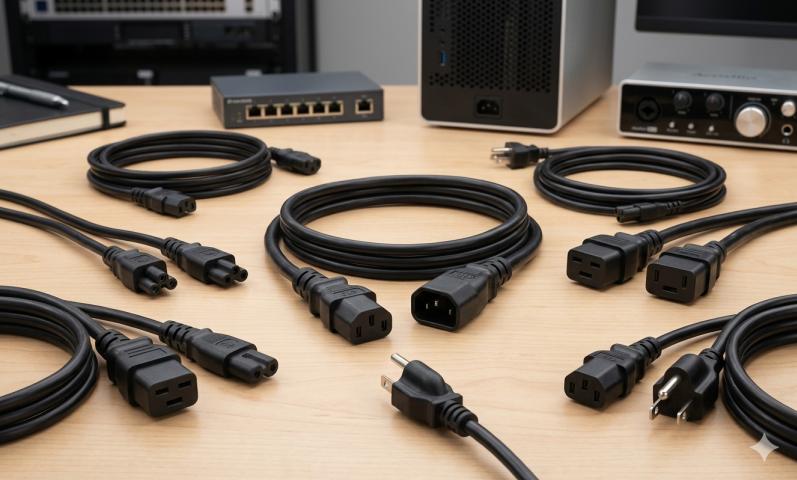
Not all plugs look the same. Different configurations exist for different power levels and uses. The shape of the plug ensures you can't accidentally connect a device to the wrong outlet.
Standard household outlets in the US are NEMA 5-15 or 5-20 outlets. These work for most everyday devices like lamps, TVs, and computers. But larger equipment needs special outlets.
The L6-30P outlet is a perfect example. The "L" stands for "locking," which means the plug twists and locks into place. This prevents accidental disconnections. The "6" indicates it's a 250V rated outlet. The "30" means it handles up to 30 amps. The "P" stands for plug (while "R" would mean receptacle).
You'll find L6-30P outlets in workshops, data centers, and industrial settings. They power heavy-duty equipment like large air compressors, welders, and server racks.
Match the Voltage First
Voltage matching is critical. Using a 120V cord on a 240V device means your device won't get enough power. Using a 240V cord on a 120V device can destroy it instantly.
Check your device label against your available outlets. If your device needs 250V and you have standard household outlets, you need an electrician to install the right outlet. Don't try to use adapters or converters unless they're specifically designed and rated for your device.
Check the Amperage Rating
Your power cord must handle at least as many amps as your device draws. If your device pulls 20 amps, your cord needs to be rated for 20 amps or higher.
Using an under-rated cord creates heat. The cord can melt, start fires, or trip circuit breakers. Always round up if you're between ratings. A 20A cord works fine for a 15A device, but a 15A cord shouldn't power a 20A device.
Consider Cord Length and Gauge
Longer cords need thicker wires. The wire thickness is measured in gauge (AWG). Lower gauge numbers mean thicker wires.
For a 15A circuit:
- Up to 50 feet: 14 AWG works
- 50 to 100 feet: Use 12 AWG
- Over 100 feet: Consider 10 AWG
For higher amperage like a 30A circuit with an L6-30P outlet, you'll typically need 10 AWG wire regardless of length.
Thinner wires in long cords cause voltage drop. Your device gets less power than it needs at the end of the cord. This makes motors run hot and equipment work poorly.
Locking vs. Non-Locking Connectors
Locking connectors like the L6-30P outlet system offer important benefits. When you plug in and twist, the connection stays secure even if someone bumps the cord.
This matters for:
- Equipment that vibrates during operation
- High-traffic areas where people might trip over cords
- Critical equipment that can't lose power suddenly
- Outdoor or industrial environments
Standard straight-blade plugs work fine for stationary equipment in protected areas. But if your device came with a locking plug, you need a locking outlet. Don't cut off a locking plug to replace it with a standard one.
Indoor vs. Outdoor Ratings
Indoor cords work great inside. But outdoor equipment needs outdoor-rated cords. Look for labels saying "suitable for outdoor use" or "weather resistant."
Outdoor cords have thicker insulation that resists:
- Moisture and rain
- UV sunlight damage
- Temperature extremes
- Oil and chemicals
Using an indoor cord outside means it breaks down faster. The insulation cracks, wires get exposed, and you risk shocks or shorts.
When to Call a Professional
Some situations require an electrician:
- Installing new outlets like an L6-30P outlet for new equipment
- Your device needs more power than your existing outlets provide
- You're not sure about your building's electrical capacity
- Old outlets look damaged or feel loose
- Circuit breakers trip frequently
Electrical work isn't a DIY project unless you're trained and licensed. The cost of hiring a professional is much less than rebuilding after a fire or replacing damaged equipment.
Quick Matching Checklist
Before you buy or use a power cord:
- Check your device's voltage requirement
- Note the amperage your device draws
- Identify the plug type you need (like L6-30P)
- Measure how long your cord needs to be
- Select the right wire gauge for length and amperage
- Confirm indoor or outdoor rating matches your use
- Verify locking or non-locking type
- Double-check everything before plugging in
Final Thoughts
Matching your power cord to your device protects your investment and keeps everyone safe. Take time to read labels, understand ratings, and choose the right cord for your needs.
When you're dealing with specialized equipment that uses outlets like the L6-30P outlet, being careful matters even more. Higher voltages and currents don't forgive mistakes.
Keep your device manual handy. Take photos of power labels on your equipment. This information helps when you need replacement cords or when asking questions at the hardware store.
The right power cord might cost a bit more upfront, but it's worth every penny. Your equipment runs better, lasts longer, and operates safely. That's a combination you can't beat.
Sources: https://www.reblogit.com/how-to-choose-the-right-nema-power-cord-for-your-electrical-equipment/