Introduction
Choosing car insurance is not just about meeting a legal requirement—it’s
about protecting your finances, your vehicle, and your peace of mind. With
multiple policy types, coverage options, and pricing structures available
today, selecting the right car insurance can feel overwhelming. Many vehicle
owners end up underinsured or overpay simply because they don’t evaluate the
right factors before buying a policy.
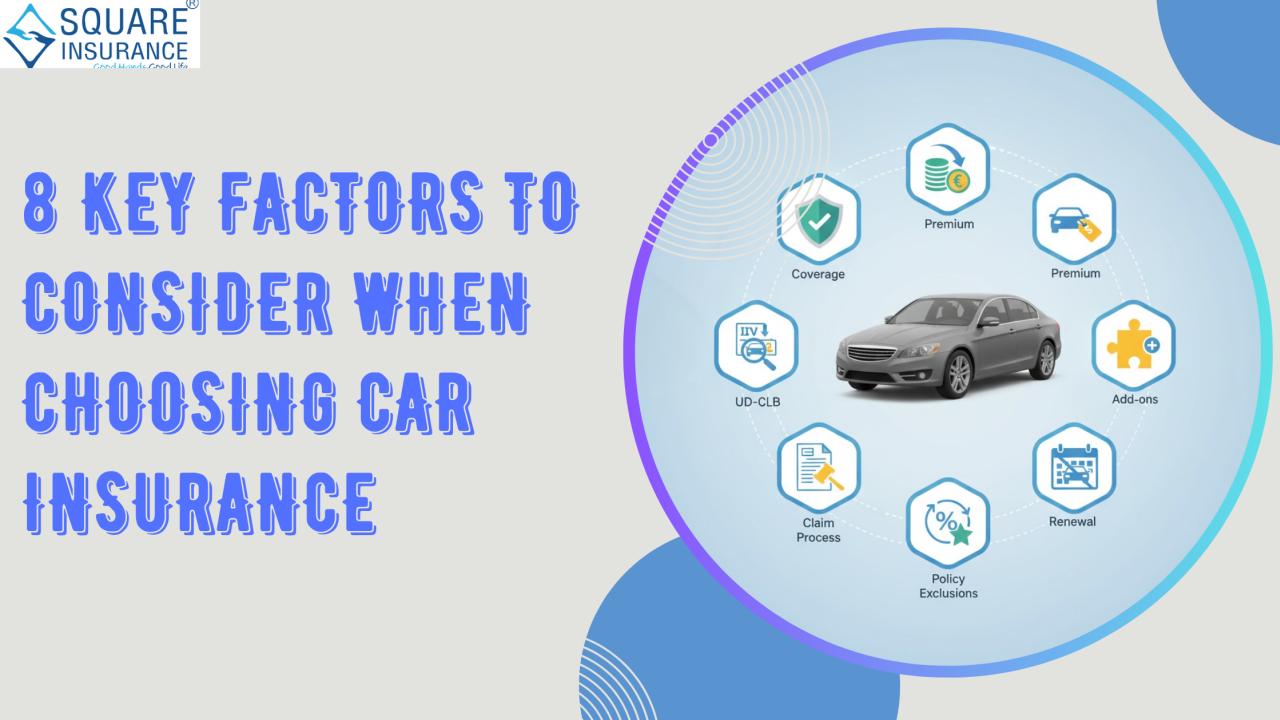
This guide breaks down the 8 key factors you must consider when choosing car insurance, helping you make an informed, confident decision that truly suits your driving needs and life>
1. Type of Car Insurance Coverage
The first and most important factor is
understanding the type of car insurance policy you need. In India, there are
three main options:
· Third-Party
Car Insurance: Mandatory by law, it covers damages or injuries caused
to a third party but does not protect your own car.
· Comprehensive
Car Insurance: Covers third-party liability as well as damage to your
own vehicle due to accidents, theft, fire, or natural disasters.
· Standalone
Own-Damage Policy: Covers damage to your car and is usually paired
with long-term third-party insurance.
For most car owners, a comprehensive policy offers the best
balance between protection and value, especially if the vehicle is new or
regularly used.
2. Insured Declared Value (IDV)
IDV represents the current market value of
your car and is the maximum amount you can receive as compensation if the
vehicle is stolen or declared a total loss.
Why IDV matters:
·
Higher IDV means higher premium but better claim
payout
·
Lower IDV reduces premium but can lead to
inadequate compensation
Choose an IDV that reflects your car’s
realistic resale value rather than blindly opting for the highest or lowest
option.
3. Premium vs Coverage Balance
Many buyers focus only on finding the lowest
premium. While saving money is important, choosing a policy purely based on
cost can be risky.
When evaluating premium:
·
Check what coverage is included
·
Understand exclusions and limitations
·
Assess claim-related benefits
A slightly higher premium often provides
significantly better protection, which can save you much more during a claim.
4. Add-On Covers and Their Relevance
Add-ons enhance your base policy, but they
should be selected carefully. Popular add-ons include:
·
Zero depreciation cover
·
Engine protection
·
Roadside assistance
·
Return to invoice
·
Consumables cover
Not every add-on is necessary for every car
owner. Choose add-ons based on:
·
Car age
·
Driving frequency
·
City traffic conditions
·
Weather and flood risk in your area
Unnecessary add-ons increase costs without
adding real value.
5. No Claim Bonus (NCB) Benefits
No Claim Bonus is a reward for claim-free
driving and can significantly reduce your premium over time.
Key points to remember:
·
NCB can go up to 50% over consecutive claim-free
years
·
It belongs to the policyholder, not the insurer
·
It can be transferred when switching insurers
Always declare your claim history correctly.
Incorrect NCB declaration can result in claim rejection.
6. Claim Process and Settlement Experience
A policy is only as good as its claim
settlement experience. Before choosing car insurance, understand how claims are
handled.
Evaluate:
·
Ease of claim filing
·
Availability of cashless garages
·
Documentation requirements
·
Turnaround time for settlement
A smooth and transparent claims process
reduces stress during accidents or emergencies and ensures timely financial
support.
7. Policy Exclusions and Limitations
Every car insurance policy comes with
exclusions—situations where claims are not payable. Common exclusions include:
·
Driving under the influence of alcohol or drugs
·
Damage due to illegal activities
·
Normal wear and tear
·
Driving without a valid license
Reading exclusions carefully helps avoid
unpleasant surprises at the time of claim and ensures you understand the real
scope of your coverage.
8. Renewal Flexibility and Long-Term Value
Car insurance should be easy to manage over
the years, not just at the time of purchase. Look for policies that offer:
·
Simple renewal process
·
Flexible add-on selection during renewal
·
Easy policy modification
·
Transparent premium recalculation
Timely renewal prevents policy lapses, loss of
NCB, and the need for vehicle inspection.
Common Mistakes to Avoid When Choosing Car
Insurance
Many car owners make avoidable mistakes such
as:
·
Choosing the cheapest policy without checking
coverage
·
Ignoring IDV impact
·
Overloading the policy with unnecessary add-ons
·
Not reviewing policy details before payment
·
Delaying renewal until the last moment
Avoiding these errors ensures better coverage
and smoother claims.
Who Should Pay Extra Attention While Choosing
Car Insurance?
While car insurance is essential for everyone,
extra caution is needed if you are:
·
A first-time car owner
·
Buying insurance for a new vehicle
·
Switching insurers
·
Living in accident-prone or flood-prone areas
·
Using your car frequently for long commutes
In such cases, coverage quality matters more than minor premium savings.
Conclusion
Choosing the right car insurance is about understanding
your vehicle, your driving habits, and your financial priorities. By carefully
evaluating these 8 key factors, you can avoid
common pitfalls and secure coverage that genuinely protects you on the road.
Platforms like Square Insurance simplify this decision-making process
by helping users compare policies clearly, understand coverage in simple terms,
and choose plans that match their real needs—without confusion or hidden
surprises. When you make an informed choice, car insurance becomes a safety net
rather than just another annual expense.
Frequently Asked Questions
1. Is
comprehensive car insurance better than third-party insurance?
Yes, comprehensive insurance offers wider protection, including damage to your
own car, which third-party insurance does not cover.
2. How
do I decide the right IDV for my car?
Choose an IDV close to your car’s current market value, balancing premium cost
and claim payout.
3. Are
add-ons mandatory in car insurance?
No, add-ons are optional and should be selected based on your specific needs.
4. Can I
change my car insurance policy at renewal?
Yes, you can modify coverage, add-ons, or even switch insurers during renewal.
5. What
happens if my car insurance policy lapses?
Policy lapse can lead to loss of NCB, higher premium, and mandatory vehicle
inspection before renewal.