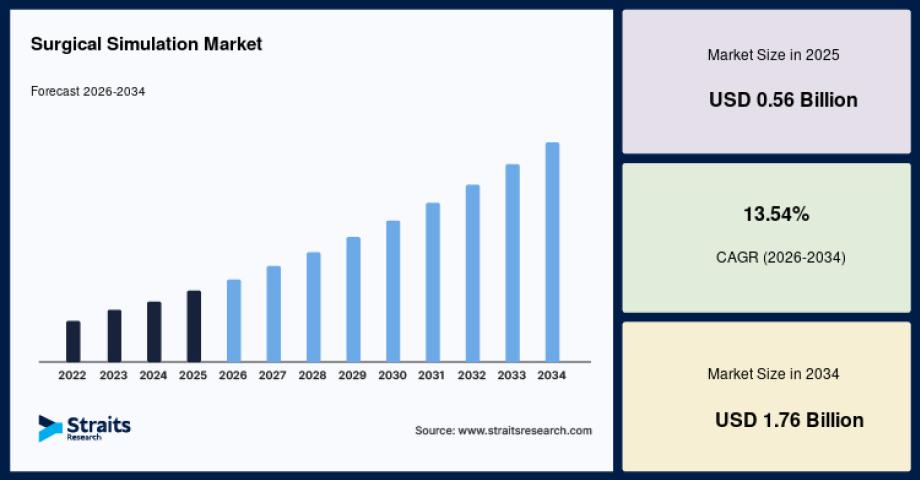
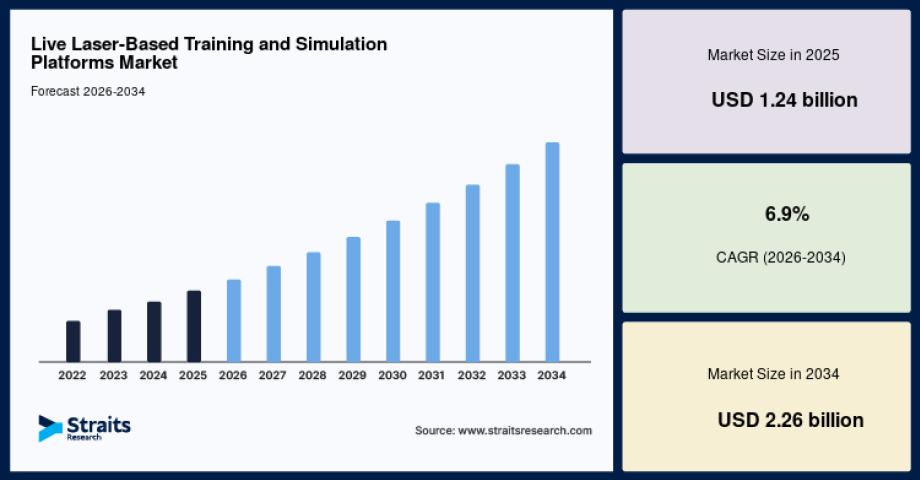
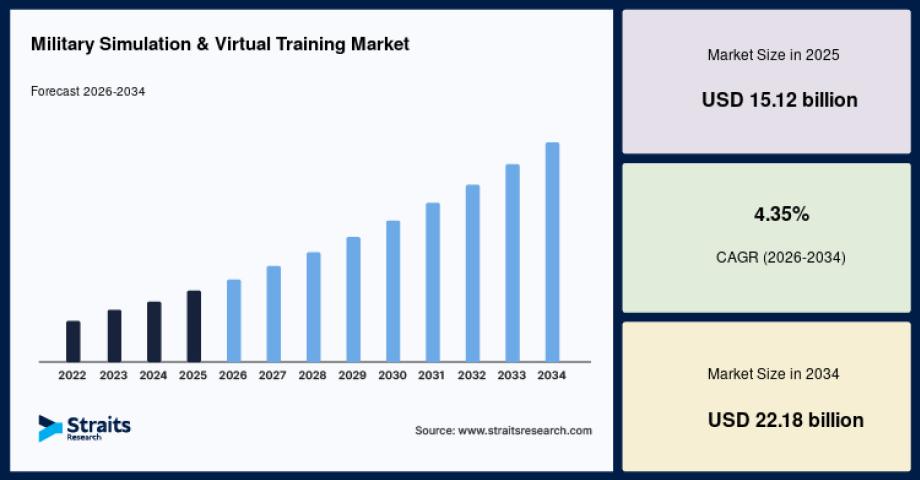
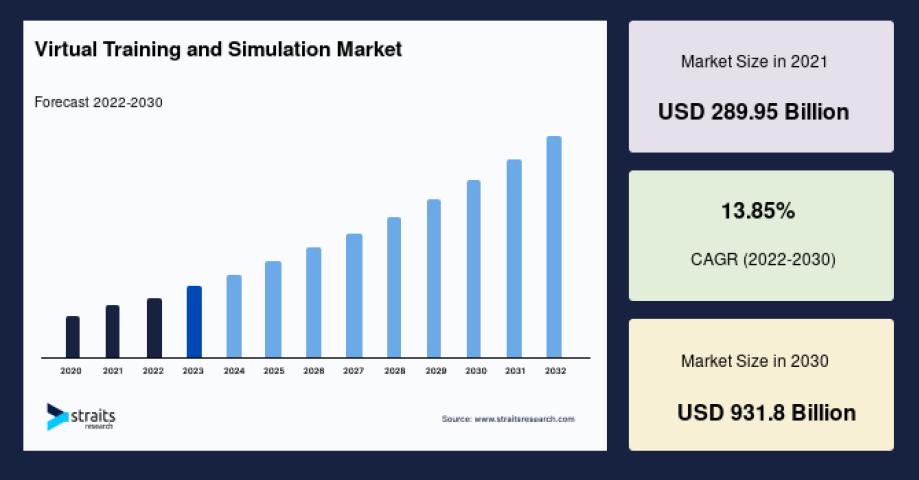
The simulation learning market is gaining strong momentum as organizations across education, healthcare, defense, aviation, manufacturing, and corporate training increasingly adopt immersive and experiential learning methods. Simulation learning enables learners to practice real-world scenarios in a controlled, risk-free digital environment, improving skill development, decision-making, and operational readiness. According to Straits Research, the growing emphasis on practical training, digital transformation in education, and advancements in simulation technologies are driving sustained growth in the simulation learning market globally.
This market research report presents a comprehensive analysis of the global simulation learning market, including market size trends, growth drivers, challenges, detailed segmentation, and an in-depth evaluation of leading market players, strictly based on insights from Straits Research.
Market Size
The global simulation learning market size was valued at USD 14.37 billion in 2024, reflecting the increasing adoption of simulation-based training solutions across multiple sectors.
The market is expected to grow from USD 15.72 billion in 2025 to reach USD 52.91 billion by 2033, growing at a CAGR of 13.43% during the forecast period (2025–2033).
Simulation Learning Market Dynamics
Market Drivers
One of the primary drivers of the simulation learning market is the growing demand for experiential and hands-on learning approaches. Traditional learning methods are increasingly being supplemented or replaced by simulation-based training, which allows learners to apply theoretical knowledge in realistic scenarios without real-world risks.
The rising adoption of simulation learning in healthcare and medical training significantly contributes to market growth. Simulation tools are widely used for clinical training, surgical practice, and emergency response training, enabling healthcare professionals to enhance skills and reduce medical errors.
The expansion of digital education and e-learning platforms is another major growth driver. Educational institutions and corporate organizations are integrating simulation-based modules into their curricula and training programs to improve learner engagement, knowledge retention, and performance outcomes.
Technological advancements in virtual reality, augmented reality, and artificial intelligence further accelerate market growth. These technologies enhance the realism, interactivity, and adaptability of simulation learning environments, making them more effective and scalable across industries.
Market Challenges
Despite strong growth prospects, the simulation learning market faces several challenges. High development and implementation costs associated with advanced simulation platforms can limit adoption, particularly among small educational institutions and organizations with budget constraints.
Another challenge is the need for specialized technical expertise. Effective deployment and maintenance of simulation learning systems require skilled professionals, which can increase operational complexity and costs.
Limited awareness and resistance to change also pose challenges in certain regions. Organizations accustomed to traditional training methods may be hesitant to adopt simulation-based learning due to concerns about return on investment and implementation complexity.
Get Your Sample Report Here: https://straitsresearch.com/report/simulation-learning-market/request-sample
Simulation Learning Market Segmentation Analysis
By Component
Based on component, the simulation learning market is segmented into software, hardware, and services. The software segment holds a significant market share due to widespread use of simulation platforms, learning management systems, and scenario-based training applications.
Hardware components, including simulators, VR headsets, and haptic devices, support immersive learning experiences and are widely used in healthcare, aviation, and defense training. Services such as consulting, integration, and maintenance play a critical role in ensuring effective deployment and long-term usability of simulation learning solutions.
By Deployment Mode
By deployment mode, the market is segmented into on-premise and cloud-based solutions. Cloud-based simulation learning solutions are gaining strong traction due to their scalability, flexibility, and cost-effectiveness. These solutions enable remote access and seamless updates, making them ideal for distributed learning environments.
On-premise solutions continue to be used in sectors requiring high data security and customized training environments, such as defense and critical infrastructure training.
By Application
Based on application, the simulation learning market includes healthcare, education, defense, aviation, manufacturing, and others. Healthcare represents a major application segment due to extensive use of simulation for clinical training, patient safety, and medical education.
The education sector is also a significant contributor, supported by growing adoption of interactive and technology-driven learning methods. Defense and aviation applications rely heavily on simulation learning for mission planning, operational training, and risk mitigation. Manufacturing organizations use simulation-based training to improve workforce skills, safety, and productivity.
By End User
By end user, the market is segmented into academic institutions, enterprises, training centers, and government organizations. Enterprises account for a substantial share as companies increasingly invest in simulation-based corporate training to enhance employee performance and reduce training-related risks.
Academic institutions and training centers continue to adopt simulation learning to improve learning outcomes and prepare students for real-world challenges. Government organizations utilize simulation learning for public safety, emergency response, and defense-related training programs.
By Region
Regionally, the simulation learning market is analyzed across North America, Europe, Asia-Pacific, Latin America, and the Middle East and Africa. North America dominates the market due to advanced technological infrastructure, high adoption of digital learning solutions, and strong presence of simulation technology providers.
Europe holds a significant market share supported by investments in digital education and workforce training initiatives. Asia-Pacific is expected to witness rapid growth due to expanding education systems, increasing corporate training investments, and rising adoption of advanced technologies. Latin America and the Middle East and Africa are gradually emerging as growth regions as digital transformation accelerates.
Purchase the complete Simulation Learning Market Report with comprehensive data and future growth projections here: https://straitsresearch.com/buy-now/simulation-learning-market
Competitive Landscape and Top Players Analysis
The global simulation learning market is highly competitive, with key players focusing on innovation, platform scalability, and application-specific solutions. According to Straits Research, major market participants emphasize technological advancements and strategic collaborations to strengthen market presence.
Leading companies invest heavily in research and development to enhance simulation realism, user experience, and integration with emerging technologies such as artificial intelligence and immersive interfaces.
Key players maintain strong global customer bases across healthcare, education, defense, and enterprise sectors, enabling steady revenue growth and market expansion.
Strategic partnerships, mergers, and acquisitions are commonly adopted to expand product portfolios, enter new markets, and strengthen technological capabilities.
Focus on customized and industry-specific simulation solutions plays a critical role in competitive differentiation, allowing companies to address unique training requirements effectively.
The competitive environment is expected to remain dynamic as demand for advanced and scalable simulation learning solutions continues to rise.
Future Outlook of the Simulation Learning Market
The global simulation learning market is projected to experience robust growth through 2033, driven by increasing demand for experiential learning, technological advancements, and digital transformation across industries. Integration of simulation learning into standard education and training frameworks will continue to shape market development.
Emerging economies are expected to offer significant growth opportunities due to expanding education infrastructure and rising investments in workforce development. Organizations that prioritize innovation, accessibility, and cost-effective deployment are likely to gain a competitive advantage during the forecast period.