In an era where online services promise instant gratification for everything from food delivery to medical consultations, the emotional support animal industry has seen its share of shortcuts. Websites offering "guaranteed approval in minutes" have flooded the market, treating what should be a meaningful mental health evaluation as little more than a transaction. At RealESALetter.com, we've chosen a different path—one that prioritizes genuine therapeutic assessment over speed and convenience.
This article pulls back the curtain on exactly how we evaluate individuals seeking an ESA Letter, why each step matters, and how our process differs from competitors who prioritize profit over patient care.
Understanding the Stakes: Mental Health in America Today
Before diving into our process, it's worth understanding why rigorous evaluation matters now more than ever. Recent data reveals that 46% of Gen Z has a mental health diagnosis, with an overwhelming 92% reporting that pets help manage their symptoms. This isn't a trend to exploit—it's a public health reality that demands responsible, compassionate responses from mental health providers.
The growing recognition of mental disorders and their impact on daily functioning has brought emotional support animals into mainstream conversation. But with increased visibility comes increased responsibility. Every legitimate ESA letter represents a clinical determination that an animal provides genuine therapeutic benefit—not a loophole for pet ownership.
Step One: Initial Consultation and Intake
Our evaluation process begins long before a licensed mental health professional reviews your case. The initial consultation serves multiple purposes: gathering comprehensive information, establishing rapport, and ensuring you understand what an ESA letter actually provides.
During intake, we collect detailed information about your mental health history, current symptoms, living situation, and relationship with your animal. This isn't a checkbox exercise. Our intake specialists are trained to ask follow-up questions, clarify ambiguities, and ensure we have a complete picture of your circumstances.
We also take this opportunity to discuss expectations. Many people seeking ESA documentation don't fully understand the difference between emotional support animals and psychiatric service dogs. While ESAs provide comfort through companionship, psychiatric service dogs are trained to perform specific tasks for individuals with disabilities. For those whose needs might be better served by task-trained animals, we discuss whether a PSD Letter might be more appropriate, and we can provide information about service dog breeds suited to various therapeutic roles.
This initial conversation typically takes 20 to 30 minutes—already longer than some competitors' entire "evaluation" process.
Step Two: Comprehensive Therapeutic Assessment
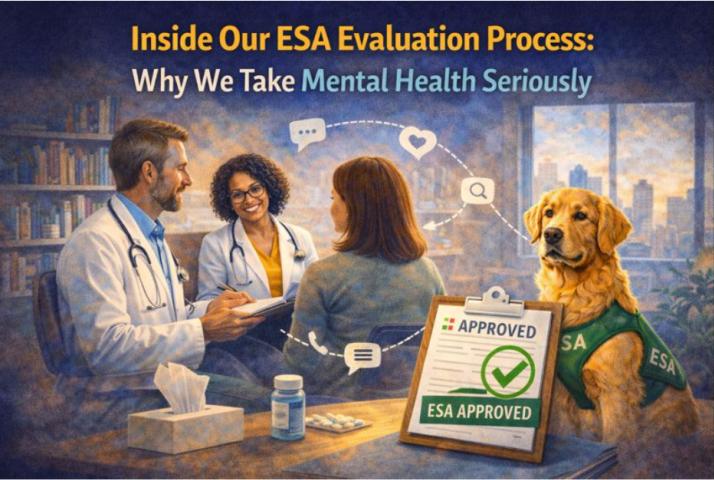
The heart of our process is a genuine clinical evaluation conducted by a licensed mental health professional. This isn't a rubber-stamp review of paperwork. It's an actual assessment designed to determine whether you have a qualifying mental health condition and whether an emotional support animal would provide legitimate therapeutic benefit.
Our clinicians evaluate several key areas during this assessment. They examine the nature and severity of your mental health symptoms, how these symptoms impact your daily functioning, your current treatment approaches and their effectiveness, your relationship with your proposed emotional support animal, and how animal companionship specifically addresses your symptoms.
Research continues to demonstrate which mental health conditions benefit most from ESA companionship. Conditions like anxiety disorders, depression, PTSD, and certain phobias often respond positively to the consistent, non-judgmental presence of an animal. Our clinicians understand these nuances and evaluate each case individually rather than applying one-size-fits-all criteria.
This assessment phase is where we most dramatically differ from "instant approval" services. Those operations often use questionnaires designed to funnel everyone toward approval, regardless of clinical appropriateness. Some don't involve licensed professionals at all. Our evaluations are conducted by therapists, psychologists, and other licensed mental health providers who take their ethical obligations seriously.
Step Three: State-Specific Compliance Review
Mental health licensing and ESA regulations vary significantly across the United States. A letter that meets requirements in California might fall short in New York. This is why our process includes a dedicated compliance review for your specific state.
We maintain comprehensive knowledge of ESA by states requirements, ensuring every letter we issue meets local standards. This includes verifying that the signing clinician is licensed in your state, that the documentation includes all required elements, and that the letter format aligns with what housing providers and others expect to see.
Understanding ESA laws is crucial for both providers and recipients. The Fair Housing Act provides federal protections, but implementation details vary. Some states have enacted additional legislation addressing ESA documentation specifically. Our compliance team stays current on these evolving requirements so you don't have to.
This step adds time to our process—typically 24 to 48 hours beyond the clinical evaluation itself. But it's time well spent. Letters that don't meet legal requirements aren't worth the paper they're printed on, regardless of how quickly they arrived.
Step Four: Documentation Standards and Quality Control
Before any letter leaves our office, it undergoes quality review against our internal ESA letter checklist. This checklist ensures every document includes the clinician's license number and state of licensure, the date of evaluation, a statement of the patient's disability-related need, the clinician's professional recommendation, and contact information for verification purposes.
We also verify that the letter is printed on appropriate professional letterhead and formatted in a way that housing providers will recognize and accept. These details matter more than many people realize. Property managers and landlords see numerous ESA letters, and they've learned to spot the hallmarks of legitimate documentation versus mass-produced templates from questionable sources.
Our documentation standards reflect our broader philosophy: every element of this process should be able to withstand scrutiny because it represents genuine clinical work, not administrative theater.
Step Five: Follow-Up Support and Ongoing Resources
Our relationship with clients doesn't end when the letter arrives. We provide follow-up support for questions about using your documentation, dealing with landlord requests, and understanding your rights. If a housing provider challenges your letter, we're available to help you respond appropriately.
We also connect clients with ongoing mental health resources. An ESA letter addresses one aspect of mental health support, but it shouldn't exist in isolation. During Mental Health Awareness Month 2026 and throughout the year, we emphasize that emotional support animals work best as part of a comprehensive approach to mental wellness.
This ongoing support reflects our understanding that mental health is a journey, not a destination. Your needs may change, your living situation may evolve, and your questions will develop over time. We're here for all of it.
Why "Instant Approval" Should Raise Red Flags
Let's be direct about what "instant approval" or "guaranteed ESA letters" actually mean: they mean no real evaluation is taking place. A legitimate clinical assessment cannot happen in five minutes. It cannot happen through a simple questionnaire. It cannot guarantee a particular outcome before the evaluation even begins.
Services offering these shortcuts create several problems. For individuals, they risk providing documentation that won't hold up when challenged, leaving you without the protections you thought you had. For the broader ESA community, they fuel skepticism among landlords and lawmakers who increasingly view all ESA letters as potential fraud. And for mental health care generally, they reduce meaningful clinical relationships to transactional exchanges.
When you see a service promising immediate approval, ask yourself: what are they actually evaluating? The answer, in most cases, is nothing meaningful at all.
Our Commitment to Transparency
We've shared our process in detail because we believe transparency builds trust. You deserve to know exactly what you're getting when you work with us, and exactly how we differ from less scrupulous alternatives.
Our evaluations take time because they're real. Our clinicians ask questions because they care about accurate assessment. Our compliance reviews exist because we want your letter to actually work when you need it. And our follow-up support continues because mental health doesn't stop being important after documentation is complete.
This approach isn't the fastest path to an ESA letter. It isn't the cheapest. But it is the right one—for you, for the mental health profession, and for the future of emotional support animal accommodations.
If you're ready to begin a genuine evaluation process with licensed professionals who take your mental health seriously, we're here to help. Because your wellbeing deserves more than a rubber stamp.