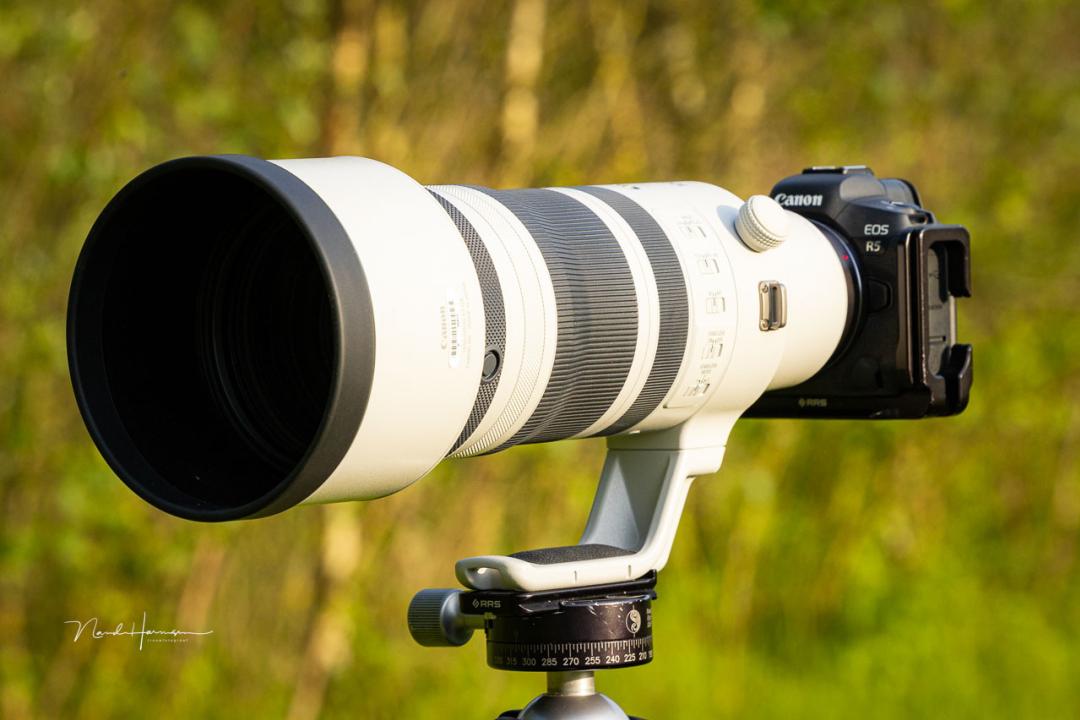

Canon RF 100-300mm f/2.8 L IS USM Review: The Ultimate Wildlife Lens
In the professional photography world, certain lenses are seen as industry standards, but rarely does a piece of glass come along that redefines an entire category. The Canon RF 100-300mm f/2.8 L IS USM is exactly that—a lens that bridges the gap between the flexibility of a zoom and the uncompromising quality of a super-telephoto prime. For wildlife and sports photographers, the ability to maintain a constant f/2.8 aperture while zooming from a medium to a long focal length is nothing short of a revelation. This lens isn't just a luxury; it is a specialized tool designed to capture fleeting moments in the harshest conditions imaginable.
A New Era for Telephoto Versatility
Traditionally, photographers had to choose between the versatility of a 70-200mm f/2.8 or the reach of a 300mm or 400mm prime. The RF 100-300mm f/2.8 eliminates this compromise. By providing a constant f/2.8 aperture across its entire range, it allows photographers to maintain fast shutter speeds even as the sun dips below the horizon. In the context of wildlife photography, where animals are often most active during the "blue hour," this extra stop of light compared to f/4 zooms is the difference between a sharp, professional image and a blurry, unusable file.
The engineering required to achieve this focal range at such a wide aperture is immense. Canon has utilized its most advanced fluorite and Ultra-Low Dispersion (UD) elements to ensure that ghosting, flare, and chromatic aberration are virtually non-existent. When used on high-resolution bodies like the EOS R5 or the flagship R1, the lens resolves a level of detail that allows for significant cropping, effectively extending its reach even further without sacrificing professional image standards.
Optical Performance and Image Stabilization
The optical formula of the RF 100-300mm is designed to deliver prime-like sharpness at every focal length. Even wide open at f/2.8, the contrast and micro-detail are staggering. This is particularly noticeable when photographing textures like fur, feathers, or the rapid movement of an athlete. To support this level of detail, Canon has integrated a powerful Image Stabilizer (IS) system. On its own, the lens provides 5.5 stops of shake correction, which increases to 6 stops when paired with a camera featuring In-Body Image Stabilization (IBIS).
For a lens of this size, stabilization is critical for handheld shooting. While many will still prefer a monopod for long events, the weight distribution and balance of the RF 100-300mm make it surprisingly manageable for short bursts of handheld action. This maneuverability is enhanced by the dual Nano USM motors, which drive the focusing groups with incredible speed and near-silent operation. For those looking to master the art of long-range photography, understanding the mechanics of a telephoto lens is vital for maximizing the potential of such a high-end investment.
Professional Construction and Durability
As an "L-series" flagship, the RF 100-300mm is built to survive the rigors of professional use. It features a heat-shielding white paint that prevents the internal optics from expanding in direct sunlight, a feature essential for outdoor sports and safaris. The weather sealing is comprehensive, protecting the internal electronics from dust, moisture, and sudden downpours. The front element is treated with a fluorine coating to repel water and oil, making it easier to clean in the field.
The lens also features a programmable control ring, a dedicated focus preset button, and a lens function button, all of which can be customized to suit a photographer's specific workflow. These tactile controls allow for instant adjustments without the need to look away from the viewfinder. For photographers in Pakistan who often work in challenging environmental conditions, this level of ruggedness provides the peace of mind necessary to focus entirely on the subject rather than the safety of the gear.
Integrating the RF Ecosystem and Alternatives
While the RF 100-300mm is a top-tier professional choice, the modern creator often needs a diverse kit to handle different shooting scenarios. The beauty of the mirrorless transition is the ability to mix high-performance zooms with specialized primes. For instance, while the 100-300mm handles the distance, a fast prime for environmental shots or behind-the-scenes content is often required. Checking the sigma 16mm 1.4 price in pakistan provides an excellent example of how photographers can supplement their heavy-duty telephoto gear with bright, wide-angle optics for a complete storytelling package.
The RF 100-300mm is also fully compatible with Canon’s RF 1.4x and 2x extenders. Adding the 1.4x extender transforms the lens into a 140-420mm f/4, while the 2x extender creates a 200-600mm f/5.6. Unlike many other zooms, the base optical quality of the 100-300mm is so high that image degradation when using these extenders is minimal, making it a truly multi-purpose tool for birders and field sports photographers.
Impact on Workflow and Creativity
The real-world impact of this lens is seen in the shots that were previously impossible. In wildlife photography, an animal might move from a distance to a close-up position in seconds. With a prime lens, the photographer would be stuck with a frame that is too tight; with a standard zoom, they might lose the light. The RF 100-300mm f/2.8 solves both problems simultaneously. It allows for a dynamic range of compositions while maintaining the elite image quality of a prime.
Furthermore, the lens's bokeh is remarkably smooth for a zoom. The 9-blade circular aperture creates pleasing out-of-focus highlights, which is essential for isolating a subject against a busy background—a common challenge in sports stadiums or cluttered forest environments. The contrast and color rendering are typical of Canon’s highest-end glass, tending towards a warm, lifelike palette that requires minimal correction in post-production.
Conclusion: The New Benchmark for Professionals
The Canon RF 100-300mm f/2.8 L IS USM represents a significant milestone in lens design. It is a lens that refuses to compromise on any front, offering the speed of a prime with the flexibility of a zoom. While its price point places it firmly in the professional category, the value it provides in terms of hit rate and creative freedom is undeniable.
- Unrivaled f/2.8 constant aperture across a versatile telephoto range.
- Dual Nano USM motors for instantaneous and silent autofocus.
- Up to 6 stops of coordinated image stabilization for handheld shooting.
- Exceptional prime-level sharpness and bokeh quality.
For the professional wildlife or sports photographer, the RF 100-300mm isn't just another addition to the gear bag; it is a transformative tool. It simplifies the kit by replacing multiple lenses while simultaneously improving the quality of the final output. In the competitive world of professional imaging, having a tool that works as hard as you do is the ultimate advantage.