Introduction
In the pulsating world of industrial machinery, power must be transferred reliably, efficiently, and consistently. At the very core of this motion lies a component so fundamental that it's often called the workhorse of industry: the transmission roller chain. These meticulously engineered assemblies of metal links, pins, and rollers are the unsung heroes inside countless machines, from food processing conveyors to heavy-duty construction equipment. Understanding their design, application, and maintenance is key to maximizing operational uptime and productivity. This article delves into why the transmission roller chain is indispensable for industrial power transmission and how choosing an expert manufacturer like Jinqiu ensures your operations never skip a beat.
Key Takeaways
- Fundamental Role: Transmission roller chains are critical for efficient mechanical power transmission, offering high strength, durability, and versatility across diverse industries.
- Precision Engineering: Proper selection involving pitch, strand, and material is crucial and depends on load, speed, and environmental conditions.
- Preventative Maintenance is Key: Regular lubrication, inspection, and correct installation significantly extend the service life of a transmission roller chain, reducing downtime and costs.
- Expert Partnership Matters: Partnering with an experienced manufacturer like Jinqiu provides access to customized solutions, rigorous quality control, and technical support, ensuring optimal chain performance.
1. The Anatomy of a Transmission Roller Chain: More Than Just Metal Links
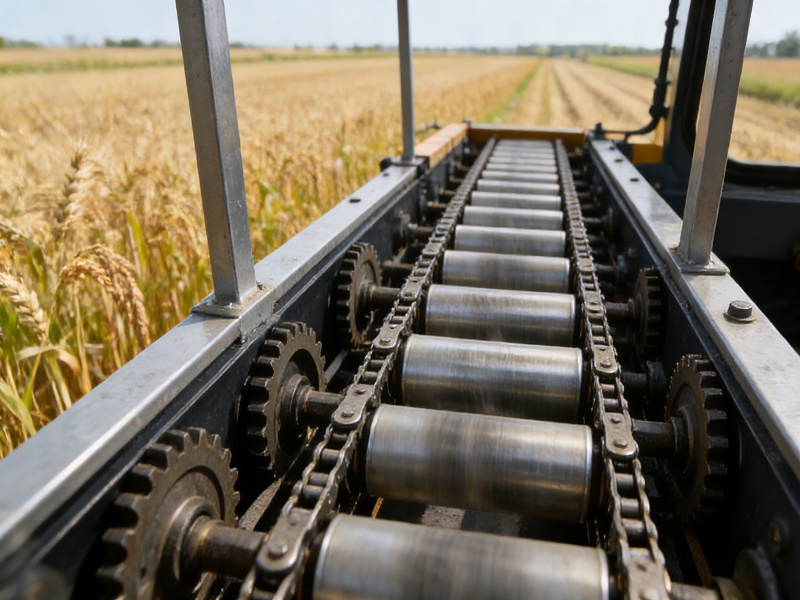
A transmission roller chain may seem simple at a glance, but it's a masterpiece of precision engineering. Each component plays a specific role:
- Inner and Outer Link Plates: These sidebars hold the chain together and withstand the primary tensile load.
- Pins: Solid cylindrical rods that connect the link plates and act as the pivot point.
- Bushings: Hardened sleeves that fit over the pins, providing a smooth surface for the roller to rotate upon.
- Rollers: The namesake components that rotate on the bushings. They engage with the sprocket teeth, minimizing friction and wear during power transmission.
This design creates a flexible yet incredibly strong mechanism that efficiently transmits power between shafts, often over longer distances than gears can accommodate.
2. Why Choose a Roller Chain? The Unbeatable Advantages
The widespread use of the transmission roller chain is no accident. It offers several distinct advantages:
- High Efficiency: They transmit power with minimal energy loss, typically 98% or higher efficiency.
- High Load Capacity: Relative to their size and weight, roller chains can handle very heavy loads.
- Constant Velocity Ratio: Unlike belts, they do not slip, ensuring a constant speed ratio between the driving and driven sprockets.
- Durability: Manufactured from high-strength steels and alloys, they withstand harsh conditions, including high temperatures and exposure to contaminants.
- Versatility: Available in countless sizes and configurations, a suitable transmission roller chain can be found for almost any application.
3. Selecting the Right Transmission Roller Chain for Your Application
Choosing the correct chain is paramount. The wrong choice leads to premature failure and costly downtime. Key selection factors include:
Table 1: Key Selection Factors for a Transmission Roller Chain
For specialized needs, manufacturers like Jinqiu offer custom transmission roller chain solutions, tailoring materials, heat treatment, and design to unique operational challenges.
4. Installation and Alignment: Setting the Stage for Long Life
Even the highest-quality transmission roller chain will fail quickly if installed incorrectly. Follow these critical steps:
- Sprocket Alignment: Misalignment is a primary cause of failure. Use a straightedge or laser tool to ensure sprockets are perfectly parallel and in plane. The International Organization for Standardization (ISO) provides guidelines on alignment tolerances.
- Proper Tensioning: The chain should have the correct amount of sag. Over-tightening causes excessive wear; under-tightening can lead to whipping and derailment. A common rule is that the chain should deflect approximately 2%-4% of the span length.
- Lubrication: Lubricate the chain beforeinitial operation. Proper lubrication reduces wear, dissipates heat, and protects against corrosion.
5. The Critical Role of Maintenance and Lubrication
Proactive maintenance is the most cost-effective strategy for maximizing the life of your transmission roller chain.
- Regular Inspection: Frequently check for signs of wear, such as chain elongation (using a wear gauge), damaged rollers, or cracked plates.
- Consistent Lubrication: Establish a lubrication schedule based on the operating environment and hours of use. The American Bearing Manufacturers Association (ABMA) offers standards for lubricant selection and application methods.
- Cleaning: In dirty environments, periodic cleaning prevents abrasive particles from accelerating wear.
Table 2: Common Signs of a Worn-Out Transmission Roller Chain
6. Jinqiu: Your Expert Partner in Transmission Roller Chain Solutions
With over 36 years of experience, Jinqiu Chain has established itself as a leading manufacturer dedicated to excellence in power transmission. Our commitment goes beyond simply selling a product; we provide engineered solutions.
- Quality Assurance: Our manufacturing processes are certified to ISO 9001:2015 standards. Every transmission roller chain undergoes rigorous testing to ensure it meets precise specifications for strength and durability.
- Custom Engineering: We understand that standard solutions don't always fit. Our technical team works directly with clients to design and produce custom chains for unique applications, from extreme temperatures to heavy-impact loads.
- Global Support & Reliability: With a vast production capacity and a network serving over 80 countries, we ensure timely delivery and provide dedicated technical support to keep your operations running smoothly. When you choose a Jinqiu transmission roller chain, you invest in reliability backed by decades of industrial expertise.
Frequently Asked Questions (FAQ)
Q1: What is the main difference between a transmission roller chain and a conveyor chain?
A: While similar in design, their primary function differs. A transmission roller chain is engineered to transmit power between two shafts, focusing on tensile strength and fatigue resistance. A conveyor chain is designed to carry products or materials directly on its links or attachments, often prioritizing resistance to abrasion and impact.
Q2: How often should I lubricate my transmission roller chain?
A: The frequency depends on operating conditions (speed, temperature, environment). A high-speed chain in a clean environment may need continuous lubrication, while a slow-moving chain might require lubrication weekly or monthly. Consult your supplier's guidelines; Jinqiu provides detailed lubrication recommendations with its products.
Q3: Can I repair a damaged transmission roller chain?
A: Minor repairs, like replacing a stiff link, are possible. However, if a chain has stretched significantly or shows widespread damage, replacement is almost always safer and more cost-effective. A worn chain accelerates wear on expensive sprockets.
Q4: Why should I choose Jinqiu for my transmission roller chain needs?
A: Jinqiu combines decades of manufacturing expertise with a customer-centric approach. We offer high-quality, ISO-certified products, custom engineering capabilities, and global technical support, ensuring you get a durable solution tailored to your specific requirements, not just an off-the-shelf component.