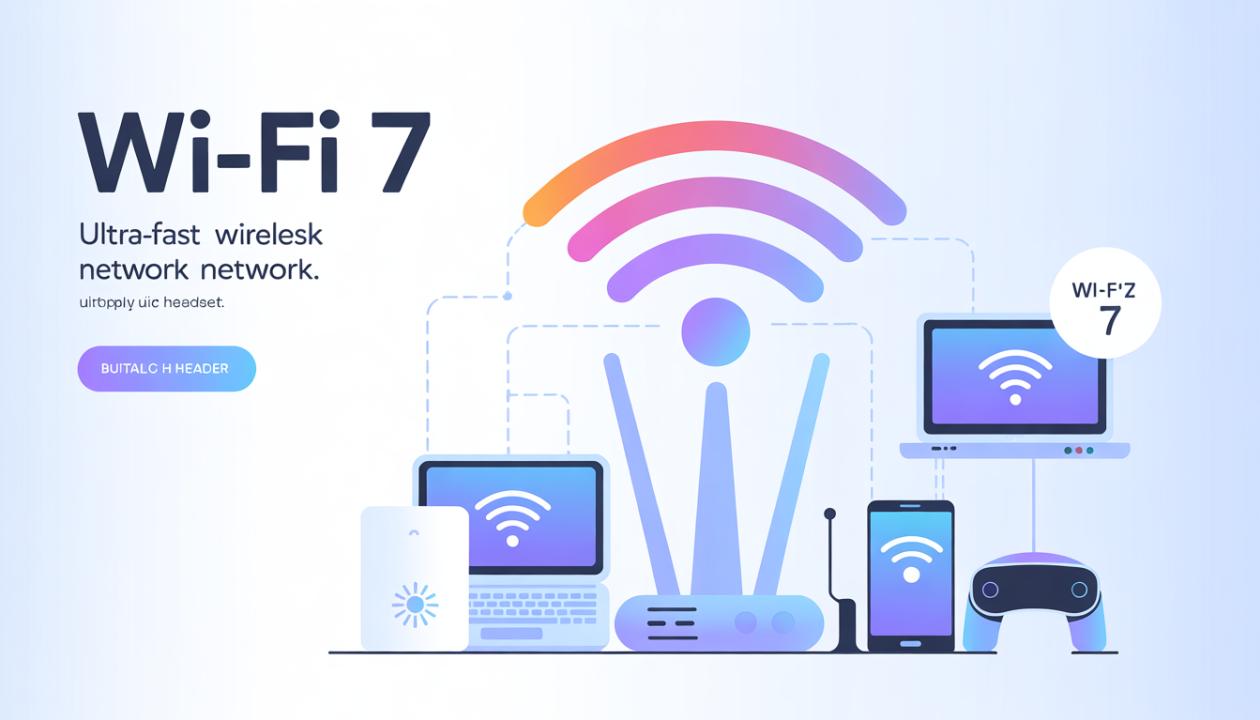
Ever wonder why your current Wi-Fi sometimes feels slow, especially when multiple devices are streaming, gaming, or working from home? You’re not alone. With more smart devices, streaming services, and online work than ever, traditional Wi-Fi can struggle to keep up.
Wi-Fi 7 is the next generation of wireless technology that promises fast speeds, very low latency, and smarter connections. If you want to upgrade your home network, set up the fastest possible internet, or understand what makes Wi-Fi 7 so important, this guide is for you.
Let’s break it down in a way that’s easy to understand, without getting lost in tech jargon.
What Is Wi-Fi 7?
Wi-Fi 7, officially called IEEE 802.11be, is the latest wireless standard following Wi-Fi 6/6E. It’s designed for:
Faster speeds – up to 46 Gbps theoretically
Lower latency – perfect for gaming, video calls, and AR/VR
Smarter connections – more devices at once without congestion
Think of it as the superhighway of wireless networks. Wi-Fi 6 improved speed and efficiency. Wi-Fi 7 takes it further by supporting multiple devices at the same time with minimal lag.
Why Wi-Fi 7 Matters
If your home or workplace has many connected devices, such as smartphones, laptops, smart TVs, gaming consoles, and IoT devices, Wi-Fi 7 can make a noticeable difference. Here’s why:
Ultra-High Speed: Ideal for 8K streaming, cloud gaming, and large file transfers.
Low Latency: Perfect for real-time applications like online gaming and virtual meetings.
Improved Reliability: Handles crowded networks better, reducing dropouts and buffering.
Future-Proof: Supports next-gen devices and emerging technologies like AR, VR, and AI-driven IoT.
Essentially, Wi-Fi 7 prepares your home or office for the digital demands of tomorrow.
Wi-Fi 7 vs Wi-Fi 6: What’s the Difference?
It’s natural to wonder if you really need Wi-Fi 7. Here’s a quick comparison:
| Feature | Wi-Fi 6 | Wi-Fi 7 |
| Maximum Speed | 9.6 Gbps | 46 Gbps |
| Channel Width | 160 MHz | 320 MHz |
| Multi-Device Support | OFDMA, MU-MIMO | Enhanced OFDMA, Multi-Link Operation (MLO) |
| Latency | Moderate | Ultra-low |
| Best Use Case | HD streaming, online work | 8K streaming, cloud gaming, VR/AR, smart home |
If Wi-Fi 6 already feels fast enough, Wi-Fi 7 isn’t necessary yet, but for high-demand households, gaming setups, or offices, it’s a game-changer.
Key Features of Wi-Fi 7
Wi-Fi 7 introduces several advanced features that make it stand out:
1. Multi-Link Operation (MLO)
MLO allows devices to connect across several channels at the same time, which reduces lag and improves reliability. Your streaming, gaming, and video calls can run more smoothly, even on busy networks.
2. Wider Channels (up to 320 MHz)
Wi-Fi 7 doubles the maximum channel width compared to Wi-Fi 6, allowing faster data transfer and higher throughput.
3. 4096-QAM Modulation
Higher modulation means more data with each signal. This improves speed and efficiency, making it ideal for applications that need a lot of bandwidth, like 8K video streaming.
4. Advanced MU-MIMO
Supports more devices simultaneously. No more network congestion during family video calls or multiplayer gaming nights.
5. Lower Latency
Critical for gaming, AR and VR experiences, and industrial IoT applications where milliseconds matter.
6. Backward Compatibility
Wi-Fi 7 works with older devices, so you don’t have to replace every device in your home or office immediately.
Benefits of Wi-Fi 7 in Everyday Life
Here’s what Wi-Fi 7 can do for you:
Seamless 8K Streaming: Watch ultra-high-definition content without buffering.
Cloud Gaming Without Lag: Enjoy fast-paced online games with ultra-low latency.
Better Smart Home Management: More IoT devices connected without slowing down your network.
Future-Proof Work Setup: Support video conferencing, file sharing, and remote work demands effortlessly.
Multiple Devices at Once: Perfect for busy households with kids, roommates, or remote work setups.
Simply put, Wi-Fi 7 isn’t just faster, it’s smarter.
Do You Need Wi-Fi 7 Right Now?
While Wi-Fi 7 promises amazing benefits, not everyone needs it immediately:
You’re a casual internet user: Browsing, social media, and HD streaming are fine with Wi-Fi 5 or 6.
You don’t have many devices: The advantage of MLO and enhanced MU-MIMO isn’t fully utilized.
Your ISP is slow: Even the fastest Wi-Fi can’t compensate for slow internet speeds.
If you want to prepare your home or office network for the future, enjoy the fastest speeds for gaming or streaming, or run a smart home setup, consider Wi-Fi 7.
Tips for Setting Up Wi-Fi 7
Choose a compatible router: Look for Wi-Fi 7 certified models.
Check your devices: Only some newer laptops, phones, and tablets will support Wi-Fi 7 initially.
Place your router strategically: Avoid walls or large obstacles to maximize speed.
Use wired connections for critical devices: Even with Wi-Fi 7, Ethernet is faster and more stable for gaming or streaming servers.
Update firmware regularly: New features and security patches are released frequently.
A little planning goes a long way to getting the best out of next-gen wireless.
Conclusion: Wi-Fi 7 Is More Than Just Faster Internet
Wi-Fi 7 marks a significant advancement in wireless technology. It’s not just about speed; it’s also about reliability, low latency, and smart connectivity for several devices. Whether you’re a gamer, work remotely, or a family managing many devices, Wi-Fi 7 gets your home or office ready for the future.
Even if you’re not upgrading right away, understanding the basics now can help you make informed choices when you decide to invest in a next-gen router or compatible devices.
With Wi-Fi 7, the future of wireless connectivity looks faster, smarter, and smoother than ever.
Frequently Asked Questions (FAQs)
1. What is Wi-Fi 7, and how fast is it?
Wi-Fi 7 is the next-generation wireless standard (IEEE 802.11be). It offers speeds up to 46 Gbps and very low latency, which leads to smoother experiences.
2. Is Wi-Fi 7 compatible with older devices?
Yes. Wi-Fi 7 is backward compatible, meaning it works with Wi-Fi 6, 5, and older devices.
3. Do I need Wi-Fi 7 for casual browsing and streaming?
Not necessarily. Wi-Fi 6 or even 5 is sufficient for everyday use. Wi-Fi 7 is most beneficial for high-demand applications.
4. When will Wi-Fi 7 routers be widely available?
Wi-Fi 7 routers are starting to roll out in 2025, but adoption will increase as compatible devices become more common.
5. Can Wi-Fi 7 improve gaming and streaming?
Absolutely. Features like Multi-Link Operation, low latency, and high throughput make gaming and streaming smoother with fewer interruptions.
6. How does Wi-Fi 7 compare to Wi-Fi 6?
Wi-Fi 7 has wider channels, faster speeds, better support for multiple devices, and lower latency. It also includes improved modulation compared to Wi-Fi 6. This makes it perfect for next-gen applications.