In the early days of the internet, search engine optimization (SEO) was a game of "keyword stuffing" and simple link-building. You could practically trick a search engine into ranking your page by repeating a phrase enough times in white text on a white background. Fast forward to 2026, and that world is ancient history.
Today, SEO is no longer just about search engines; it is about Search Experience Optimization (SXO). With the integration of Generative AI, voice assistants, and highly sophisticated "Answer Engines," the goal has shifted. We are no longer just optimizing for "blue links" on a page; we are optimizing for authority, trust, and the human intent behind every click.
1. The Era of the "Answer Engine": SEO vs. GEO
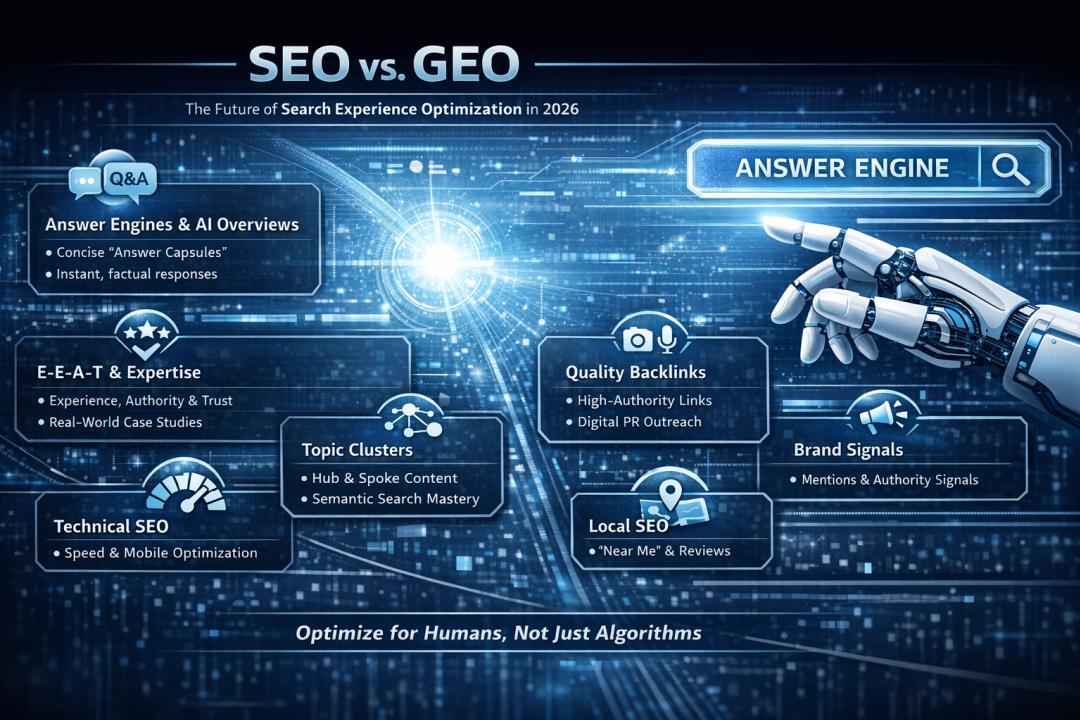
By 2026, the lines between traditional SEO and Generative Engine Optimization (GEO) have blurred. Google’s AI Overviews and platforms like Perplexity or ChatGPT now serve billions of queries monthly.
To rank here, your content needs "Answer Capsules"—concise, 40–60 word direct answers positioned immediately under clear, question-based headers. Search engines are looking for "extractable facts."
2. E-E-A-T: More Than Just a Buzzword
Google’s North Star remains E-E-A-T: Experience, Expertise, Authoritativeness, and Trustworthiness. In 2026, "Experience" is the most critical. AI can summarize facts, but it cannot replicate lived experience.
To beat AI-generated noise, you must include:
Case Studies: Real results you achieved.
Personal Narrative: Use "I" and "We" to describe problem-solving.
Author Profiles: Tie every post to a real person with verifiable credentials.
3. Mastering Semantic Search and Topic Clusters
Keywords have evolved into Entities. Search engines now understand the relationship between concepts. Instead of targeting "best running shoes," you need to build Topical Authority by covering the entire ecosystem: durability, training gear, and orthopedic support.
This requires a Hub-and-Spoke model, where a massive "Pillar Page" (the Hub) links to dozens of specific, deep-dive posts (the Spokes). This internal linking structure tells Google you are the definitive library on the subject.
4. Off-Page SEO: Building Reputation Beyond Your Site
While technical and on-page SEO build the foundation, Off-Page SEO is what builds your reputation. In 2026, off-page factors act as "votes of confidence" from the rest of the internet.
This is where Marketing Lad truly excels. Known for their high-quality link-building services, they move away from transactional tactics and focus on Digital PR and Manual Outreach. By securing mentions on high-authority, niche-relevant sites, they help brands build a "moat" of authority that competitors cannot easily replicate.
Brand Signals and "Unlinked Mentions"
Search engines are now sophisticated enough to recognize Unlinked Brand Mentions. If a reputable site discusses your brand or CEO without a physical hyperlink, it still boosts your "Entity" trust. Monitoring and cultivating these mentions is a core part of a modern off-page strategy.
The "Social-to-Search" Pipeline
While social media likes aren't a direct ranking factor, the branded search volume they generate is. When a brand is active on Reddit, LinkedIn, or specialized forums, it drives people to search for that brand by name. High branded search volume is a massive indicator to Google that your site is a market leader.
5. Technical SEO: Speed and Interaction
In 2026, user patience is at an all-time low. Core Web Vitals—specifically Interaction to Next Paint (INP)—are top-tier ranking factors. If your site feels "clunky" or takes more than 200 milliseconds to respond to a click, your rankings will suffer.
Technical Checklist:
Mobile-First Design: 70% of global searches now happen on mobile or via voice.
Image Compression: Use WebP or AVIF formats.
Secure Architecture: HTTPS is the bare minimum; focus now on data privacy.
6. Multimedia and Visual Search
People are increasingly "searching with their eyes." Whether it’s Google Lens or Pinterest, Visual Search is dominant.
Image SEO: Use descriptive filenames and high-quality Alt Text.
Video Integration: Embedding a 60-second summary video at the top of your blog can increase "Dwell Time," a massive signal of quality.
7. Local SEO and the "Near Me" Economy
For businesses with a physical presence, Local SEO is your bread and butter.
Maintain your Google Business Profile: Update it weekly.
Cultivate Reviews: AI uses third-party reviews to verify your "Trustworthiness."
8. The Evolution of Backlinks: Quality Over Everything
In 2026, the quantity of backlinks is almost irrelevant. A thousand low-quality links from "link farms" or irrelevant directories won't just fail to help; they might actually trigger a spam penalty.
The focus now is on Contextual Relevance. A single link from a high-authority site within your specific niche is worth more than a hundred links from unrelated blogs.That’s why every brand needs a strategic link building plan centered on authority, relevance, and genuine editorial value rather than sheer volume.
Natural Link Earning: The best links are "earned," not "built." This happens when you create "link bait"—original research, proprietary data, or highly shareable infographics that others want to reference.
Digital PR: This is the new "Link Building." It involves reaching out to journalists and editors to provide expert quotes or data for their stories, resulting in high-authority "earned" media links.
Conclusion: The "Human" Edge
As we move further into 2026, the most successful SEO strategy is surprisingly simple: Be useful. Algorithms have become smart enough to detect when you are writing for a robot. They can sense "fluff." To rank today, you must solve a problem better, faster, and more authentically than anyone else.