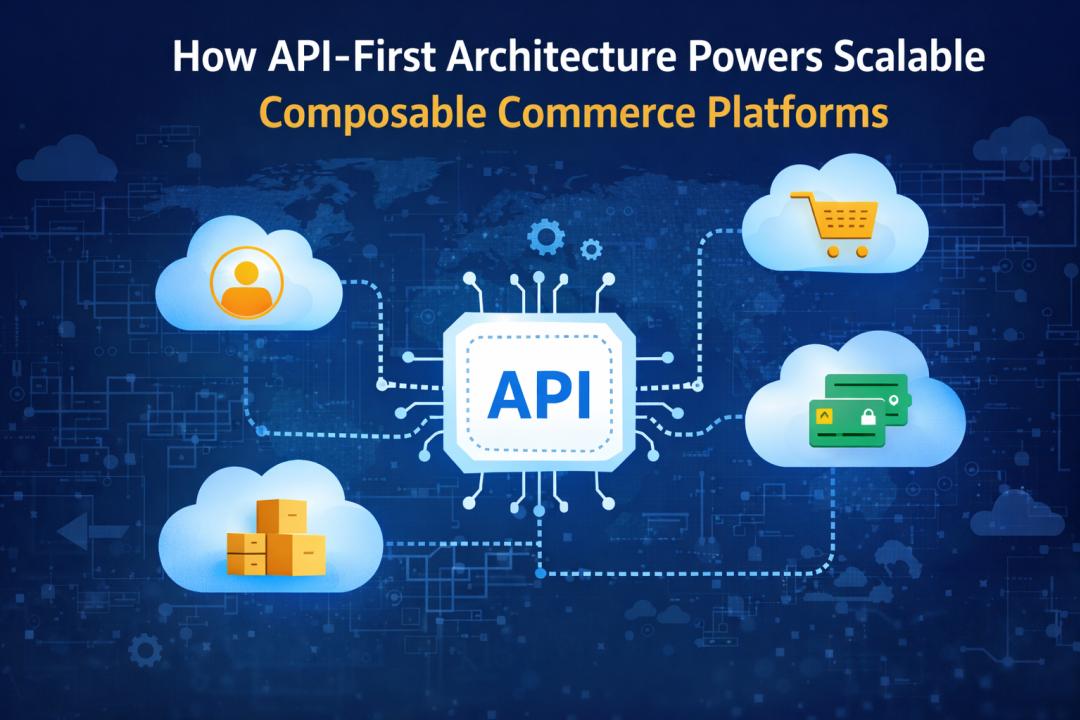
Composable commerce platforms rely on flexible technologies that can adapt quickly to changing business needs and customer expectations.
API-first architecture plays a critical role in enabling composable commerce by connecting independent services into one unified ecosystem.
In this article, you will learn how API-first systems improve scalability, integration, and performance in modern digital commerce platforms.
Understanding API-First Architecture in Composable Commerce
API-first architecture focuses on building systems where every service communicates through application programming interfaces.
This approach ensures that individual components can interact without depending on a centralized backend system.
Composable commerce platforms use API-first architecture to integrate tools such as payment gateways, inventory systems, and customer data platforms.
Instead of relying on a single vendor solution, businesses can choose the best tools and connect them seamlessly.
Why API-First Architecture Matters for Composable Commerce Scalability
Scalability is one of the biggest advantages of composable commerce platforms built on API-first principles.
Businesses can expand their operations by adding or replacing services without disrupting the entire system.
This architecture allows organizations to handle increasing traffic loads and operational complexity efficiently.
API-first commerce platforms can scale:
- Product catalogs
- Order processing systems
- Payment integrations
- Inventory management tools
- Customer experience modules
Each function operates independently, reducing performance bottlenecks during peak demand periods.
Core Components of API-First Commerce Infrastructure
Composable commerce platforms are structured using modular services that communicate through APIs.
These services work together to support daily marketplace and store operations.
Microservices Integration
Microservices break down complex commerce operations into smaller functional units.
Each microservice performs a specific task such as product listing, checkout processing, or user authentication.
API connections enable these services to exchange data in real time.
Cloud-Based Infrastructure
Cloud-native systems allow commerce platforms to allocate resources dynamically.
When traffic increases, API-enabled services can scale automatically without manual configuration.
This flexibility ensures consistent performance during promotional events or seasonal sales.
Middleware and API Gateways
Middleware tools manage communication between integrated services.
API gateways handle authentication, routing, and data synchronization between components.
This prevents data mismatches across commerce systems.
Improving Platform Flexibility with API-First Architecture
Traditional commerce platforms often limit customization due to rigid system dependencies.
Composable commerce platforms avoid these limitations through API-driven integration.
Businesses can introduce new tools such as marketing automation platforms, analytics tools, or even a flexible eCommerce CMS without rebuilding the entire platform.
This flexibility allows teams to:
- Experiment with new commerce features
- Integrate third-party services
- Improve customer experience
- Optimize backend workflows
API-first systems enable continuous innovation without downtime.
Faster Development and Deployment Cycles
API-based commerce platforms allow developers to work on individual services independently.
This reduces the time required for testing and deploying updates.
Development teams can update:
- Checkout processes
- Product recommendation engines
- Shipping modules
- Customer dashboards
without affecting other operational components.
Composable commerce environments improve development efficiency through modular deployments.
Enhancing Security Through API-Based Systems
Security remains a major concern for digital commerce platforms.
API-first architecture allows businesses to implement authentication protocols across different services.
Identity Management Systems
Centralized identity solutions help manage user access permissions across multiple services.
This reduces the risk of unauthorized system access.
Multi-Factor Authentication
Commerce platforms can integrate multi-factor authentication tools using APIs.
This improves transaction security during checkout and account login.
Omnichannel Experience Enablement
Customers interact with commerce platforms through multiple digital channels.
Composable commerce platforms use APIs to ensure consistent experiences across devices.
Businesses can manage data across:
- Mobile apps
- Web stores
- Marketplaces
- Social commerce channels
API-first integration ensures customer data remains synchronized across all touchpoints.
Real-Time Data Synchronization
Real-time data exchange improves operational accuracy across commerce platforms.
API-enabled systems allow services to communicate instantly.
Inventory Updates
Stock levels can be updated automatically across different storefronts.
Order Tracking
Customers receive real-time order updates through integrated logistics services.
Customer Data Integration
Marketing teams can use API-driven customer data platforms to personalize experiences.
Composable commerce platforms rely on real-time insights to improve performance.
Actionable Tips for Implementing API-First Commerce Systems
Businesses can improve platform scalability by adopting the following strategies:
- Use API gateways for service communication
- Implement cloud-native microservices
- Monitor API performance regularly
- Automate authentication workflows
- Enable real-time inventory updates
- Integrate middleware for data consistency
These steps help ensure reliable commerce operations.
Conclusion
API-first architecture supports composable commerce by enabling seamless communication between independent services.
It improves scalability, platform flexibility, and development efficiency for modern digital commerce systems.
Businesses that adopt API-first systems can deliver consistent customer experiences across multiple channels.
Review your commerce infrastructure and consider implementing API-driven workflows to support long-term scalability.