India has one of the largest road networks in the world, and national
highways form the backbone of long-distance connectivity. From connecting major
metropolitan cities to boosting trade, tourism, and defense logistics, these
highways play a critical role in India’s economic growth. In 2026, with ongoing
infrastructure expansion and corridor development, understanding the longest national highways in India becomes even more relevant for transporters,
businesses, and everyday commuters.
In this guide, we will explore the longest national highways in India, their
routes, total lengths, states covered, and their overall importance.
What Are National Highways in India?
National Highways (NH) are arterial roadways managed by the National
Highways Authority of India under the Ministry of Road Transport and Highways.
These highways connect major cities, ports, state capitals, and industrial hubs
across the country.
They are designed for high-speed travel and long-distance transportation,
making them crucial for economic integration and logistics efficiency.
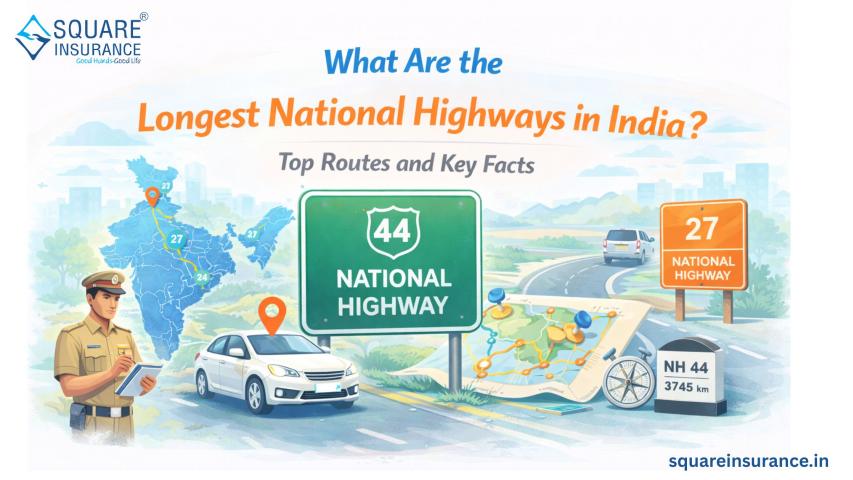
1. National Highway 44 – The Longest National Highway in India
Total Length: Approximately 4,112 km
Route: Srinagar (Jammu & Kashmir) to Kanyakumari (Tamil
Nadu)
National Highway 44 (NH 44) holds the title of the longest national highway
in India. It stretches from the northernmost region of Jammu & Kashmir to
the southern tip of Tamil Nadu, passing through multiple states including
Punjab, Haryana, Delhi, Uttar Pradesh, Madhya Pradesh, Maharashtra, Telangana,
Andhra Pradesh, and Karnataka.
Importance:
·
Connects North India to South India.
·
Facilitates trade and tourism.
·
Boosts interstate transport and freight
movement.
·
Plays a key role in agricultural and industrial
supply chains.
NH 44 replaced older highway numbers during the highway renumbering system
introduced in 2010.
2. National Highway 27 – East to West Corridor
Total Length: Approximately 3,507 km
Route: Porbandar (Gujarat) to Silchar (Assam)
NH 27 is the second-longest national highway in India. It connects the
western coastal region to the northeastern states, forming a major east-west
corridor.
Importance:
·
Strengthens connectivity to Northeast India.
·
Enhances defense mobility.
·
Promotes cross-border trade in eastern regions.
·
Supports industrial and agricultural
transportation.
3. National Highway 48 – Key Economic Corridor
Total Length: Around 2,807 km
Route: Delhi to Chennai
NH 48 connects major business hubs such as Delhi, Jaipur, Ahmedabad, Mumbai,
Pune, Bengaluru, and Chennai.
Importance:
·
Connects major metro cities.
·
Supports industrial corridors.
·
Heavy freight traffic route.
·
Crucial for automobile and IT industries.
This highway significantly contributes to India’s GDP by connecting economic
powerhouses.
4. National Highway 52 – Strategic North-East Route
Total Length: Around 2,317 km
Route: Sangrur (Punjab) to Ankola (Karnataka)
NH 52 links northern India with southern coastal regions, passing through
Rajasthan, Madhya Pradesh, and Maharashtra.
Importance:
·
Enhances regional trade.
·
Improves rural connectivity.
·
Supports interstate logistics.
5. National Highway 30 – Central India Connector
Total Length: Approximately 2,040 km
Route: Sitarganj (Uttarakhand) to Vijayawada (Andhra Pradesh)
NH 30 plays a major role in connecting central Indian states and
facilitating transportation across Uttar Pradesh, Chhattisgarh, and Telangana.
Importance:
·
Boosts agricultural distribution.
·
Supports freight movement across central India.
·
Reduces travel time between north and
south-central states.
Why Are Long National Highways Important?
1. Economic Growth
Long highways ensure smooth transportation of goods across states. They
connect ports, industrial zones, and manufacturing hubs, reducing logistics
costs.
2. Employment Generation
Highway construction and maintenance create millions of direct and indirect
jobs.
3. Defense & Strategic Importance
Long highways improve troop mobility and national security, especially near
border regions.
4. Tourism Development
Routes like NH 44 and NH 27 pass through scenic and culturally significant
areas, boosting tourism.
5. Interstate Connectivity
They help unify markets and improve supply chain efficiency.
Road Safety on Long Highways
While long highways improve connectivity, they also witness heavy traffic
and high-speed driving, increasing accident risks. Key safety measures include:
·
Following speed limits.
·
Avoiding fatigue during long drives.
·
Regular vehicle maintenance.
·
Using safety gear.
·
Keeping emergency contact numbers handy.
Long-distance travel requires careful planning and adequate insurance
protection.
Impact on Motor Insurance
Long national highways often involve intercity and interstate travel.
Vehicles frequently used for highway driving may:
·
Experience higher wear and tear.
·
Face increased accident risks.
·
Require add-on coverage like roadside
assistance.
Comprehensive motor insurance becomes essential for vehicles frequently used
on highways. Add-ons such as zero depreciation cover, engine protection, and
return-to-invoice cover can provide additional financial security.
Future of National Highways in India (2026 and Beyond)
India is actively expanding its road network under various infrastructure
initiatives. Expressways, economic corridors, and greenfield highway projects
are being developed to:
·
Reduce congestion.
·
Improve freight efficiency.
·
Enhance road safety standards.
·
Support electric vehicle infrastructure.
The continuous expansion of highways will further strengthen India’s
transport ecosystem.
Conclusion
The longest national highways in India, including NH 44 and NH 27, form the
backbone of the country’s transportation system. These routes connect north to
south and east to west, driving economic growth, trade, tourism, and strategic
mobility.
However, frequent long-distance travel also increases exposure to road
risks. Protecting your vehicle with the right motor insurance plan is
essential. Square Insurance can help you choose comprehensive coverage,
add-ons, and roadside assistance plans that provide financial security during
long highway journeys.
A strong road network powers the nation—but the right insurance protects
your journey.
Frequently Asked Questions
1. Which is the longest national highway in India in 2026?
National Highway 44 is the longest national highway in India, stretching
over 4,112 km from Srinagar to Kanyakumari.
2. What is the second-longest highway in India?
National Highway 27 is the second-longest highway, connecting Porbandar in
Gujarat to Silchar in Assam.
3. Who manages national highways in India?
National highways are managed by the National Highways Authority of India
under the Ministry of Road Transport and Highways.
4. Why are long highways important for India?
They improve trade, boost economic growth, enhance connectivity, and
strengthen national security.
5. Does highway driving affect car insurance?
Frequent highway usage may increase risk exposure, making comprehensive
insurance and add-ons like roadside assistance beneficial.