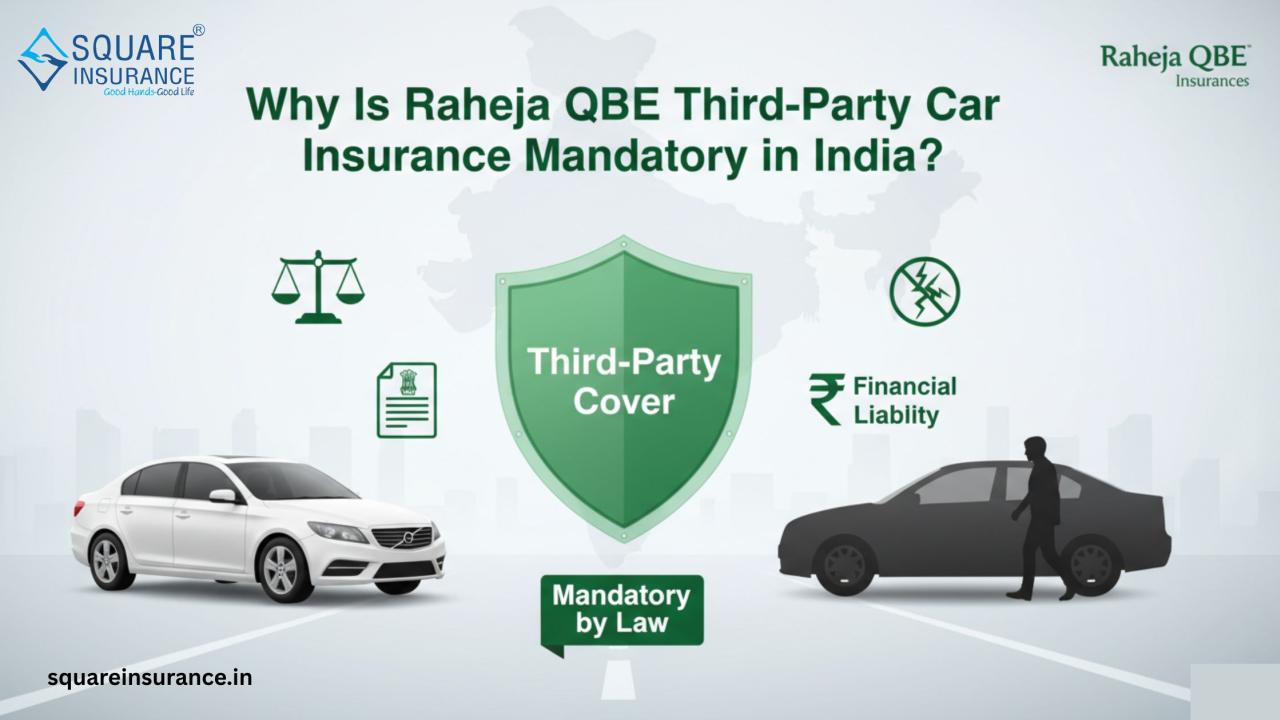
Owning a car brings convenience, independence, and comfort. However, it also comes with responsibility. Every vehicle owner must follow traffic laws and safety regulations. One of the most important legal requirements in India is having third-party car insurance. Without it, driving a vehicle on public roads is not permitted.
Many car owners choose a Raheja
QBE Third-Party Car Insurance Policy to meet this legal requirement.
But why exactly is third-party car insurance mandatory in India? What purpose
does it serve, and how does it protect both drivers and the public? Let’s
understand this in simple and clear language.
What Is Third-Party Car
Insurance?
Third-party car insurance is a type
of motor insurance that covers damages or injuries caused to another person,
vehicle, or property due to your car. It does not cover damage to your own
vehicle. Instead, it focuses only on protecting the “third party.”
In simple terms:
- First party – You (the car owner)
- Second party – The insurance company
- Third party – Any other person affected by your vehicle
If your car accidentally injures
someone or damages someone else's property, third-party insurance helps pay for
those losses.
Why Is It Mandatory in
India?
Third-party car insurance is
compulsory under Indian law. This requirement exists to ensure that victims of
road accidents receive financial support.
India has a large number of vehicles
on the road. Accidents, unfortunately, are not uncommon. When accidents happen,
medical expenses, repair costs, and legal claims can be financially
overwhelming. Making third-party insurance mandatory ensures that victims are
not left without compensation.
Legal Requirement Under the
Motor Vehicles Act
The Motor Vehicles Act clearly
states that every motor vehicle operating on public roads must have valid
third-party insurance coverage. Driving without it can result in:
- Heavy fines
- Legal penalties
- Possible suspension of driving license
- Vehicle seizure in serious cases
Therefore, having a valid Raheja QBE
Third-Party Car Insurance Policy ensures that you are legally compliant and
avoid unnecessary legal trouble.
Protection for Accident
Victims
One of the main reasons third-party
insurance is mandatory is to protect innocent victims.
If a car accident causes:
- Injury to a pedestrian
- Damage to another vehicle
- Damage to public property
- Fatal injuries
The insurance company compensates
the affected third party as per legal guidelines.
Without this system, victims might
struggle to recover financial losses from the vehicle owner directly.
Financial Security for
Vehicle Owners
Accidents can lead to expensive
claims. Medical treatment, property repair, and legal settlements can run into
large amounts.
If you do not have third-party
insurance, you would have to pay these expenses from your own pocket. This can
seriously affect your financial stability.
A Raheja QBE Third-Party Car
Insurance Policy provides financial protection by covering these liabilities,
reducing your personal financial risk.
Coverage Offered Under Third-Party
Insurance
While third-party insurance does not
cover your own car’s damage, it provides essential protection, such as:
- Bodily injury or death of a third party
- Property damage caused to others
- Legal liabilities arising from accidents
Compensation amounts are usually
decided as per legal provisions and court judgments in case of severe
accidents.
How Does It Differ from
Comprehensive Insurance?
It is important to understand the
difference between third-party and comprehensive car insurance.
Third-Party Insurance:
- Mandatory by law
- Covers damage to others only
- Lower premium compared to comprehensive plans
Comprehensive Insurance:
- Not mandatory but recommended
- Covers both third-party and own vehicle damage
- Higher premium due to wider coverage
Many car owners start with
third-party coverage to meet legal requirements and later upgrade to
comprehensive protection.
Why Is It Important for
Public Safety?
Mandatory third-party insurance
creates a system where road accident victims are financially protected. It
promotes responsible driving because vehicle owners know they are legally
accountable for any damage they cause.
It also reduces disputes between
drivers and accident victims, as compensation is handled through a structured
legal and insurance framework.
What Happens If You Drive
Without It?
Driving without valid third-party
insurance can lead to serious consequences:
- Monetary fines
- Court cases
- Legal complications
- Additional penalties for repeated offenses
Beyond legal trouble, it can also
lead to heavy financial loss if you are responsible for an accident.
Premium Regulation
Premium rates for third-party
insurance are generally regulated. This ensures affordability and uniformity
across vehicle categories.
Premium depends on factors like:
- Engine capacity
- Vehicle type
- Duration of coverage
Because coverage is standardized,
policyholders know what protection they are getting.
Claim Process in
Third-Party Insurance
If an accident occurs:
- Inform the insurer immediately.
- File an FIR if required.
- Provide accident details and documents.
- The case may be reviewed legally if compensation is
claimed.
Third-party claims sometimes involve
legal procedures, especially in cases involving serious injury or death. The
insurer handles the financial settlement as per legal direction.
Role in Promoting
Responsible Driving
Knowing that third-party insurance
is mandatory encourages vehicle owners to drive responsibly. It reminds drivers
that they are accountable for any harm caused to others.
This system supports road discipline
and fairness.
Who Should Buy It?
Every vehicle owner in India must
buy at least third-party insurance before driving on public roads. Whether your
car is new or old, private or commercial, insurance is not optional—it is
compulsory.
Renewing the policy on time is
equally important to avoid lapses.
Is It Enough Protection?
While third-party insurance is
legally sufficient, it does not cover your own vehicle’s repair costs. Many car
owners prefer upgrading to comprehensive coverage for better protection.
However, even if you choose only
third-party coverage, it fulfills the legal requirement and protects you from
third-party liabilities.
Conclusion
Third-party car insurance is not
just a rule; it is a system designed to protect everyone on the road. The
requirement ensures that accident victims receive compensation and that vehicle
owners are financially safeguarded against legal liabilities.
Having a valid Raheja QBE
Third-Party Car Insurance Policy means you are following the law, protecting
others, and securing yourself from unexpected financial burdens. Road safety is
a shared responsibility, and third-party insurance plays a crucial role in maintaining
fairness and financial balance in unfortunate situations.
Driving comes with responsibility.
Insurance ensures that when accidents happen, there is a structured way to
manage losses and support those affected.