If Your Electrical Design Has No Buffer, It Has No Brain
An electrical system without buffer isn’t efficient.
It’s reckless.
In commercial environments, buffer — also called headroom or margin — is the thinking space inside a system. It’s what allows infrastructure to absorb stress, growth, faults, and human unpredictability without collapsing.
If your electrical design has no buffer, it wasn’t engineered with foresight.
It was drafted to survive paperwork.
What “Buffer” Actually Means
Buffer isn’t wasted capacity.
It’s intentional design intelligence.
In practical terms, buffer looks like:
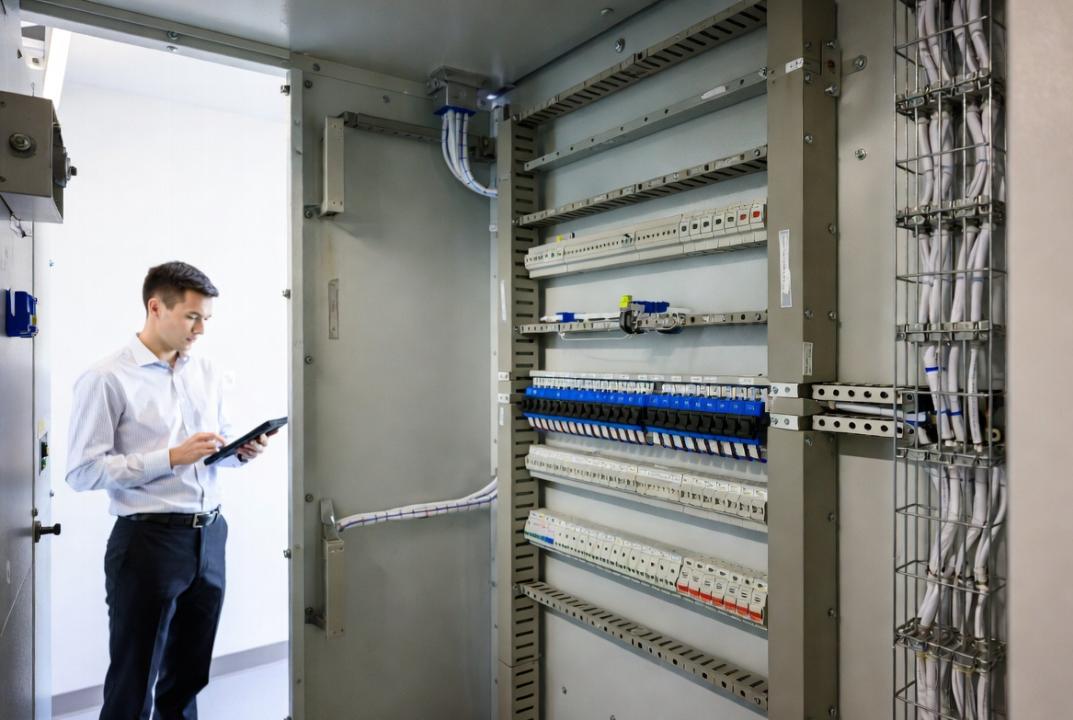
Spare ways in switchboards
Additional capacity above calculated demand
Conservative cable sizing
Logical circuit separation
Room for future tenancy growth
Allowance for simultaneous peak load
It’s the gap between “maximum possible load” and “actual operating load.”
Without that gap, your system runs tight.
And tight systems don’t think ahead.
Tight Designs Aren’t Smart — They’re Fragile
When electrical systems are value-engineered too aggressively, buffer is usually the first thing removed.
Switchboards are sized to match current load exactly.
Diversity assumptions are optimistic.
Spare circuits are eliminated to reduce cost.
Future expansion is deferred “until needed.”
On paper, it looks precise.
In operation, it’s restrictive.
Commercial buildings aren’t static environments. Staff numbers grow. Equipment increases. Operating hours expand. HVAC loads intensify during extreme weather.
A design with no buffer assumes none of that will happen.
That’s not engineering.
That’s optimism.
Real-World Conditions Aren’t Predictable
Electrical systems operate in dynamic conditions:
Morning startup surges
Seasonal demand spikes
Unexpected equipment additions
Changes in tenancy density
Fault conditions redistributing load
If your system is already running close to capacity under normal conditions, any deviation becomes a risk multiplier.
Buffer absorbs variability.
Without it, variability becomes failure.
The Cost of Designing Without Margin
Systems designed without buffer tend to experience:
Nuisance tripping under peak demand
Limited ability to expand
Accelerated component wear
Heat stress in switchboards
Expensive mid-life upgrades
None of these problems appear immediately.
They surface gradually — often after the building is fully occupied and operational.
Retrofitting capacity later is always more expensive and disruptive than building it in during installation.
Intelligent Electrical Design Plans for Imperfection
A proper Commercial Electrician Sydney doesn’t design for perfect conditions.
They design for imperfect ones.
At Lightspeed Electrical, that means:
Calculating realistic peak simultaneous demand
Allowing structured headroom in boards
Separating critical systems logically
Modelling expansion scenarios
Ensuring the system can handle stress, not just pass inspection
Because intelligent infrastructure anticipates change.
👉 https://www.lightspeedelectricals.com.au/
Buffer Is the Difference Between Control and Chaos
Think of buffer as operational breathing room.
Without it:
Growth feels stressful.
Equipment additions trigger upgrades.
Minor faults escalate quickly.
Expansion becomes disruptive.
With it:
The system absorbs demand spikes.
Tenancy changes are manageable.
Load increases don’t immediately force redesign.
Stability is maintained under pressure.
Buffer isn’t overspending.
It’s risk management.
The Bottom Line
If your electrical design has no buffer, it has no brain.
Commercial electrical systems must be engineered with margin, foresight, and adaptability.
Designing to the absolute limit isn’t precision.
It’s vulnerability.
Because real buildings don’t operate in perfect, controlled conditions.
They operate in messy, evolving, high-demand environments.
And only systems with buffer can handle that reality without becoming fragile.
Smart design doesn’t just calculate today’s load.
It protects tomorrow’s uncertainty.