Introduction: The Rising Importance of Artificial Intelligence in Business
In the modern digital economy, organizations are constantly looking for ways to become faster, smarter, and more efficient. The rapid growth of digital data, increasing customer expectations, and intense global competition are pushing businesses to adopt advanced technologies that can help them stay ahead. One of the most transformative technologies driving this change is artificial intelligence solutions.
Artificial intelligence is no longer a concept limited to research labs or futuristic discussions. It has become a practical and powerful tool that organizations use to analyze data, automate processes, and improve decision-making. From startups to global enterprises, companies are increasingly integrating AI into their operations to build intelligent systems that can adapt and learn over time.
As digital transformation continues to evolve, artificial intelligence solutions are emerging as a key driver of innovation, enabling businesses to unlock insights, enhance productivity, and deliver more personalized experiences to their customers.
Understanding Artificial Intelligence Solutions
Artificial intelligence solutions refer to advanced technological systems designed to mimic human intelligence and perform complex tasks using data-driven algorithms. These solutions are built using technologies such as machine learning, natural language processing, computer vision, and predictive analytics.
Unlike traditional software systems that follow predefined instructions, AI-powered solutions can learn from historical data and continuously improve their performance. This learning capability allows organizations to process vast amounts of information and identify patterns that may not be visible through conventional analysis.
For example, AI systems can analyze customer interactions, operational metrics, and market trends to generate insights that support strategic decision-making. By transforming raw data into actionable intelligence, artificial intelligence solutions help businesses operate more efficiently and make more informed choices.
Why Businesses Are Adopting Artificial Intelligence Solutions
Organizations across industries are increasingly adopting artificial intelligence solutions because of the significant value they deliver. One of the primary benefits of AI is its ability to handle large volumes of data quickly and accurately.
In today’s digital environment, businesses generate enormous amounts of data through websites, mobile applications, customer transactions, and internal systems. Extracting meaningful insights from this data manually can be extremely challenging. AI-powered tools simplify this process by analyzing data in real time and identifying trends that can guide business strategies.
Another key advantage is automation. Many organizations spend valuable time and resources on repetitive tasks such as data entry, document processing, and customer service queries. Artificial intelligence solutions can automate these activities, allowing employees to focus on higher-level tasks that require creativity and strategic thinking.
By improving productivity and reducing operational costs, AI enables organizations to allocate resources more effectively and achieve better business outcomes.
The Role of Artificial Intelligence in Enhancing Customer Experience
Customer expectations have changed dramatically in recent years. Consumers now expect businesses to provide fast responses, personalized interactions, and seamless digital experiences. Companies that fail to meet these expectations risk losing customers to competitors that offer more responsive and tailored services.
Artificial intelligence solutions help organizations understand customer behavior by analyzing large datasets that include browsing patterns, purchase history, and engagement metrics. These insights allow businesses to create personalized experiences that resonate with individual customers.
For instance, e-commerce platforms use AI-driven recommendation engines to suggest products based on user preferences. Customer support teams deploy AI-powered chatbots that can instantly answer common questions and assist users around the clock. Marketing teams use predictive analytics to design campaigns that target the right audience at the right time.
These applications demonstrate how AI is transforming the way businesses interact with customers, creating more meaningful and efficient experiences.
Industry Applications of Artificial Intelligence Solutions
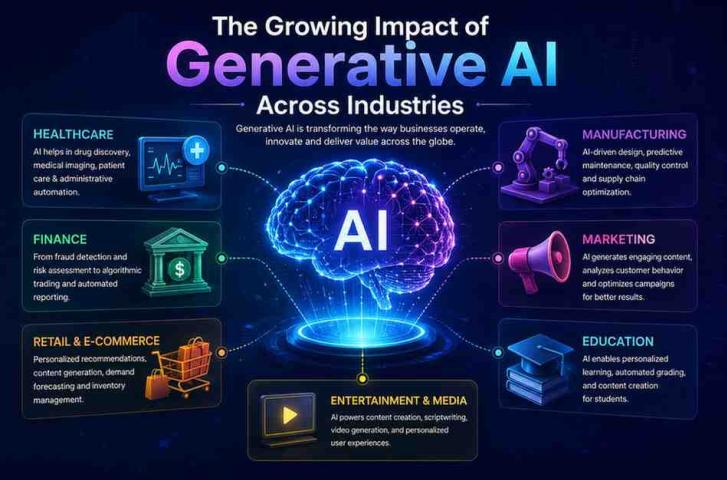
The impact of artificial intelligence solutions extends across numerous industries, each benefiting from AI in unique ways. In healthcare, AI-powered diagnostic systems help doctors detect diseases earlier and more accurately by analyzing medical images and patient data.
In the financial services sector, artificial intelligence plays a critical role in fraud detection, risk assessment, and algorithmic trading. Banks and financial institutions rely on AI models to monitor transactions and identify suspicious activity in real time.
Retail businesses use AI to optimize inventory management, forecast demand, and create personalized shopping experiences. Similarly, manufacturing companies use predictive maintenance systems powered by AI to detect potential equipment failures before they occur, reducing downtime and operational costs.
These examples illustrate how artificial intelligence solutions are enabling organizations to solve complex challenges and operate more efficiently across diverse industries.
The Emergence of Generative AI and Intelligent Systems
One of the most exciting developments in the AI landscape is the emergence of generative AI technologies. These systems are capable of producing new content, including text, images, software code, and product designs.
Generative AI tools are helping organizations accelerate creativity and innovation. Marketing teams can generate content more efficiently, software developers can automate portions of the coding process, and design teams can experiment with new concepts faster than ever before.
At the same time, autonomous AI agents are beginning to transform business workflows. These intelligent systems can analyze data, make decisions, and perform tasks independently with minimal human intervention. As these technologies continue to evolve, artificial intelligence solutions will become even more powerful and capable of handling complex business processes.
Challenges in Implementing Artificial Intelligence Solutions
While the benefits of AI are significant, implementing artificial intelligence solutions can present several challenges. One of the most common obstacles organizations face is ensuring the availability of high-quality data.
AI models rely on large datasets for training and analysis. If the data used to train these models is incomplete or biased, the results generated by the system may not be reliable. Businesses must invest in strong data management practices to ensure that their AI systems operate effectively.
Another challenge involves integrating AI technologies with existing enterprise infrastructure. Many organizations still rely on legacy systems that were not designed to support advanced AI capabilities. Successfully integrating modern AI platforms with these systems requires technical expertise and careful planning.
Additionally, there is a growing need for skilled professionals who can design, develop, and manage AI solutions. As demand for AI talent increases, organizations must invest in training programs and partnerships to build the necessary expertise.
The Future of Artificial Intelligence Solutions
The future of artificial intelligence solutions looks incredibly promising. Advances in computing power, cloud infrastructure, and machine learning algorithms are enabling the development of increasingly sophisticated AI systems.
In the coming years, AI is expected to become deeply embedded in everyday business operations. Intelligent assistants will support decision-making, predictive models will anticipate market trends, and autonomous systems will handle complex workflows.
Organizations that adopt AI strategically will gain a significant competitive advantage. By leveraging artificial intelligence solutions, businesses can enhance efficiency, accelerate innovation, and deliver superior value to their customers.
As technology continues to evolve, AI will move from being a competitive differentiator to becoming a fundamental component of modern enterprise infrastructure.
Conclusion: AI as the Foundation of the Intelligent Enterprise
Artificial intelligence solutions are reshaping the way organizations operate in the digital age. By enabling advanced data analysis, intelligent automation, and predictive decision-making, AI empowers businesses to achieve new levels of efficiency and innovation.
From improving customer experiences to optimizing operations and enabling new products and services, AI is transforming industries across the globe. Companies that successfully integrate artificial intelligence into their strategies will be better equipped to navigate the challenges of a rapidly changing business environment.
As businesses continue their digital transformation journeys, artificial intelligence solutions will play a central role in building the intelligent enterprises of the future.