Choosing where to place an air conditioner is not just a construction detail. The location of an AC unit directly affects cooling efficiency, maintenance accessibility, noise levels, and even the lifespan of the system. Many homeowners focus on the brand or capacity of the AC but overlook placement, which can significantly influence overall performance.
In recent years, side yard installation has gained attention as an alternative to traditional backyard or open-area placement. Homeowners planning a new installation or system replacement often want to understand how these two options compare. If you want to understand about side yard air conditioner, you can read this detailed guide.
This article explains the practical differences between side yard and traditional AC placement, how each setup works, and which one may be the better choice depending on property layout and cooling requirements.
What Is Traditional AC Placement?
Traditional AC placement refers to installing the outdoor condenser unit in a backyard, open ground area, or near the rear wall of a home. This has been the most common installation method for decades.
In many homes, especially older constructions, HVAC contractors placed the condenser where there was ample space, good airflow, and minimal visual concern.
Common locations for traditional placement
- Backyard corners
- Rear side of the house
- Open ground space behind the property
- Utility zones near other mechanical systems
Why traditional placement became the standard
Historically, homes had larger backyards and fewer design constraints. Installing the AC unit in the rear portion of the property helped reduce noise near living spaces and kept the equipment out of sight from the street.
However, as urban properties become smaller and lot sizes shrink, the limitations of traditional placement are becoming more noticeable.
What Is Side Yard AC Placement?
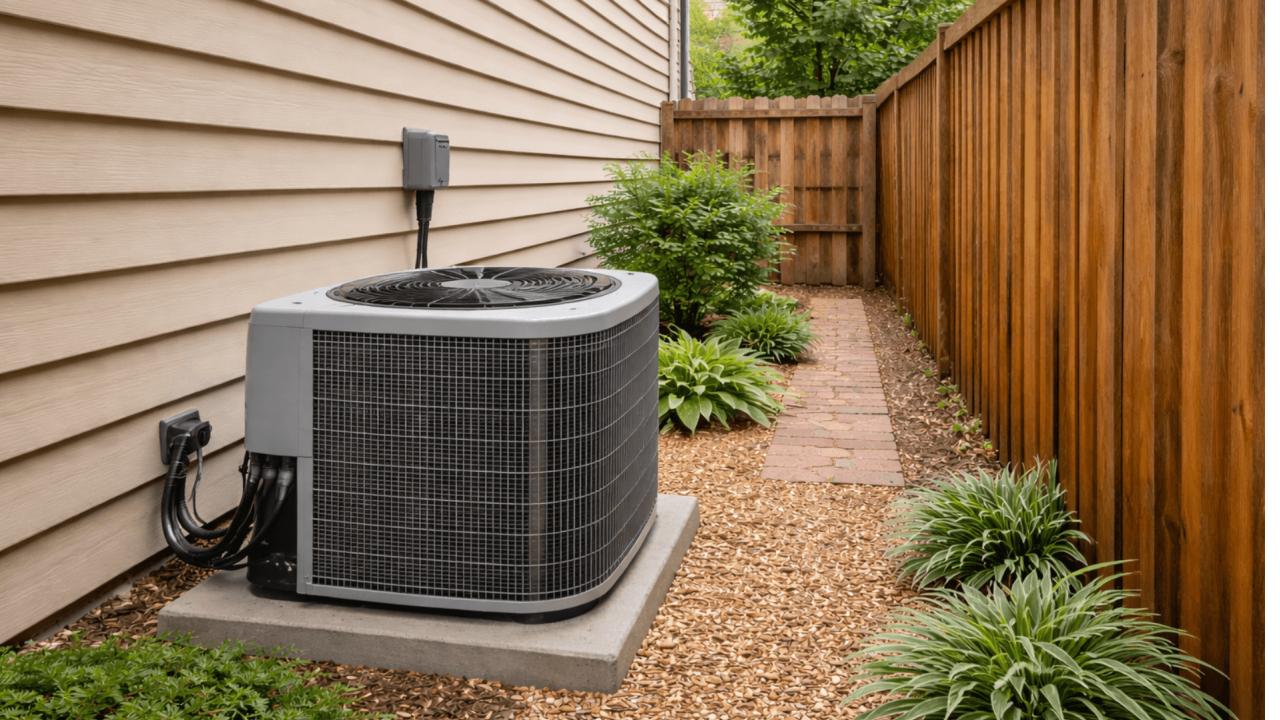
Side yard placement refers to installing the outdoor condenser unit along the narrow space between the house and the property boundary.
This location is often used in modern housing developments where backyard space is limited or reserved for landscaping and outdoor living areas.
Typical features of side yard installations
- Installed along the side wall of the house
- Positioned between property boundaries
- Designed with proper airflow clearance
- Often hidden from the main view of the home
Side yard installations are becoming increasingly common in new residential construction because they make better use of available property space.
Key Differences Between Side Yard and Traditional AC Placement
Although both setups serve the same purpose, the placement can influence system performance, comfort, and maintenance.
1. Space Utilization
Traditional Placement
Backyard installations require more open space around the unit. Contractors usually maintain clearance on all sides to ensure airflow and service access.
This can reduce usable backyard space, especially in smaller properties.
Side Yard Placement
Side yards often remain unused in many homes. Installing the AC unit there allows homeowners to preserve backyard areas for patios, gardens, or recreational use.
In urban homes with limited lot size, this approach helps maximize usable outdoor space.
2. Airflow and System Efficiency
Airflow around the condenser unit is critical for efficient cooling.
Traditional Setup
Backyard placement typically provides better open airflow because there are fewer surrounding walls. This can help the system release heat more easily during operation.
Side Yard Setup
Side yard installations require careful planning. If the unit is installed in a narrow area with poor ventilation, heat buildup may reduce efficiency.
Professional installers ensure proper spacing and airflow clearance to prevent this issue. When installed correctly, side yard systems can perform just as efficiently as traditional placements.
3. Noise Impact
Outdoor AC units generate sound while operating.
Traditional Placement
Placing the unit behind the house often keeps the noise away from living rooms and bedrooms. However, it may still be noticeable in outdoor entertainment areas.
Side Yard Placement
Side yard installations can bring the unit closer to interior walls. Without proper placement, noise could be heard inside certain rooms.
Modern AC systems are significantly quieter than older units, and proper installation techniques help minimize noise transfer.
4. Maintenance and Accessibility
Routine servicing is necessary for AC performance and longevity.
Traditional Placement
Backyard installations generally provide ample room for technicians to inspect, clean, and repair the system.
However, if the unit is placed far from the house, refrigerant line length may increase, which can sometimes complicate servicing.
Side Yard Placement
Side yard units are usually closer to the home’s mechanical systems. This can shorten refrigerant line runs and simplify certain maintenance tasks.
The key factor is ensuring enough clearance around the unit for technicians to work safely.
5. Visual Appearance
Many homeowners care about how mechanical systems affect the appearance of their property.
Traditional Placement
Backyard units may still be visible from outdoor seating areas or through windows facing the rear of the house.
Side Yard Placement
Side yard installation often keeps the unit hidden from the main outdoor spaces. This can help maintain a cleaner visual layout in the backyard.
Some homeowners also use landscaping or fencing to further conceal the system.
6. Installation Complexity
The complexity of installation varies depending on property layout.
Traditional Placement
In homes with large yards, installation is usually straightforward. Contractors have plenty of space to place the condenser and route refrigerant lines.
Side Yard Placement
Side yard installations may require more planning. Contractors must measure clearances, ensure proper airflow, and comply with local building codes.
Despite this, modern HVAC installation practices have made side yard setups increasingly common and reliable.
Which Placement Works Better for Cooling Performance?
From a technical standpoint, the cooling performance of an AC system depends more on proper installation and system sizing than the specific location of the outdoor unit.
Both side yard and traditional placements can deliver efficient cooling if the installation meets these conditions:
- Adequate airflow clearance
- Proper condenser placement
- Correct refrigerant line installation
- Professional system sizing
- Compliance with manufacturer guidelines
When these requirements are met, the difference in cooling performance between the two placements is minimal.
When Side Yard Placement Is the Better Choice
Side yard installations often work well in the following situations:
- Homes with limited backyard space
- Properties with narrow lots
- New construction homes with planned mechanical zones
- Homeowners who want a cleaner backyard layout
In many modern residential designs, the side yard is intentionally reserved for HVAC systems to maintain functional outdoor living areas.
When Traditional Placement May Be More Suitable
Traditional placement may still be the better option in some homes.
Examples include:
- Large backyard properties
- Homes with wide open outdoor spaces
- Properties where side yard clearance is limited
- Older homes designed with rear HVAC placement
If space is not a constraint, backyard installation can still provide excellent airflow and convenient service access.
Factors to Consider Before Choosing AC Placement
Before deciding on a location, homeowners should consider several practical factors.
Property layout
The shape and size of the property often determine the most suitable placement.
Local building codes
Some municipalities have regulations regarding condenser placement, clearance requirements, and distance from property lines.
Noise considerations
Bedrooms, living rooms, and outdoor seating areas should be considered when selecting a location.
Maintenance accessibility
Technicians must be able to safely access the unit for inspections and repairs.
Airflow clearance
Every AC condenser requires sufficient open space to release heat efficiently.
Working with experienced HVAC professionals helps ensure these factors are properly evaluated during installation planning.
Final Thoughts
The debate between side yard and traditional AC placement is less about which option is universally better and more about which setup works best for a specific property.
Traditional placement remains effective for homes with larger outdoor areas and fewer space constraints. On the other hand, side yard installation offers a practical solution for modern homes where efficient use of space is essential.
When properly designed and professionally installed, both placements can support efficient cooling, reliable system performance, and long-term durability.
For homeowners planning a new AC installation or system replacement, the most important step is consulting experienced HVAC professionals who can evaluate the property layout and recommend the most effective placement for the system.