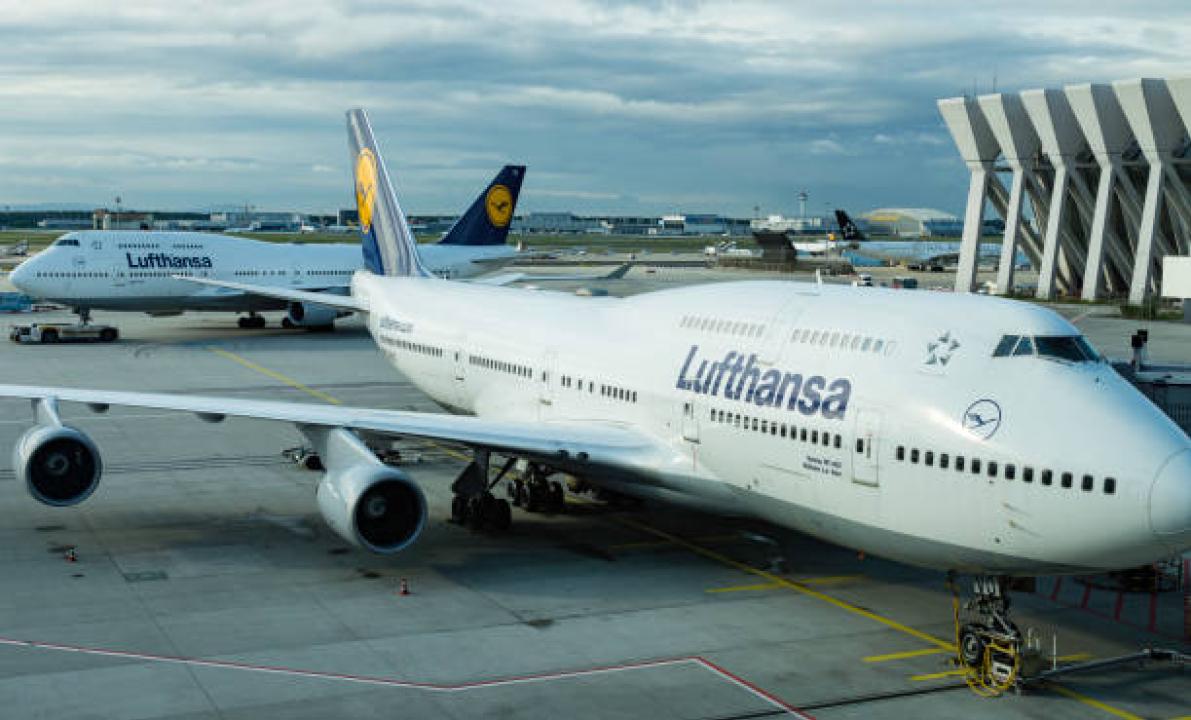
A canceled flight is one of those travel experiences that can unravel everything — hotel bookings, connecting arrangements, time off work, plans that took months to organize. When it's Lufthansa doing the canceling, passengers are often handed a rebooking option and left to figure out the rest on their own. What most don't realize in that moment is that a rebooking doesn't settle the matter. Depending on when the cancellation was communicated and how the alternative played out, they may still be entitled to cash compensation under European law.
This guide covers exactly what Lufthansa passengers are owed when a flight is canceled, how the regulation works in practice, and what the most effective path to compensation actually looks like.
The Legal Framework: EC 261/2004
European air passenger rights are governed by EC Regulation 261/2004, a piece of legislation that has been in force since 2005 and applies across all EU member states. Lufthansa, headquartered in Frankfurt, is a German carrier and fully subject to this regulation.
The regulation covers flights departing from any airport within the EU — regardless of airline nationality — and flights arriving into the EU operated by EU-licensed carriers. A Lufthansa flight from Frankfurt to Chicago and a Lufthansa flight from New York to Munich both fall within scope, albeit for different reasons.
When it comes to cancellations specifically, the key variable is timing. The regulation draws a clear line at 14 days before the scheduled departure date.
If Lufthansa cancels your flight more than 14 days in advance and informs you properly, no compensation is owed under EU261 — though a full refund remains your unconditional right regardless of the fare type. If the cancellation comes within that 14-day window, the situation changes considerably.
When Cancellation Compensation Is Owed
A cancellation within 14 days of departure triggers a compensation entitlement unless one of two conditions applies. First, Lufthansa can avoid paying if it can demonstrate that the cancellation was caused by extraordinary circumstances that could not have been avoided even if all reasonable measures had been taken. Second, no compensation is owed if the airline offered a rerouting that arrived at your destination within a tight window of the original scheduled arrival time — specifically within two hours for short-haul flights and within four hours for long-haul.
Extraordinary circumstances is a term that airlines lean on heavily, and not always legitimately. Severe weather events, political instability, and air traffic control strikes across an entire region typically qualify. A technical fault discovered during routine maintenance, a crew scheduling failure, or an aircraft swap that went wrong generally does not — even if Lufthansa frames it that way in a rejection letter.
If neither of those conditions applies, and your flight was canceled within 14 days of departure, you are entitled to fixed compensation based on the distance of the route.
Flights under 1,500 kilometres pay out €250 per passenger. Routes between 1,500 and 3,500 kilometres are worth €400. Anything beyond 3,500 kilometres — which covers most of Lufthansa's transatlantic and intercontinental network — puts the figure at €600 per person. These amounts are set by the regulation and cannot be reduced by the airline offering a voucher or a meal at the airport.
Lufthansa's Network and Why Cancellations Happen
Lufthansa operates one of the largest networks in Europe, with Frankfurt Airport and Munich Airport serving as its two primary hubs. The scale of the operation means that cancellations, while not common on a per-route basis, affect a significant number of passengers in absolute terms.
The most frequent causes of cancellations within Lufthansa's control include technical issues with aircraft, crew availability problems — particularly during periods of industrial action by Lufthansa's own staff, which has occurred multiple times in recent years — and operational cascades where a delay on one route triggers a cancellation on another. All of these scenarios fall outside the extraordinary circumstances exemption and should be compensable under EU261.
Lufthansa pilots and cabin crew have conducted a number of strikes over the past several years. Strikes by an airline's own employees are explicitly not considered extraordinary circumstances under EU261 case law — the European Court of Justice has confirmed this. If your flight was canceled as a result of a Lufthansa staff strike, your claim is very likely valid.
What You're Also Entitled To
Beyond the cash compensation figure, EU261 requires airlines to provide immediate assistance when a cancellation occurs at the airport. This means meals and refreshments appropriate to the waiting time, two telephone calls or equivalent electronic communication, and hotel accommodation plus transport to and from it if an overnight stay becomes necessary.
These are separate from compensation and are owed regardless of whether the cancellation qualifies for a payout. Passengers who cover these costs out of pocket during a cancellation can typically claim reimbursement from the airline, in addition to any compensation claim they pursue separately.
How to File a Lufthansa Cancelled Flight Compensation Claim
The most direct route is through Lufthansa's own customer relations process. Their website accepts compensation requests, and for clear-cut cases — where the cancellation was within 14 days, no qualifying rerouting was offered, and the cause wasn't an extraordinary circumstance — some claims do get resolved this way. The problem is that the process tends to be slow, the first response is frequently a rejection that invokes extraordinary circumstances without much explanation, and passengers without a detailed understanding of the regulation often accept that response and move on.
A more reliable approach is using a specialist claims service. These platforms assess your case, submit the claim, handle all communication with Lufthansa, and escalate through legal channels if the airline refuses to pay. The no win, no fee model means the only cost is a percentage of the compensation if the claim succeeds — there's no upfront charge and no fee if the claim doesn't come through.
Voos works exactly this way. You enter your flight details, explain what happened, and the team takes over. They know how to challenge extraordinary circumstances rejections, how to assess whether the rerouting Lufthansa offered actually met the regulation's requirements, and when to take the matter further without any additional input from you.
To check your eligibility for Lufthansa cancelled flight compensation, you'll need your flight number, travel date, and ideally a booking confirmation. In cases where documents aren't available, flight records can often be retrieved independently.
Don't Accept Less Than You're Owed
Airlines have a financial incentive to settle claims for as little as possible — or not at all. Vouchers offered at the gate, partial reimbursements framed as goodwill gestures, and rejection letters citing extraordinary circumstances are all standard tools in that playbook.
EU261 exists precisely because the asymmetry between passengers and airlines is significant. Knowing the regulation gives you leverage. Using a service that applies it on your behalf gives you a realistic chance of receiving what you're actually owed — without spending hours navigating an airline's customer relations system on your own.
If Lufthansa canceled your flight within the last three years and it was within 14 days of departure, your claim is worth checking. The eligibility assessment takes a few minutes, costs nothing, and the process runs itself from there.