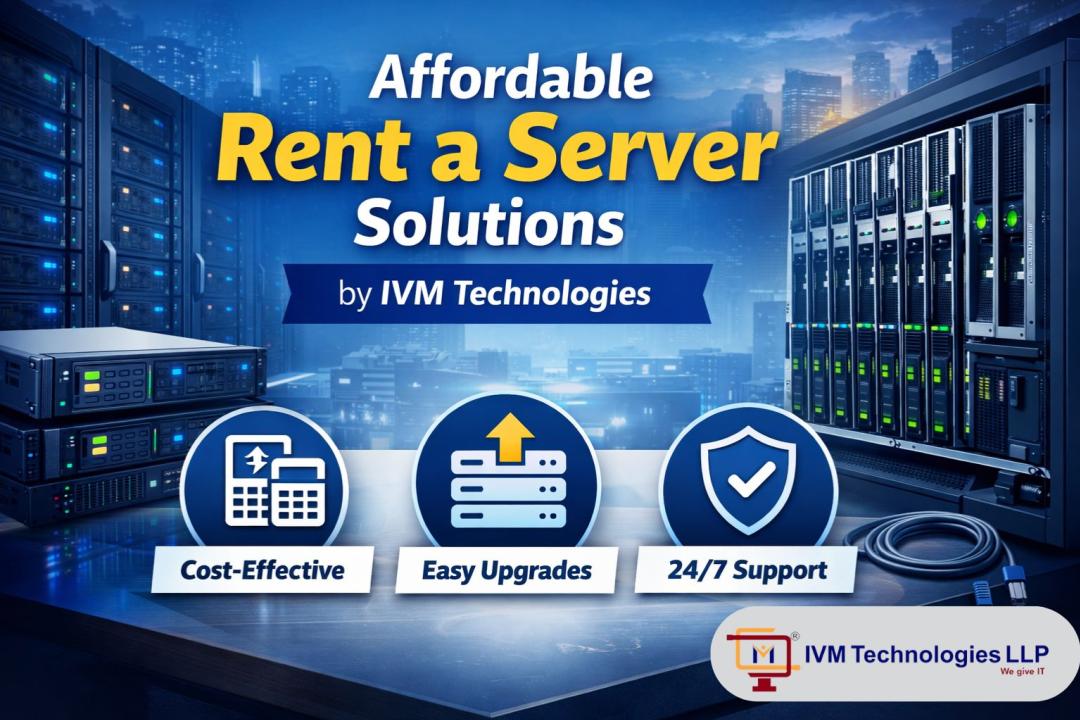
Buying a physical server sounds great until you see the price tag, maintenance costs, and the time it takes to manage everything. That’s why many businesses now choose to rent a server. It gives you the power you need without the long-term commitment or heavy upfront spending.
I’ve seen startups struggle after investing too much in hardware too early. Renting gives breathing space. You pay for what you need, upgrade when required, and avoid the stress of managing expensive equipment.
Let’s talk about how server rental works and how to pick the right option.
What Does It Mean to Rent a Server?
Renting a server simply means you use a dedicated physical machine hosted by a provider while paying a monthly or yearly fee. The provider manages the hardware, power, cooling, and often basic support.
You just use the computing power.
Businesses usually rent servers for:
Hosting websites or applications
Running business software
Data storage and backup
Testing environments
Email hosting
ERP or CRM systems
It’s similar to renting office space instead of buying a building. You still get the benefits without the ownership burden.
Why Businesses Prefer Server Rental
There are many practical reasons companies go this route.
Lower upfront cost
Buying a good server can cost lakhs. Renting spreads that cost into smaller monthly payments.
Quick setup
Most rental servers can be ready within hours or days. No waiting for hardware delivery or installation.
Easy upgrades
Need more RAM or storage? Most providers allow upgrades without replacing the entire system.
Less maintenance stress
Hardware failures happen. With rental, the provider usually handles replacements.
Predictable spending
Fixed monthly pricing helps with budgeting.
Who Should Rent a Server?
Server rental works well for:
Startups testing new products
Digital agencies managing client websites
Software developers
E-commerce businesses
Companies expanding into new markets
Businesses running temporary projects
If your workload changes often, renting usually makes more sense than buying.
Rack Server vs Blade Server – Which Should You Rent?
Many people get confused between these two options. The choice depends on your workload and space needs.
What is a Rack Server?
A rack server is a standalone unit mounted inside a rack cabinet. Each server has its own power supply and cooling.
Rack servers are good for:
Small and medium businesses
Standard applications
Dedicated workloads
Companies wanting simple infrastructure
What is a Blade Server?
A blade server fits inside a shared chassis. Multiple blade servers share power and cooling resources.
Blade servers are suitable for:
Large data centers
High-density computing
Virtualization projects
Companies running many servers together
Quick comparison: Rack server vs blade server
Feature | Rack Server | Blade Server |
Setup | Simple | Requires chassis |
Cost | Lower starting cost | Higher initial setup |
Expansion | Add more units | Add more blades |
Cooling | Separate per server | Shared cooling |
Best for | SMBs | Large deployments |
If you're unsure between rack server vs blade server, most growing businesses start with rack servers because they are easier to manage.
Things to Check Before You Rent a Server
Not all rental servers are equal. A few small checks can save headaches later.
Hardware specifications
Check:
Processor generation
RAM type and capacity
SSD or HDD storage
RAID support
Network speed
Always match the server specs to your workload.
Support response time
Ask:
Is support available 24/7?
How fast is hardware replacement?
Is remote support included?
Data center reliability
Look for:
Backup power
Fire protection
Network redundancy
Physical security
Upgrade flexibility
Make sure upgrades are possible without long downtime.
Backup options
Data loss hurts. Confirm backup availability or plan your own backup system.
Benefits of Renting from a Local Provider
Working with a nearby provider can help with faster response and better communication.
Some advantages include:
Faster hardware replacement
Easy communication
Local compliance understanding
Better service coordination
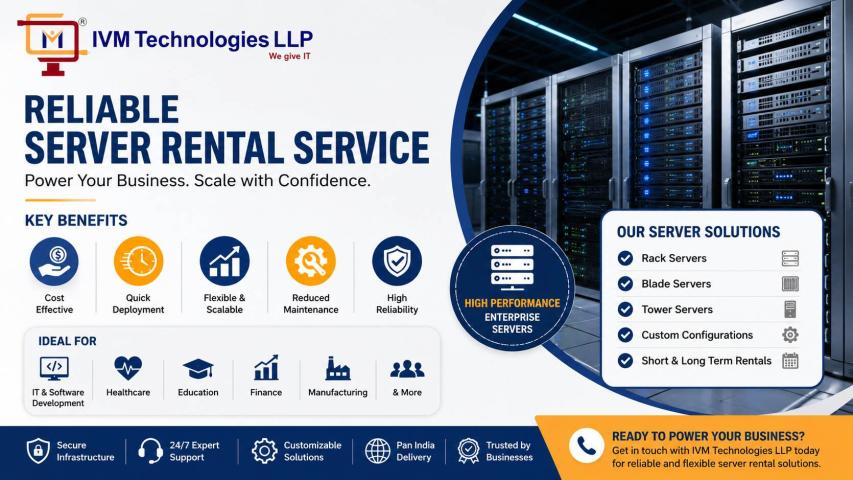
Companies like IVM Technologies help businesses with flexible server rental plans along with technical assistance when needed.
Common Server Rental Use Cases
Here are some real examples I’ve seen work well.
Application hosting
Many software companies rent servers to host their apps without building infrastructure.
Backup servers
Companies often rent separate machines just for backups.
Testing environments
Developers use rental servers to test new releases safely.
Seasonal traffic handling
E-commerce companies often rent extra servers during festive sales.
Remote office infrastructure
Businesses expanding to new cities often rent servers rather than moving hardware.
How Much Does It Cost to Rent a Server?
Pricing depends on:
CPU power
RAM size
Storage type
Bandwidth
Support level
Basic servers may start from a few thousand rupees per month. High-performance machines cost more depending on configuration.
A good provider will suggest a configuration based on your usage rather than pushing the highest plan.
Mistakes to Avoid While Renting a Server
I’ve seen businesses regret skipping these checks:
Choosing the cheapest plan without checking performance
Ignoring backup planning
Not asking about downtime policies
Forgetting upgrade options
Not checking contract terms
How to Choose the Right Server Rental Partner
Look for a provider that offers:
Clear pricing
Honest hardware details
Fast support response
Upgrade choices
Good reputation
A company such as IVM Technologies provides server rental support for businesses that want stable infrastructure without managing hardware internally.
When Should You Move from Rental to Ownership?
Some businesses eventually buy servers. That usually happens when:
Workload becomes very stable
Long-term cost comparison favors ownership
Internal IT team is available
Infrastructure needs stop changing
Until then, rental gives flexibility.
Final Thoughts on Renting a Server
Server rental is a practical choice for businesses that want performance without heavy investment. You get computing power, flexibility, and less maintenance responsibility.
Start small. Upgrade as your needs grow. That approach has helped many companies avoid unnecessary spending.
Get Started with the Right Server Rental Partner
If you're planning to rent a server for your business, working with an experienced provider can save time and effort. IVM Technologies offers rental options for businesses that want reliable hardware and responsive technical help. If you're planning expansion or need better performance, their team can help you choose a configuration that fits your workload without pushing unnecessary upgrades.