With advancements in mechanical engineering, tiny components such as bearings play a decisive role in the smooth operation of machinery. However, when selecting the right parts for your high-speed machinery, bearings are among the most essential components.
Many engineers and buyers often find themselves trying to decide which option is best for them: ceramic vs. steel bearings. Whether you are looking to buy from a reputable bearing manufacturer or just researching alternatives such as ball bearings near me, understanding the difference between the two will help you make an informed decision.
This blog discusses the primary comparison between ceramic and steel bearings in high-speed machinery applications.
Why Bearings Are Important For High-Speed Machinery?
High-speed equipment requires a lot from its parts, especially from its bearings. The heat, constant motion, friction, and overall machine performance put a lot of strain on their bearings. However, even a small inefficiency can cause serious problems with your equipment.
It is the primary reason why the choice of bearing material is so important. The right choice of bearing material directly influences your overall performance.
Understanding Steel Bearings
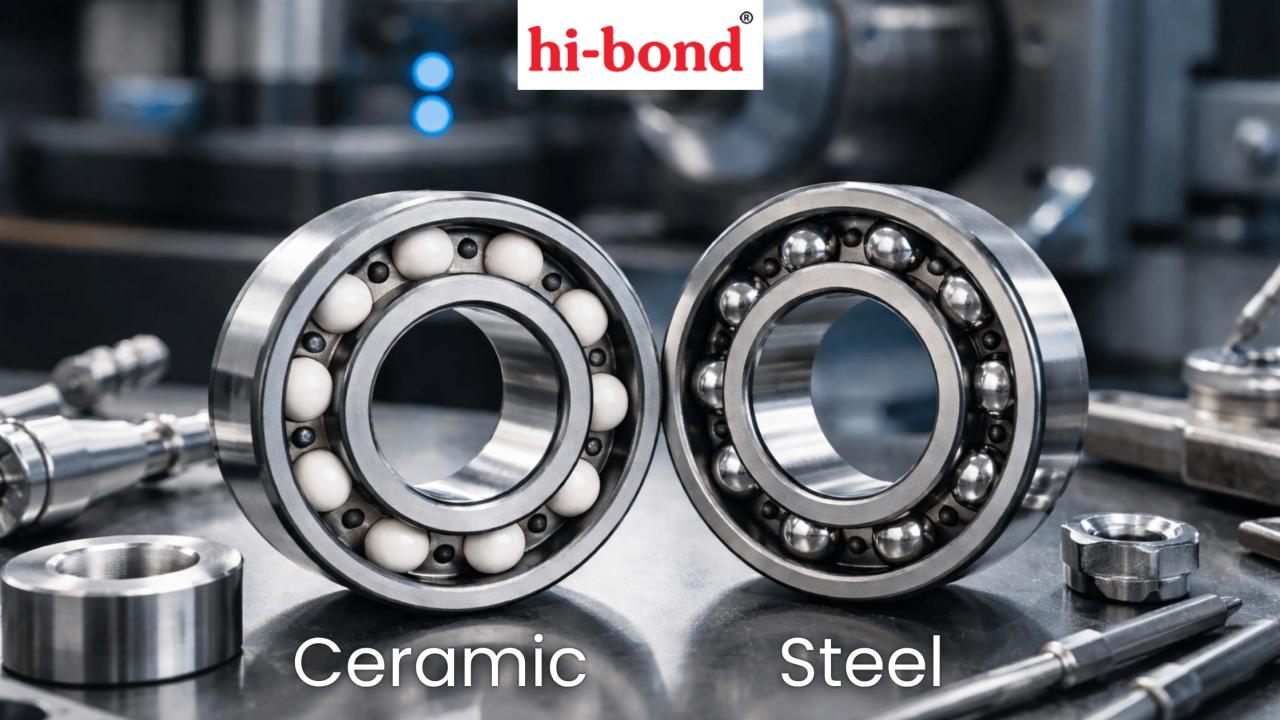
Steel bearings have dominated the industry for decades. The popularity of steel bearings arises from their reliability, strength, and affordability.
Primary Advantages Of Steel Bearings
Steel bearings are popular for their strength. Steel bearings can withstand heavy loads and perform efficiently under high pressure. Also, these bearings are economical and a good option for businesses with limited budgets.
In addition, these steel bearings are readily available. If you are looking to buy ball bearings near me, you are most likely to find steel bearings in the local market.
Disadvantages Of Steel Bearings
Although they are strong, they also have a few disadvantages, especially in high-speed operations. They produce more friction than ceramic bearings, leading to increased heat buildup. In addition, they are more likely to corrode, especially in poorly maintained environments. In environments with moisture and chemicals, corrosion can be a remarkable problem.
Understanding Ceramic Bearings
Ceramic bearings are gradually gaining popularity in high-speed operations. They are usually made of silicon nitride, which has several unique advantages.
Potential Benefits Of Ceramic Bearings
Ceramic bearings are popularly known for their low weight. Since they are light, they allow industrial machines to move faster. In addition, they produce less friction compared to other bearings, such as steel bearings. This function reduces heat buildup, a major advantage in high-speed operations.
Also, ceramic bearings are highly corrosion-resistant. They are greatly beneficial in hostile environments, where other types of bearings, such as steel bearings, are ineffective. Also, longevity is a major factor in these bearings. They wear less over time, which is a major advantage.
Limitations Of Ceramic Bearings
Ceramic bearings are disadvantageous because they are much more expensive than steel bearings, which may not fit every budget.
In addition, they are more brittle, especially in environments subject to vibrations and shocks. Although they are highly beneficial in these environments, they can easily be damaged.
Key Differences Of Ceramic vs Steel Bearings
We will compare the two bearings directly to decide which is better.
Durability And Wear
Steel bearings are more durable at withstanding heavy loads and impacts. These bearings are less likely to break under extreme pressure.
On the other hand, ceramic bearings are highly effective at reducing wear. The total performance of ceramic bearings remains intact for a long period, especially in a controlled environment.
Speed Performance
Ceramic bearings are highly beneficial in high-speed operations. They are lightweight, enabling machines to move faster. Though steel bearings are reliable, they might struggle to perform efficiently at extremely high speeds due to excessive heat buildup.
Heat And Friction
In this area, ceramic bearings clearly lead the way. Ceramic bearings have lower friction, which means they generate less heat. It is a critical factor, especially for high-speed devices. However, steel bearings generate significant heat, which may affect overall performance.
Cost Consideration
Though steel bearings are less effective, they are definitely budget-friendly. In this case, ceramic bearings are a costly investment, although they might prove worthwhile in the end.
Corrosion Resistance
In this particular case, ceramic bearings are highly effective. These ceramic bearings are highly corrosion- and rust-resistant. Although effective, steel bearings require frequent maintenance to prevent corrosion.
Comparison With Other Options
When comparing bearing performance, some users may also consider alternatives, such as bushings. The comparison of a plain ball bearing with bushings might be based on the device’s motion, such as non-rotational or rotational.
In rotational motion, ball bearings are highly effective because they reduce friction. Although bushings are less effective, they are a simpler option, especially for devices with a sliding motion. Also, you might encounter ball bearings with an integrated shaft for specialized applications.
When To Select Steel Bearings?
Steel bearings are a good choice for applications where moderate speeds, high loads, and budget constraints are primary factors.
These bearings are also a good choice for applications where the industrial machine or equipment operates in a stable environment and speed and temperature are not extreme.
When To Choose Ceramic Bearings?
Ceramic bearings are an ideal choice for applications where high speed and high precision are required, and optimal performance is critical in the equipment or the industry.
These types of bearings are the perfect option for diverse applications where increasing efficiency, reducing heat, and reducing maintenance costs are critical.
Making The Right Choice Between These Bearings
Making the right choice between ceramic and steel bearings relies on what you need in a bearing for your industrial machinery or equipment. There is no one-size-fits-all answer, because it depends on the factors you need in a bearing for your machinery or equipment.
For most businesses, a combination of steel and ceramic bearings may be the perfect choice. Steel bearings are used for standard parts of industrial machinery, while ceramic bearings are used for high-performance parts.
Increase The Accuracy Of High-Speed Machinery With Perfect Bearing Selection
Steel and ceramic bearings are both useful in the equipment and machinery industry, and each has its own advantages and disadvantages. Steel bearings are useful for everyday applications, especially plain ball bearings, as they are cost-efficient and reliable.
In contrast, ceramic bearings are useful for applications that require high speed and high performance. It is also beneficial for reducing heat and increasing efficiency, which are critical to equipment and the industry.