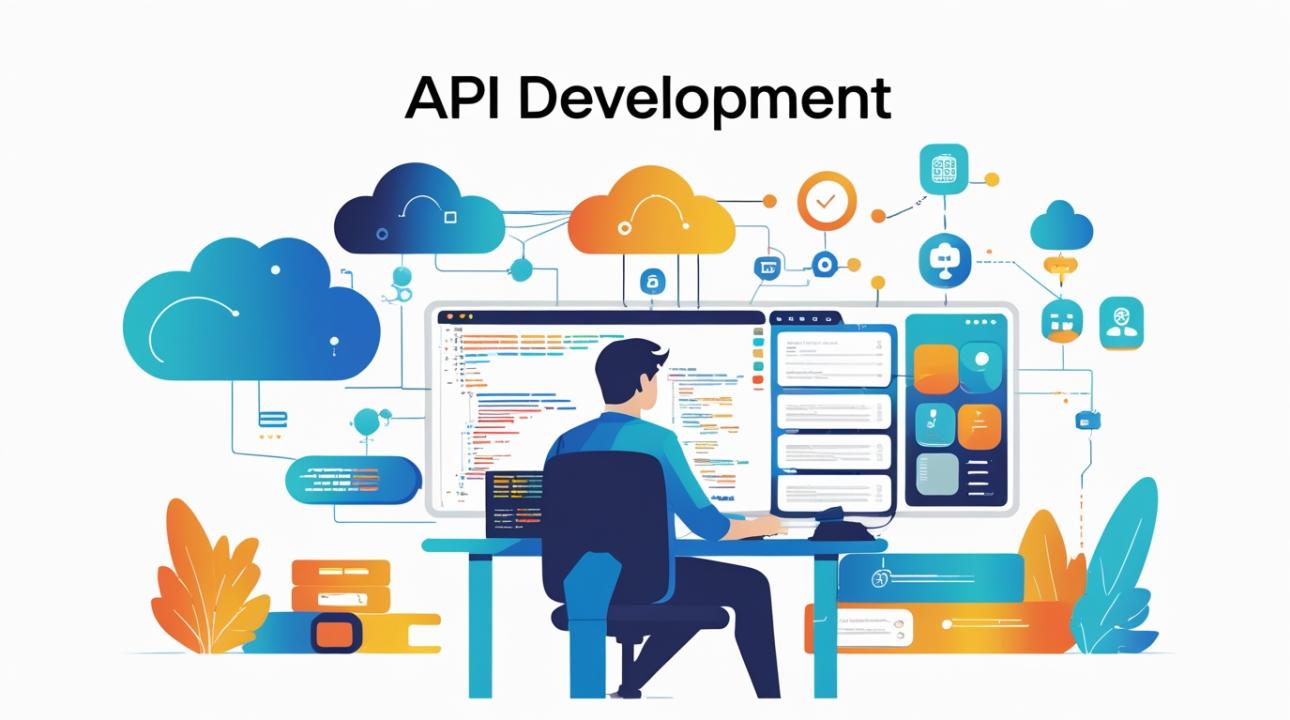
APIs are no longer just technical connectors sitting quietly behind applications. In 2026, they power digital ecosystems, enable platform business models, and drive seamless user experiences across web, mobile, IoT, and AI-driven systems. From fintech platforms processing millions of transactions to SaaS products integrating third-party services in real time, APIs have become the backbone of modern software architecture.
The shift toward cloud-native infrastructure, microservices, and AI-assisted applications has raised the bar for how APIs are designed, secured, and scaled. Organizations now rely on robust API development services not just to build endpoints, but to architect scalable, secure, and performance-driven ecosystems that support long-term digital growth.
Poorly structured APIs can slow innovation, create security risks, and increase long-term maintenance costs. Well-architected APIs, on the other hand, unlock agility, faster releases, and sustainable growth.
This guide explores the architectural choices, best practices, and performance strategies that define future-ready API development in 2026.
What Has Changed in API Development by 2026?
APIs are not just technical connectors anymore. By 2026, they shape how products scale, how teams collaborate, and how businesses compete. Here’s what has fundamentally changed:
1. APIs Now Power Multi-Platform Products
APIs must support web apps, mobile apps, partner integrations, internal dashboards, and third-party ecosystems, often simultaneously. Each client has different performance and release cycles, which demand stronger contract discipline and backward compatibility.
2. AI and Data Workflows Depend on APIs
Modern AI systems rely on structured, real-time APIs to ingest and serve data. APIs are no longer just CRUD interfaces, they feed machine learning models, power automation workflows, and enable intelligent decision-making layers.
3. Security Has Shifted to Zero-Trust by Default
With growing attack surfaces and stricter regulations, every API request must be authenticated, authorized, and validated. Token-based access, scoped permissions, and runtime threat detection are baseline expectations.
4. Performance and Cost Are Leadership Concerns
API inefficiencies directly impact cloud bills and customer experience. Latency (p95), request volume, and payload size are actively monitored as business metrics, not just engineering metrics.
5. Governance Has Become Strategic
Unmanaged APIs create technical debt fast. Organizations now invest in API catalogs, lifecycle policies, and review boards to prevent sprawl and ensure long-term scalability.
API Architectural Styles in 2026 (When to Use What)
In 2026, architecture decisions are driven by:
● Product complexity
● Client diversity (web, mobile, partner, AI systems)
● Performance expectations
● Internal team maturity
1. REST (Still Dominant, But More Structured Now)
Best for: Standard CRUD applications, public APIs, predictable data models.
REST remains the default for most API development. Its simplicity, widespread tooling, and ecosystem maturity make it reliable.
In 2026, REST has evolved with:
● Stronger OpenAPI contract enforcement
● Standardized error schemas
● Better versioning discipline
● Built-in observability integration
Where REST works well:
● SaaS platforms exposing customer-facing APIs
● E-commerce platforms
● Admin dashboards
● CRUD-heavy enterprise systems
Where it struggles:
● Complex data aggregation across multiple services
● Real-time streaming needs
● Over-fetching or under-fetching for mobile clients
If your system is predictable and resource-oriented, REST remains efficient and scalable.
2. GraphQL (Client Flexibility at Scale)
Best for: Multi-client ecosystems with different data needs.
GraphQL allows clients to request exactly what they need, nothing more, nothing less.
In 2026, GraphQL is commonly used in:
● Mobile + web products sharing a backend
● Content-heavy applications
● Frontend-heavy product teams
● Platforms with rapidly evolving UI requirements
Advantages:
● Reduces over-fetching
● Flexible for frontend teams
● Ideal for composable commerce architectures
Trade-offs:
● Requires strong schema governance
● Complex caching strategies
● Query depth control needed for security
GraphQL shines when frontend velocity matters. But it requires discipline in query management and monitoring.
3. gRPC (High-Performance Internal Communication)
Best for: Microservices communication and performance-critical systems.
gRPC uses Protocol Buffers and supports:
● Strong typing
● Bi-directional streaming
● High-performance binary communication
It’s widely adopted in internal service-to-service architecture where:
● Latency matters
● Bandwidth optimization is important
● Systems are distributed
Ideal scenarios:
● Fintech transaction systems
● AI model serving pipelines
● Real-time analytics engines
● Large-scale microservices
Limitations:
● Not ideal for public APIs
● Browser support is limited without proxies
● Steeper learning curve
Use gRPC internally where performance and efficiency are critical.
4. Event-Driven APIs (Asynchronous & Real-Time)
Best for: Decoupled systems and real-time workflows.
Unlike request-response models (REST/GraphQL), event-driven architecture works asynchronously.
Systems publish events. Other services subscribe and react.
In 2026, this model is common in:
● E-commerce order pipelines
● Payment processing
● Inventory updates
● AI-triggered workflows
● IoT systems
Benefits:
● Loosely coupled architecture
● Better scalability
● Real-time responsiveness
● Resilience in distributed systems
Challenges:
● Debugging becomes harder
● Event schema versioning is critical
● Monitoring must be advanced
Event-driven APIs are essential when systems must react in real time without blocking operations.
5. Hybrid Architectures (The Most Common in 2026)
Typical modern stack:
● REST for public APIs
● GraphQL for frontend aggregation
● gRPC for internal microservices
● Event streaming for async processing
Example pattern:
● API Gateway
● BFF (Backend for Frontend)
● Microservices via gRPC
● Event Bus (Kafka or similar)
● Centralized Observability
Hybrid architecture allows you to:
● Optimize for each use case
● Scale independently
● Balance flexibility with control
The key is governance. Without clear contracts and monitoring, hybrid systems become chaotic.
API Architectural Styles Comparison Table
| Style | Best For | Strengths | Trade-offs | Typical Use Case |
| REST | Public APIs, CRUD systems | Simple, widely adopted, strong tooling, easy to document | Over-fetching, limited real-time capabilities | SaaS platforms, e-commerce APIs, and admin systems |
| GraphQL | Multi-client apps | Flexible queries, frontend-friendly, reduce over-fetching | Complex caching, governance challenges, and security tuning are needed | Mobile + web apps, composable commerce |
| gRPC | Internal microservices | High performance, low latency, strong typing | Not browser-native, harder for public APIs | Fintech systems, AI pipelines, service-to-service communication |
| Event-Driven APIs | Real-time & distributed systems | Decoupled architecture, scalable, async processing | Debugging complexity, schema management required | Order processing, payment systems, IoT, and real-time analytics |
| Hybrid Architecture | Large-scale platforms | Optimized per use case, scalable, future-ready | Requires strong governance & observability | Enterprise platforms, multi-product ecosystems |
API-First Architecture: Why It’s No Longer Optional
In 2026, API-first is not just a technical choice. It’s a scalability strategy that protects velocity, predictability, and long-term platform health.
- APIs are now the product backbone: In multi-platform environments (web, mobile, partner integrations, AI systems), APIs must be treated as core interfaces, not afterthoughts.
- API-first means designing the contract before writing code: Define the schema (OpenAPI, GraphQL schema, Protobuf) upfront so all teams align on structure, responses, and error handling.
- Parallel development becomes possible: Frontend, backend, QA, and even partner teams can work simultaneously using mock servers and validated contracts.
- Reduces regression risk: When APIs are contract-driven, backend changes don’t unexpectedly break mobile apps or third-party integrations.
- Improves version control and lifecycle management: API-first forces teams to plan versioning, deprecation, and backward compatibility early, instead of reacting later.
- Enables cleaner governance: Standardized naming, authentication methods, and response formats are easier to enforce when APIs are designed intentionally.
- Supports distributed and offshore teams: Clear contracts reduce ambiguity, back-and-forth communication, and integration surprises.
Core Best Practices for API Development in 2026
Now let’s get tactical.
These are the execution principles that separate scalable APIs from fragile ones.
1. Design for Change (Versioning Strategy)
Most API failures come from poor change management.
In 2026, versioning must be intentional.
Common Versioning Approaches:
● URI Versioning:
/v1/orders
● Header Versioning:
Accept: application/vnd.company.v2
● Query Parameter Versioning (less common)
Best practice:
● Maintain backward compatibility
● Deprecate gradually
● Announce sunset policies clearly
● Avoid frequent breaking changes
Poor versioning destroys partner trust and increases technical debt.
2. Standardized Naming & Resource Modeling
Inconsistent naming creates long-term confusion.
Bad example:
/getUserData
/userInfo
/fetchUser
Good example:
/users/{id}
/users/{id}/orders
Principles:
● Use nouns, not verbs
● Keep endpoints predictable
● Follow consistent casing
● Model resources clearly
Predictability reduces documentation burden and onboarding time.
3. Consistent Error Handling
If errors are inconsistent, debugging becomes expensive.
Standardize:
● HTTP status codes
● Error object format
● Trace IDs
● Human-readable messages
● Machine-readable codes
Example error structure:
{
"error_code": "ORDER_NOT_FOUND",
"message": "Order ID does not exist",
"trace_id": "abc123xyz"
}
Traceability is critical in distributed systems.
4. Documentation as a Living Contract
Documentation is not optional.
Modern API documentation should:
● Be interactive
● Auto-generated from schema
● Include example requests/responses
● Provide authentication guidance
● Offer SDK references
Developer portals now function as ecosystem enablers, especially if you monetize APIs.
If documentation is weak, adoption suffers.
5. Idempotency & Reliability
In distributed systems, retries happen.
If your API:
● Charges a card twice
● Creates duplicate orders
● Triggers duplicate workflows
You have a reliability issue.
Design for idempotency:
● Use idempotency keys
● Ensure safe retries
● Protect against duplicate side effects
This is essential in fintech, payments, and transaction-heavy systems.
6. Observability from Day One
Many teams add monitoring too late.
Track:
● p50 / p95 latency
● Error rates
● Traffic spikes
● Dependency failures
● Rate limit hits
Use:
● Centralized logging
● Distributed tracing
● Metrics dashboards
Observability enables:
● Faster debugging
● Capacity planning
● SLA compliance
Without it, scale becomes reactive instead of predictable.
7. Security Embedded in Design
Security cannot be retrofitted.
Core practices:
● OAuth 2.1 / OIDC
● Short-lived tokens
● Rate limiting
● Zero-trust request validation
● Encryption in transit and at rest
● OWASP API Top 10 testing
Every request must be verified, including internal APIs.
8. Performance Optimization
APIs must balance speed and cost.
Focus on:
● Caching strategies
● Payload optimization
● Compression
● CDN edge delivery
● Async processing where possible
Measure continuously. Optimize based on real usage, not assumptions.
9. Testing Strategy
Strong API testing includes:
● Unit testing
● Contract testing
● Integration testing
● Load testing
● Security testing
Automate validation in CI/CD.
Manual validation does not scale.
Common API Development Mistakes to Avoid
Even well-funded teams with experienced engineers make avoidable API mistakes.
The problem isn’t lack of effort, it’s lack of architectural discipline early on.
Here are the most common issues that quietly slow down platforms over time:
- Designing APIs Around Databases, Not Business Capabilities: When endpoints mirror table structures instead of business workflows, APIs become rigid. This makes future changes painful and tightly couples clients to internal data models. APIs should represent capabilities (e.g., “create order,” “process refund”), not tables.
- No Clear Versioning Strategy: Breaking changes without version control create downstream chaos. Mobile apps fail. Partner integrations break. Frontend teams lose velocity. Without a formal versioning and deprecation policy, technical debt multiplies quickly.
- Ignoring Backward Compatibility: Small response changes can break consumers in subtle ways. Removing a field or changing a data type without coordination damages trust. Backward compatibility must be a standard, not an afterthought.
- Over-Fetching and Under-Fetching: Sending too much data increases latency and cost. Sending too little forces multiple round-trip. Both reduce performance and create unnecessary client complexity.
- Inconsistent Authentication & Authorization: Using different auth methods across services creates security gaps. Mixed token systems, inconsistent scopes, or unclear permission models increase risk. A centralized, standardized access strategy is essential.
Future Trends in API Development Beyond 2026
● Edge-Native APIs: APIs will increasingly run closer to users at the edge. This reduces latency, improves real-time performance, and supports use cases like IoT, AR/VR, and instant personalization without routing everything through central data centers.
● AI-Generated & Self-Optimizing APIs: AI tools will assist in generating API contracts, documentation, test cases, and even performance optimizations. Over time, APIs may auto-tune rate limits, caching layers, and scaling rules based on traffic patterns.
● Autonomous Governance: Policy engines powered by AI will automatically detect inconsistencies in schema design, security gaps, or versioning conflicts, reducing manual review cycles.
● Event-Driven & Real-Time First Design: More systems will move toward asynchronous, event-based communication instead of traditional request-response models, enabling better scalability and resilience.
Conclusion
In 2026, API development is no longer a backend engineering task, it’s a strategic discipline that shapes scalability, security, and product velocity. The difference between fragile systems and future-ready platforms lies in architectural clarity, governance, and disciplined execution.
Whether you choose REST, GraphQL, gRPC, event-driven models, or a hybrid approach, the goal remains the same: build APIs that are resilient, observable, secure, and adaptable to change. Organizations that invest in API-first thinking, strong versioning, and embedded security will innovate faster and scale sustainably. Ultimately, modern API development services must align technology decisions with long-term business growth.