Market Overview:
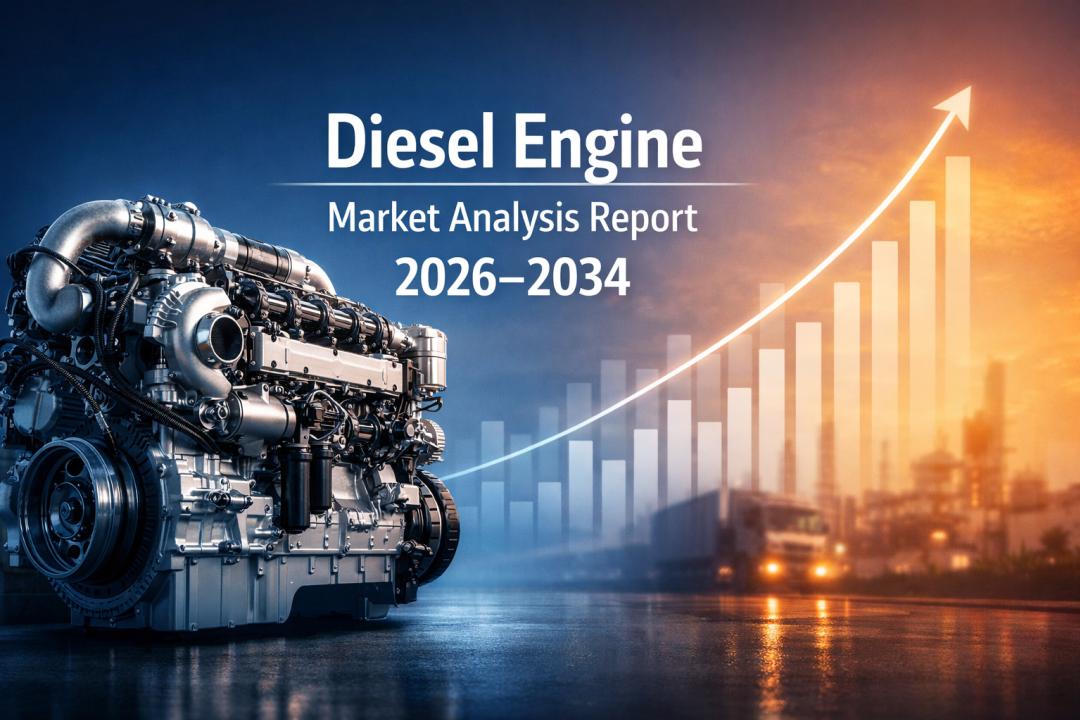
The diesel engine market is experiencing rapid growth, driven by infrastructure development and construction activity, demand for reliable backup power in data centers, and expansion of global marine trade and fleet renewal. According to IMARC Group's latest research publication, "Diesel Engine Market Size, Share, Trends, and Forecast by Type, Source, Application, and Region, 2026-2034", The global diesel engine market size reached USD 243.8 Billion in 2025. Looking forward, IMARC Group expects the market to reach USD 318.7 Billion by 2034, exhibiting a growth rate (CAGR) of 3.02% during 2026-2034.
This detailed analysis primarily encompasses industry size, business trends, market share, key growth factors, and regional forecasts. The report offers a comprehensive overview and integrates research findings, market assessments, and data from different sources. It also includes pivotal market dynamics like drivers and challenges, while also highlighting growth opportunities, financial insights, technological improvements, emerging trends, and innovations. Besides this, the report provides regional market evaluation, along with a competitive landscape analysis.
Download a sample PDF of this report: https://www.imarcgroup.com/diesel-engine-market/requestsample
Our report includes:
- Market Dynamics
- Market Trends and Market Outlook
- Competitive Analysis
- Industry Segmentation
- Strategic Recommendations
Growth Factors in the Diesel Engine Market
- Infrastructure Development and Construction Activity
A primary driver for the diesel power engine market is the intensive global push toward large-scale infrastructure and urban development. In many emerging economies, governments are allocating massive budgets to enhance logistics, transportation, and public services. For instance, in India, the government has recently sanctioned 56 Watershed Development Projects across top-performing states with a budget of 700 crore, while private investments like the 30,237 crore commitment by the Adani Group in Kerala are fueling demand for construction machinery. High-torque diesel engines are indispensable for the excavators, loaders, and cranes used in these projects because they offer the robustness and continuous operation necessary for extreme environments. These machines require the thermal efficiency and durability that only compression-ignition engines currently provide at scale. As countries continue to build metro rail networks, highways, and ports, the reliance on diesel-powered equipment remains a critical component of their economic growth strategies, further strengthening the expansion of the diesel power engine market.
- Demand for Reliable Backup Power in Data Centers
The explosive growth of artificial intelligence and cloud computing has led to an unprecedented build-out of data center infrastructure, which serves as a major catalyst for the diesel engine market. Data centers require 100% operational uptime, and diesel generators remain the gold standard for large-scale backup power in the 0.5 megawatt to 5 megawatt range. In North America and Europe, the rapid expansion of these facilities is driving a surge in orders for high-horsepower diesel gensets that can provide immediate, reliable electricity during grid failures. Current market valuations for the global diesel engine sector have reached 74.82 billion, significantly supported by the industrial segment's need for stable power. Even as renewable energy sources are integrated into the grid, the intermittent nature of wind and solar makes diesel-powered backup systems essential for protecting sensitive digital infrastructure. This "always-on" requirement ensures that industrial-grade diesel engines remain a vital asset for the global technology sector.
- Expansion of Global Marine Trade and Fleet Renewal
The marine industry is undergoing a significant phase of growth and modernization, directly boosting the demand for high-performance diesel engines. Increasing global seaborne trade volumes necessitate the continuous replacement and expansion of merchant fleets, including tankers, container ships, and bulk carriers. In the current year, the marine diesel engine market is valued at approximately 5.65 billion, with the merchant shipping segment accounting for 38.6% of this revenue. Growth is further accelerated by international regulatory frameworks, such as the IMO Tier III NOx standards and EEXI efficiency requirements, which compel fleet operators to retire older, less efficient engines. Shipbuilders are increasingly specifying medium-speed diesel engines, which are projected to hold a 45.7% market share this year due to their optimal balance of fuel efficiency and power. This cycle of fleet renewal ensures a steady stream of procurement for advanced diesel propulsion systems that can comply with modern environmental mandates.
Key Trends in the Diesel Engine Market
- Integration of Dual-Fuel and Renewable Diesel Technology
A prominent trend in the diesel market is the shift toward fuel flexibility, particularly the adoption of dual-fuel engines and renewable diesel. Manufacturers are increasingly designing engines capable of running on a mix of diesel and Liquefied Natural Gas (LNG) or methanol to reduce carbon footprints without sacrificing performance. Furthermore, the use of Hydrotreated Vegetable Oil (HVO), often referred to as renewable diesel, is gaining traction as a "drop-in" replacement for traditional petroleum diesel. In the United States, renewable diesel production has effectively doubled over the last two years, reflecting a strong industrial pivot toward sustainable fuels. Companies like Phillips 66 and Renewable Energy Group have expanded their production capacities by over 25% recently to meet this demand. This trend allows fleet operators in the transportation and marine sectors to achieve significant emissions reductions while utilizing their existing engine infrastructure and refueling logistics.
- Adoption of Advanced Emission Control Systems
As environmental regulations tighten globally, the integration of sophisticated after-treatment technologies has become a standard feature in new diesel engines. Technologies such as Selective Catalytic Reduction (SCR) and Diesel Particulate Filters (DPF) are now essential for meeting EPA Tier 4 and EU Stage V standards. SCR systems are particularly dominant because they can reduce nitrogen oxide (NOx) emissions by as much as 90%. This technological evolution has fundamentally changed the perception of diesel, moving it toward a "clean diesel" profile where particulate matter is virtually eliminated. For example, modern clean diesel technology in the U.S. now accounts for less than 6% of all particulate emissions nationwide. These advancements not only ensure regulatory compliance but also improve the overall air quality in urban and industrial zones, allowing diesel engines to remain a viable choice for heavy-duty trucking and off-road construction equipment.
- Digitalization and AI-Driven Predictive Maintenance
The digital transformation of the industrial sector has introduced AI-driven predictive maintenance as a core trend in diesel engine management. Modern diesel engines are now equipped with IoT-enabled sensors that monitor performance variables such as vibration, temperature, and fuel consumption in real-time. Major companies are embracing these digital solutions to move away from traditional, schedule-based servicing toward outcome-based maintenance models. By using machine learning algorithms to analyze engine data, operators can forecast potential component failures before they occur, significantly reducing unplanned downtime and total cost of ownership. This is particularly critical in sectors like mining and data centers, where a single hour of engine failure can result in massive financial losses. This trend is also fostering a growing market for engine remanufacturing, where digital history logs allow for more precise refurbishment and a more efficient circular economy for heavy machinery parts.
Leading Companies Operating in the Diesel Engine Industry:
- AGCO Corporation
- China First Automobile Works (FAW) Group Corporation
- Robert Bosch GmbH
- Deere & Company
- Continental AG
- Delphi Automotive System Private Limited
- Mitsubishi Heavy Industries, Ltd.
- Ford Motor Company
- General Motors Company
- MAN SE
- Wärtsilä Oyj Abp
- Cummins, Inc.
- Caterpillar
- Rolls-Royce Motor Cars Limited
Diesel Engine Market Report Segmentation:
By Power Rating:
- 0.5 MW–1 MW
- Up to 0.5 MW
- 2 MW–5 MW
- 1 MW–2 MW
- Above 5 MW
0.5 MW–1 MW is dominating the market, this power range is widely used in commercial applications for generators and heavy machinery, offering reliability and torque while aligning with sustainability efforts through improved fuel efficiency and reduced emissions.
By End-User:
- Automotive
- On-Road
- Light Vehicles
- Medium/Heavy Trucks
- Light Trucks
- Off Road
- Industrial/Construction Equipment
- Agriculture Equipment
- Marine Applications
- On-Road
- Non-Automotive
Automotive representing the largest segment, diesel engines thrive in larger vehicles like trucks and SUVs, providing superior torque and fuel efficiency for long-haul transportation, while continuing to meet the demands of logistics and e-commerce despite emissions challenges.
Regional Insights:
- North America (United States, Canada)
- Asia Pacific (China, Japan, India, South Korea, Australia, Indonesia, Others)
- Europe (Germany, France, United Kingdom, Italy, Spain, Russia, Others)
- Latin America (Brazil, Mexico, Others)
- Middle East and Africa
Asia Pacific is exhibiting the largest market share, this region's rapid industrialization and agricultural reliance on diesel engines for machinery and transportation underscore their critical role in powering generators, construction equipment, and logistics operations.
Note: If you require specific details, data, or insights that are not currently included in the scope of this report, we are happy to accommodate your request. As part of our customization service, we will gather and provide the additional information you need, tailored to your specific requirements. Please let us know your exact needs, and we will ensure the report is updated accordingly to meet your expectations.
About Us:
IMARC Group is a global management consulting firm that helps the world’s most ambitious changemakers to create a lasting impact. The company provide a comprehensive suite of market entry and expansion services. IMARC offerings include thorough market assessment, feasibility studies, company incorporation assistance, factory setup support, regulatory approvals and licensing navigation, branding, marketing and sales strategies, competitive landscape and benchmarking analyses, pricing and cost research, and procurement research.
Contact Us:
IMARC Group
134 N 4th St. Brooklyn, NY 11249, USA
Email: sales@imarcgroup.com
Tel No:(D) +91 120 433 0800
United States: +1-201971-6302