Most people think damage happens when movers lift furniture. That is not true. Damage starts before the first item moves.
Floors get scratched. Walls get chipped. Furniture gets marked. These problems happen when movers skip preparation. You then pay for repairs or lose part of your bond.
In many homes, movers fail before loading even begins. This risk grows during long relocations like moving from Melbourne to Adelaide, where small mistakes add up over distance.
I work closely with real moving teams across Melbourne suburbs. I see one clear pattern. Movers who prepare well prevent damage. Movers who rush create problems.
This guide shows what movers should do before they start. You will learn simple steps that protect your home and reduce risk.
What Do Professional Movers Do Before Moving Starts?
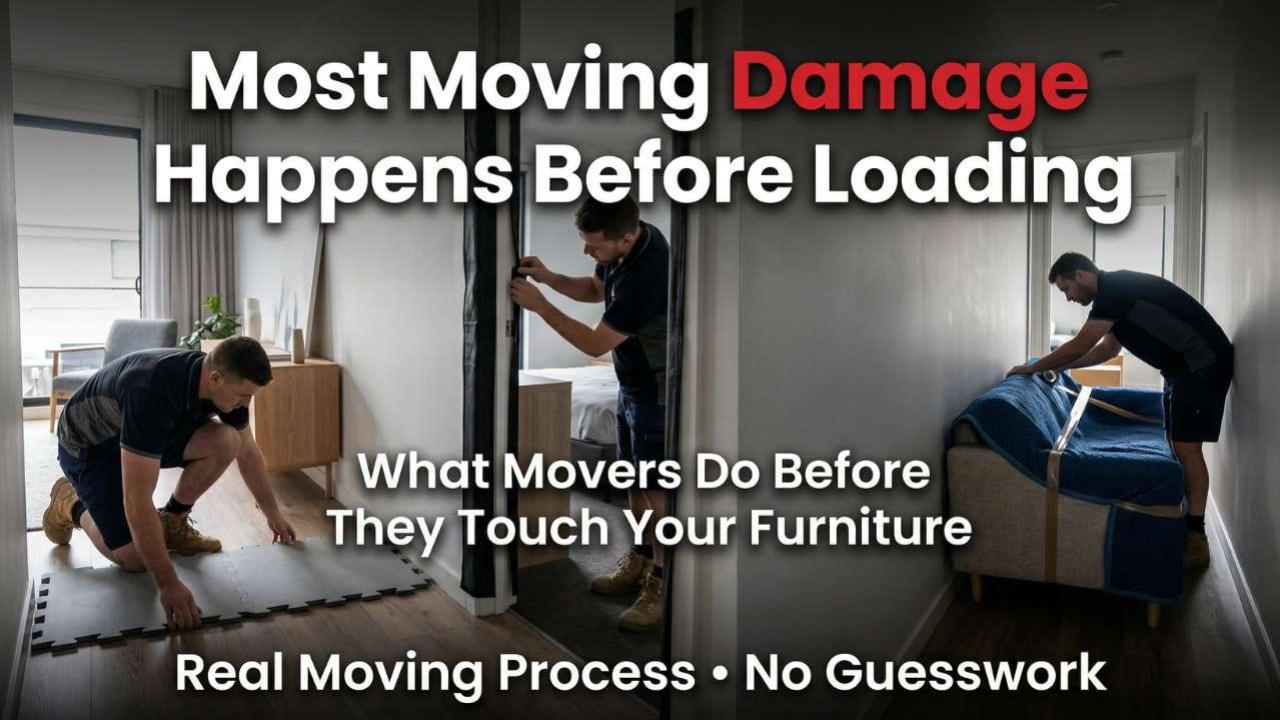
Professional movers prepare the space before they lift anything.
They inspect entry points and tight areas
They protect floors and walls
They wrap and secure furniture
They plan how items will move inside the home
They stage items to avoid crowding
This process reduces mistakes and keeps everything under control.
Where Most Moving Damage Actually Happens
Most damage happens inside your home. It does not happen on the truck.
Movers face tight spaces and sharp turns. If they do not plan, they hit walls, floors, and frames.
Entry Points and Narrow Areas
Doors and hallways create pressure zones. Movers must turn and adjust large items.
Door frames get chipped
Walls get scratched
Corners take direct impact
Older Melbourne homes increase this risk because space is limited.
Staircases and Level Changes
Stairs make movement harder. Weight shifts quickly and control drops.
Furniture hits railings
Edges drag on steps
Movers lose balance during turns
👉 Takeaway: Damage starts inside the house when movers do not plan movement.
Step-by-Step Pre-Move Protection Process
Good movers follow a clear process. They prepare first and move later.
Pre-Move Inspection and Risk Planning
Movers walk through the home and check risk areas.
They look at:
Entry paths
Tight corners
Fragile surfaces
They create a simple plan before lifting anything.
Protection Setup Before Moving
Movers install protection before they start.
They place boards or runners on floors
They pad door frames and corners
They cover high-risk areas
This step reduces contact damage.
Furniture Staging and Path Testing
Movers organise items in order.
They move large items first
They keep fragile items safe until last
They keep pathways clear
👉 Example: A Footscray move finished faster and safer after proper staging reduced handling time.
👉 Takeaway: Preparation removes confusion and prevents mistakes.
Floor Protection Systems (Why Floors Get Damaged First)
Floors take the most pressure during a move. Every item passes over them.
Without protection, damage happens even with careful handling.
Types of Floor Protection
Movers use different materials based on surface type.
Masonite boards protect timber floors
Rubber runners provide grip
Carpet film blocks dirt and stains
What Happens Without Protection
Skipping this step causes visible damage.
Timber floors get scratched
Tiles develop cracks
Carpets collect stains
Blankets do not work well. They move and expose the surface.
👉 Example: A Southbank move without floor boards caused scuff marks that cost over $600 to fix.
👉 Takeaway: Floor protection acts as the first layer of defence.
Wall, Door & Stair Protection (High Impact Zones)
Walls and frames take direct contact during movement. Large items rarely pass without touching surfaces.
Door Frames and Corners
Doorways create tight movement points.
Edges scrape paint
Frames chip easily
Furniture hits corners during turns
Staircase Risk Areas
Stairs increase pressure and reduce control.
Items hit railings
Edges drag across steps
Balance becomes unstable
👉 Example: A Carlton move without padding caused wall damage along a narrow staircase.
👉 Takeaway: Protecting these areas prevents visible and costly damage.
Furniture Preparation Before Moving Starts
Furniture needs preparation before movers lift it. Unprepared items increase risk.
Disassembly and Control
Movers break large items into smaller parts.
Beds
Tables
Modular units
This makes movement easier and safer.
Wrapping and Surface Protection
Movers secure furniture before moving.
Blankets protect surfaces
Shrink wrap holds parts together
Edge guards reduce impact
Some companies like Harry The Mover Melbourne Furniture removalists follow structured preparation steps to reduce handling risk.
👉 Example: A Richmond move without wrapping caused a chipped table edge during a turn.
👉 Takeaway: Proper preparation prevents damage before movement starts.
Timing Mistakes That Cause Damage
Timing plays a big role in safety. Rushed moves increase risk.
Rushed Moves and Poor Setup
When movers rush, they skip key steps.
No protection installed
Pathways stay blocked
Handling becomes careless
Settlement Day Pressure
Time pressure creates problems. Many people search for moving on settlement day explained because delays create risk.
Limited access time
Cleaning deadlines
Key handover pressure
👉 Example: A Docklands move skipped floor protection due to delays and caused visible scuffs.
👉 Takeaway: Poor timing leads to poor decisions and more damage.
Interstate Moves Need Extra Protection
Long-distance moves increase risk. More distance means more handling and stress.
Multiple Handling Stages
Items move more than once.
More lifting
More repositioning
More contact points
Load Stability During Travel
Items shift inside the truck during long trips.
Weight moves during turns
Items press against each other
Fragile items take stress
This becomes more critical during moving from Melbourne to Adelaide because of travel distance.
👉 Example: Poor load securing caused surface damage during an interstate move.
👉 Takeaway: Proper preparation reduces risk over long distances.
Real Case Example (What Proper Preparation Changes)
Real examples show the difference clearly. Preparation changes outcomes.
Brunswick Apartment Move (Without Preparation)
No floor protection
No wall padding
Poor furniture wrapping
Result:
Wall scratches
Floor damage
Furniture marks
Same Setup With Proper Preparation
Floor boards installed
Walls protected
Furniture wrapped
Result:
No damage
Faster movement
Better control
👉 Takeaway: Preparation creates better results, not speed.
Pre-Move Protection Checklist
Use this checklist before your move starts. It helps you avoid mistakes.
What Movers Should Do First
Clear entry paths
Install floor protection
Pad walls and door frames
Wrap furniture
Mark fragile areas
Quick Check Before Moving Starts
Look for:
Visible protection
Clear pathways
Organised setup
👉 Example: A Preston move avoided damage after a quick check revealed missing floor protection.
👉 Takeaway: A simple checklist prevents costly problems.
FAQs (What People Ask Before Moving)
Do movers protect floors in Melbourne homes?
Yes, professional movers protect floors before they start. They use boards, runners, or film based on the surface. Timber floors need strong boards to prevent scratches. Carpet areas need film to block dirt. Without protection, floors get damaged during movement.
Who is responsible for damage during a move?
Responsibility depends on your agreement with the mover. Most movers offer limited liability unless you take extra insurance. If movers act carelessly, they may be responsible. You should always check terms before the move begins.
What should movers do before moving furniture?
Movers should prepare the space first. They should clear pathways, protect surfaces, and wrap furniture. They should also disassemble large items. These steps reduce risk and make movement safer.
How do I know if a mover is professional?
Professional movers inspect the property and prepare before lifting. They install protection and explain their plan clearly. If movers start work without preparation, it shows poor standards.
Is moving on settlement day risky?
Yes, it increases risk because time is limited. Movers rush and skip steps. This leads to poor handling and more damage inside the home.
Do movers disassemble furniture before moving?
Yes, most movers disassemble large furniture. This makes items easier to carry and reduces damage risk. Smaller parts move safely through tight spaces.
Why does furniture get damaged before loading?
Damage happens during internal movement. Tight spaces and poor planning increase contact. Without protection, furniture hits walls, floors, and corners.
What is the most common cause of moving damage?
The main cause is poor preparation. Missing protection, rushed work, and unclear paths create damage. Proper setup reduces these risks.
Conclusion
Damage does not start on the road. It starts inside your home before the move begins.
Floors, walls, and furniture face risk from the first step. When movers skip preparation, problems happen fast.
Movers who plan, protect, and prepare reduce damage. This is what creates a smooth and safe move.
Before your move, ask one simple question: “What do you protect before you start moving?”