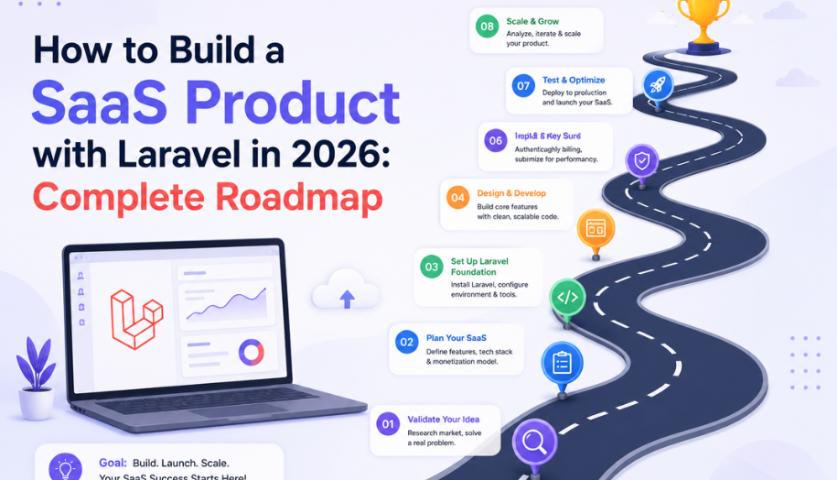

Building a scalable SaaS product is not just about writing clean code it’s about making the right architectural decisions from day one. Laravel, with its elegant syntax and powerful ecosystem, provides a solid foundation for creating SaaS platforms that can grow with your user base. Whether you’re launching an MVP or planning for long-term expansion, understanding how to structure your Laravel application is key.
Start with a Strong Foundation
Every scalable SaaS product begins with a clear architecture. In Laravel, it’s important to separate concerns using MVC (Model-View-Controller) properly. Avoid tightly coupling your logic inside controllers. Instead, use service classes, repositories, and jobs to keep your codebase organized and maintainable.
A modular approach also helps. Breaking your application into smaller, independent modules makes it easier to scale specific parts without affecting the entire system. This becomes especially useful when your SaaS grows and requires frequent updates.
Choose the Right Database Strategy
Database design plays a major role in scalability. For SaaS products, multi-tenancy is often required. You can implement this in Laravel using either a single database with tenant identification or multiple databases per tenant.
A single database approach is easier to manage initially, but as your product grows, you may need to shift to a more scalable solution like database sharding. Laravel supports multiple database connections, making this transition smoother.
Caching is another critical aspect. Use tools like Redis or Memcached to reduce database load. Laravel’s built-in caching system makes it easy to store frequently accessed data and improve performance.
Optimize Performance Early
Performance issues tend to appear when it’s already too late. That’s why optimization should be part of your development process from the beginning.
Use eager loading to prevent N+1 query problems. Laravel’s Eloquent ORM provides simple ways to load relationships efficiently. Also, queue heavy tasks such as email sending, report generation, or data processing using Laravel Queues. This ensures your application remains responsive even under heavy load.
Another useful approach is to use Laravel Horizon for monitoring queues. It gives you visibility into job processing and helps identify bottlenecks early.
Implement Scalable File Storage
SaaS platforms often deal with user uploads images, documents, or other assets. Storing these files on your main server can quickly become a problem.
Instead, use cloud storage services like AWS S3. Laravel’s filesystem abstraction allows you to switch between storage providers without changing your core logic. This flexibility is important when scaling your infrastructure.
Focus on API-First Development
Modern SaaS applications often rely on APIs to connect with mobile apps, third-party services, and frontend frameworks. Laravel makes it easy to build RESTful APIs with authentication using Laravel Sanctum or Passport.
Designing your application as API-first ensures that you can expand your product in the future without major rewrites. It also improves maintainability and allows multiple teams to work independently.
Use Load Balancing and Horizontal Scaling
As your user base grows, a single server won’t be enough. Horizontal scaling adding more servers instead of upgrading one is the preferred approach for SaaS applications.
You can deploy your Laravel app on multiple servers behind a load balancer. This distributes traffic evenly and improves reliability. Services like AWS Elastic Load Balancer or DigitalOcean Load Balancers can help manage this setup.
Make sure your application is stateless. Store sessions in a centralized system like Redis so users can switch between servers without issues.
Automate Testing and Deployment
Scalability isn’t just about handling traffic it’s also about maintaining stability during growth. Automated testing ensures that new features don’t break existing functionality.
Laravel provides built-in testing tools that make it easier to write unit and feature tests. Combine this with CI/CD pipelines to automate deployment. This reduces human error and speeds up development cycles.
Monitor and Log Everything
You can’t scale what you can’t measure. Monitoring tools help you understand how your application performs under different conditions.
Use tools like New Relic or Laravel Telescope to track performance, errors, and user activity. Logging is equally important. Store logs in a centralized system so you can quickly debug issues.
Security and Data Protection
As your SaaS grows, security becomes even more critical. Laravel includes features like CSRF protection, encryption, and secure authentication out of the box.
However, you should also implement additional layers such as rate limiting, role-based access control, and regular security audits. Protecting user data is essential for long-term success.
Learn from Industry Experts
If you’re unsure about building a scalable architecture, studying how experienced teams approach SaaS development can help. Many top Laravel development companies in USA follow best practices like microservices architecture, containerization with Docker, and Kubernetes for orchestration.
These approaches may not be necessary for an MVP, but they become valuable as your product grows. Start simple, but design your system in a way that allows gradual upgrades.
Practical Web Development Tips for Scaling
Here are some simple yet effective web development tips to keep in mind:
- Avoid premature optimization, but don’t ignore performance basics
- Write clean, readable code that your team can maintain
- Use version control and proper branching strategies
- Keep dependencies updated to avoid security risks
- Document your architecture and decisions clearly
These small practices make a big difference when your SaaS product starts scaling.
Final Thoughts
Building a scalable SaaS product using Laravel is a combination of smart planning, efficient coding, and continuous improvement. Focus on creating a flexible architecture, optimizing performance, and preparing your system for growth from the start.
Laravel gives you the tools to build powerful applications, but how you use them determines your product’s success. By following the right strategies and learning from real-world implementations, you can create a SaaS platform that not only works well today but continues to perform as your user base expands.