Dog owners and trainers are always looking for effective ways to build engagement, improve obedience, and satisfy a dog’s natural instincts. Two popular tools often compared are the flirt pole and the tug toy. While both can be excellent additions to a training routine, they serve different purposes and offer unique benefits. Choosing which tool works better depends on your dog’s temperament, training goals, and the type of interaction you want to encourage.
What Is a Flirt Pole?
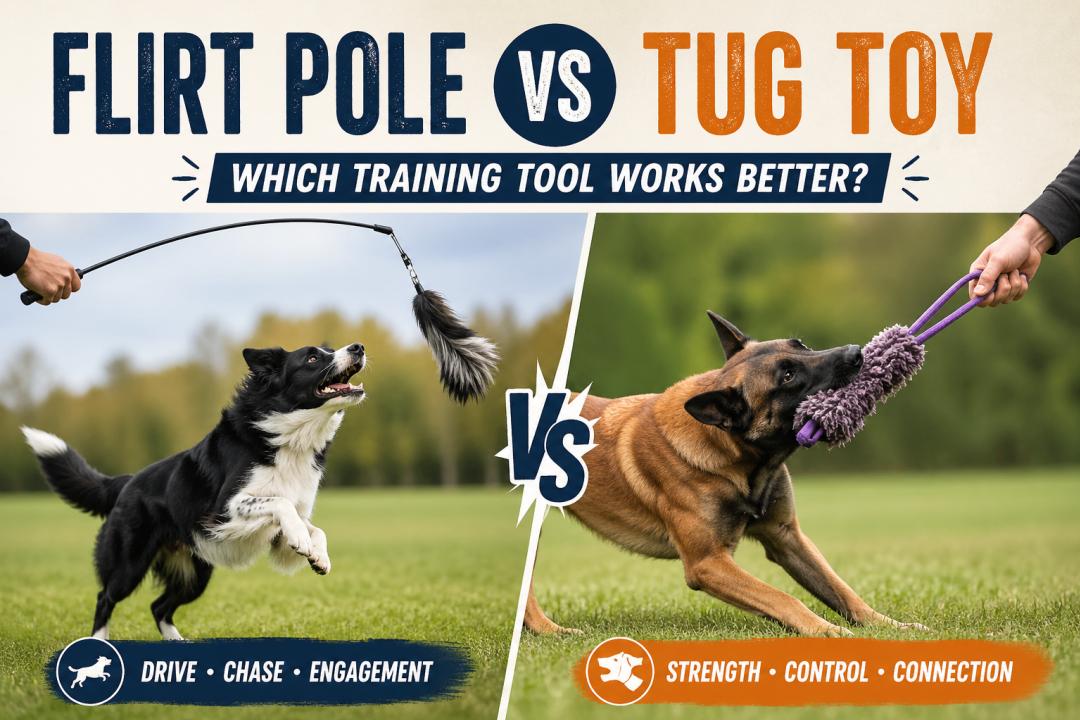
A flirt pole dog tool typically consists of a long pole with a rope attached and a lure or toy at the end. It functions much like a giant cat teaser, allowing you to simulate prey movement for your dog to chase.
Flirt poles are often used for:
- Building focus and impulse control
- Exercising high-energy dogs
- Encouraging prey-drive satisfaction
- Improving recall and obedience
- Creating structured play sessions
Because the lure moves unpredictably, dogs are mentally engaged while also getting a physical workout. This combination makes flirt poles a favorite among trainers working with energetic breeds, working dogs, and young dogs that need controlled outlets for excitement.
What Is a Tug Toy?
A dog bite tug is designed for interactive play where a dog grips and pulls against resistance. Tug toys come in many forms, including jute tugs, leather tugs, bite pillows, and rope tugs.
Tug training can help with:
- Reward-based obedience training
- Grip development
- Confidence building
- Relationship and engagement
- Bite work foundation for sport dogs
Many professional trainers use tug toys as a high-value reward. Instead of using treats, a quick game of tug can reinforce desired behaviors while keeping the dog motivated.
Physical Exercise: Which Tool Wins?
If your goal is to burn energy, the flirt pole usually has the advantage.
A flirt pole encourages sprinting, chasing, turning, and jumping, which creates a full-body workout. For dogs with high stamina, this can provide substantial exercise in a relatively short session.
Tug toys offer physical activity too, but the exercise tends to be more concentrated in pulling, gripping, and resistance. While it builds strength and coordination, it generally does not match the cardiovascular workout of a flirt pole.
For sheer physical output, flirt poles often come out ahead.
Mental Stimulation and Impulse Control
Flirt poles excel when it comes to teaching self-control.
A properly used flirt pole is not just about letting a dog chase. It can incorporate commands like sit, down, stay, leave it, and release before allowing the dog to pursue the lure.
This transforms play into a structured training session.
For example:
- Ask the dog to sit.
- Move the lure while the dog remains waiting.
- Release the dog on cue.
- Ask for an “out” command after capture.
This sequence strengthens obedience under arousal, which can be very valuable.
Tug can also develop impulse control, particularly when teaching rules such as “take it,” “drop,” and calm starts. However, flirt poles often provide broader opportunities for managing excitement.
Engagement and Relationship Building
Tug toys often take the lead in this category.
Because tug is interactive and cooperative, it strengthens the bond between handler and dog. The dog learns that engaging with the handler produces fun and reward.
Many trainers use tug to make themselves more valuable than environmental distractions.
For dogs that are less motivated by food, tug can become an especially powerful training reinforcer.
Flirt poles involve interaction too, but the dog may focus more heavily on the moving lure than the handler unless the game is structured carefully.
Prey Drive Development
Both tools can tap into prey drive, but in different ways.
Flirt poles stimulate chase instinct. They are ideal for dogs that love pursuing movement.
Tug toys stimulate possession and grip. They appeal to dogs that enjoy capturing and holding an object.
For dogs involved in sport training or bite foundations, tug often provides more transferable skills.
For general pet training or controlled prey satisfaction, a flirt pole can be easier to use.
Which Is Better for Puppies?
For puppies, both can work when used appropriately.
A flirt pole should be used with caution. Excessive jumping or abrupt turns can put stress on developing joints. Sessions should stay short and movements should remain low-impact.
Tug can be very useful for puppies, particularly for confidence building and teaching engagement. Soft tug toys designed for young dogs are often ideal.
For many young dogs, starting with tug and introducing a flirt pole later can be a balanced approach.
Which Tool Is Better for High-Drive Dogs?
For intense working breeds, the answer is often both.
A flirt pole can help drain energy and channel drive.
A tug toy can refine that drive into focused engagement.
Many trainers use a flirt pole before obedience work to reduce excess energy, then use tug as a reward during training.
This combination often delivers better results than relying on only one tool.
Common Mistakes to Avoid
Regardless of which tool you choose, avoid these mistakes:
Overusing the Flirt Pole
Too much repetitive chasing can overstimulate some dogs. Keep sessions structured and moderate.
Letting Tug Become Chaotic
Tug should have rules. Uncontrolled rough play can create bad habits.
Using the Wrong Tool for the Dog
A shy dog may benefit more from confidence-building tug. A hyperactive dog may need the outlet of a flirt pole dog australia trainers often recommend for structured exercise.
Ignoring Safety
Always use durable equipment suited to your dog’s size and strength.
So, Which Works Better?
There is no universal winner.
Choose a flirt pole if you want:
- High-energy exercise
- Chase fulfillment
- Impulse control training
- Structured prey-drive outlets
Choose a tug toy if you want:
- Engagement with your dog
- Reward-based motivation
- Grip development
- Relationship building
For many trainers, the real answer is not “one or the other,” but using both strategically.
A flirt pole can provide the chase.
A tug toy can reward the capture.
Together, they create a complete training system that develops focus, fitness, and drive in a balanced way.
Final Thoughts
Both flirt poles and tug toys can be powerful training tools when used correctly. The best option depends on what you want to achieve and how your dog responds to play.
If your dog needs an outlet for energy and prey instincts, a flirt pole may be the better choice.
If your goal is engagement and reward-based training, tug may work better.
For many handlers, combining both tools offers the most effective path—turning play into purposeful, productive training.