Every facility manager has a floor cleaning budget. Most have a washroom maintenance schedule. Very few have a documented entry hygiene protocol - and that gap is where the real cost of poor hygiene quietly accumulates. Contamination does not wait for a scheduled cleaning round. It walks in through the front door, on shoes, helmets, bags, and hands, hundreds of times a day. The businesses that have started addressing this with an automated disinfection kiosk at entry are not doing it because it looks good on a walkthrough. They are doing it because the alternative - doing nothing - has a measurable cost that eventually shows up in maintenance bills, staff sick days, compliance penalties, and the kind of visitor experience that does not generate a second visit.
What Is the Real Cost of Poor Entry Hygiene?
Poor entry hygiene is the cumulative operational and reputational damage a facility absorbs when contamination enters unchecked at access points - through footwear, personal items, and shared surfaces - compounding across every visitor, every day, without a structured system to interrupt it.
Does Poor Entry Hygiene Actually Cost Businesses Money?
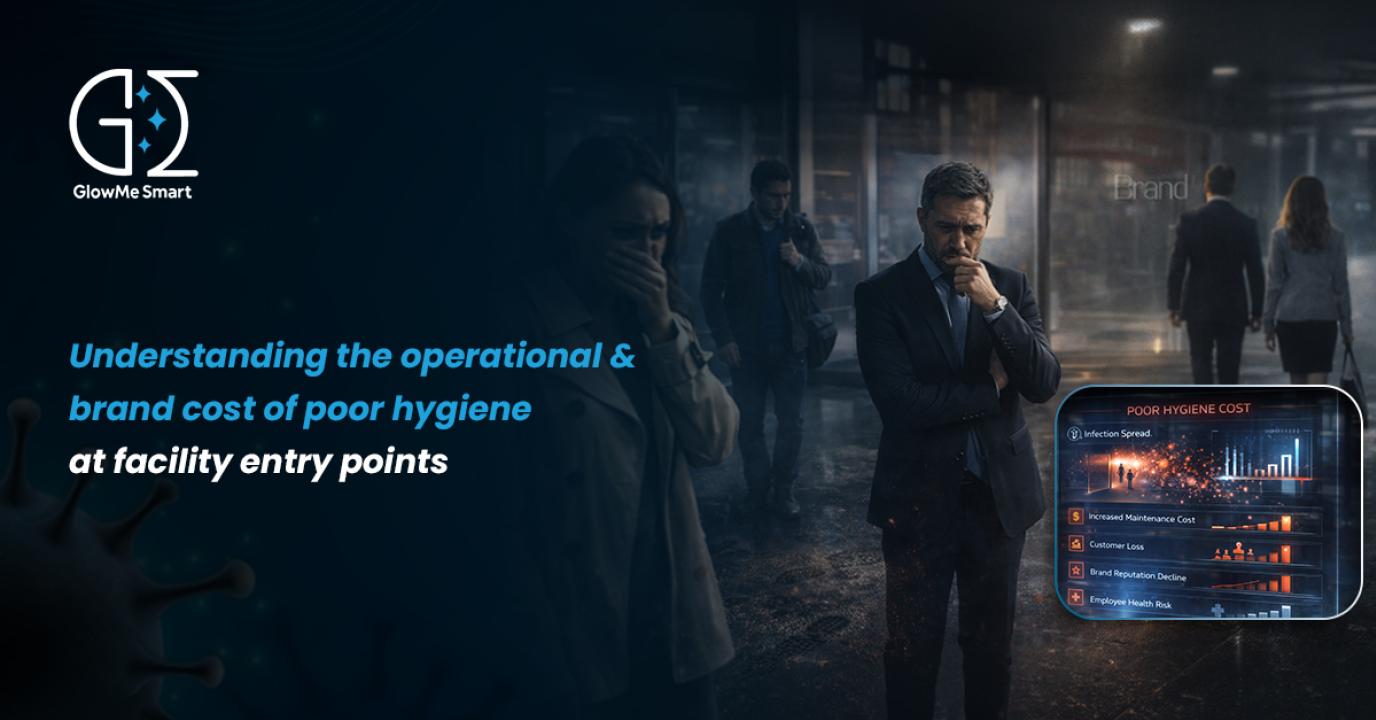
The honest answer is yes — and the cost is broader than most facility budgets account for. Poor entry hygiene does not announce itself as a line item. It shows up distributed across multiple cost centres, which is exactly why it gets underestimated until something forces a closer look.
The most visible cost is floor maintenance. Facilities that do not treat contamination at entry spend significantly more on floor cleaning cycles, chemical consumables, and equipment wear than those that stop contamination before it crosses the threshold.
The less visible cost is staff health. Shared environments where contamination enters unchecked through high-footfall access points see higher rates of respiratory and contact-transmitted illness among staff - which translates directly into sick leave, temporary cover costs, and lost productivity that no one attributes to the entry hygiene gap that caused it.
The least visible cost is reputational. A visitor who walks into a gym, school, or hotel and notices an odor, visible contamination on the floors, or the absence of any structured hygiene measures forms an impression that no marketing budget can reliably undo.
What Does an Entrance Sanitation System Actually Prevent?
An entrance sanitation system is the operational intervention that stops contamination at the point of entry rather than managing its consequences after it has spread through the facility. The distinction matters because reactive cleaning addresses symptoms. Entry hygiene infrastructure addresses the source.
Here is what a properly installed system prevents in measurable operational terms:
Pathogen transfer from footwear to indoor floors: Shoe soles carry up to 90% of outside contamination onto indoor surfaces within the first few steps — treating them at entry stops that transfer before it starts.
Helmet and personal item contamination entering shared spaces: Items carried through public transport and outdoor environments bring surface bacteria into offices, schools, and gyms that no internal cleaning schedule addresses.
Odour accumulation in enclosed venues: Gyms, sports clubs, and locker-adjacent corridors develop persistent odour problems that originate at entry — an entrance sanitation system that treats footwear at the door removes the source rather than masking the symptom.
Compliance gaps during regulatory inspections: Facilities without documented entry hygiene records face avoidable exposure during health, safety, and accreditation audits — logged kiosk cycles close that gap directly.
Cross-contamination in high-density environments: Schools, hospitals, and corporate offices, where large numbers of people occupy shared spaces, amplify any contamination that enters unchecked at access points.
GlowMe Smart's kiosk range - including StepTron for footwear and HelmetTron for helmets - operates at exactly this entry point, stopping contamination before it becomes an operational or reputational problem inside the facility.
Is Hygiene Kiosk Cost Justified Against the Operational Savings?
This is the question that stalls most procurement decisions — and it deserves a direct answer. Hygiene kiosk cost is a one-time capital investment with recurring savings spread across multiple cost centres. The comparison is not kiosk cost versus doing nothing. It is the kiosk cost versus the accumulated expense of what poor entry hygiene costs the facility every month.
Here is where the savings show up:
Reduced floor maintenance frequency: Entry-point disinfection reduces the contamination load reaching indoor floors, directly cutting cleaning cycle costs and chemical consumables over time.
Lower staff sick leave rates: Facilities with documented entry hygiene infrastructure consistently report fewer contact-transmission illness events among staff — a saving that compounds across every month of operation.
Avoided compliance penalties: A single failed hygiene inspection in a school, hospital, or food-adjacent commercial space can trigger penalties and remediation costs that dwarf the hygiene kiosk cost several times over.
Reduced odour-related maintenance spend: Gyms and sports venues that address footwear contamination at entry spend less on deep-cleaning cycles, deodorising treatments, and the member complaints those conditions generate.
Extended floor and surface lifespan: Reducing the volume and frequency of contamination reaching indoor surfaces slows the wear and degradation of flooring materials — a capital asset protection argument that rarely features in hygiene procurement conversations but consistently shows up in long-term facility budgets.
How Do You Calculate Facility Sanitation ROI Accurately?
Facility sanitation ROI is not a single number — it is a calculation that accounts for both the direct cost savings and the avoided costs that entry hygiene infrastructure generates across a facility's operational budget.
The direct savings are the easier side of the calculation: reduced cleaning frequency, lower consumables spend, and fewer sick days. These can be tracked against pre-installation baselines within the first quarter of operation.
The avoided costs are harder to quantify but more significant in value: compliance penalties not incurred, reputational damage not sustained, client or member relationships not lost because a hygiene failure made the facility look operationally careless.
Here is how to build an honest facility sanitation ROI assessment:
Baseline your current hygiene-related costs: Pull three months of floor maintenance invoices, staff sick leave data, and any compliance-related expenditure before installation as the comparison baseline.
Map contamination entry points before specifying units: Identify which access points carry the highest footfall and contamination risk — this determines where kiosks deliver the fastest measurable return.
Account for avoided costs explicitly: Factor in the cost of one compliance failure, one hygiene-related member or client complaint, and one deep-cleaning remediation event — these are real costs the infrastructure prevents.
Review logged cycle data quarterly: GlowMe Smart kiosks log every disinfection cycle — use that data to demonstrate utilisation rates and hygiene performance against the baseline you established before installation.
Include brand and perception value: For hospitality, education, and healthcare-adjacent facilities, the visible presence of structured entry hygiene infrastructure carries a measurable impact on visitor confidence that feeds into retention and referral metrics.
Is an Automated Disinfection Kiosk the Right Infrastructure Decision for Your Facility?
For any facility managing more than moderate daily footfall, the question is not whether an automated disinfection kiosk is worth the investment. The question is how much longer the facility can absorb the operational and reputational cost of not having one.
GlowMe Smart builds kiosks for the specific contamination points that matter most at commercial entry — footwear, helmets, and personal belongings — each unit purpose-built to operate without staff dependency, log every cycle, and deliver consistent disinfection performance regardless of how busy the entrance gets.
The entry point is where hygiene either starts or fails. Facilities that treat it as infrastructure rather than an afterthought stop paying the hidden cost of poor hygiene and start building the kind of operational record that holds up under any inspection, any audit, and any visitor's first impression.
Talk to GlowMe Smart today and find out what the right automated disinfection kiosk will save your facility from day one.