
The cybersecurity industry operates under a unique set of pressures that generic Customer Relationship Management (CRM) tools simply cannot address. In 2026, as threat landscapes evolve faster than ever and regulatory frameworks like GDPR, CISA, and ISO 27001 tighten their grip, cybersecurity firms face a paradox: they must demonstrate impenetrable data handling while aggressively growing their client base. Standard CRMs—built for retail or general B2B sales—lack the granular permissions, incident tracking, and threat-intelligence integration required by MSSPs (Managed Security Service Providers), pen-testing firms, and compliance consultancies.
This article explores the top crm platforms designed for cybersecurity companies in 2026. These solutions go beyond lead management, offering SOC (Security Operations Center) alignment, breach notification workflows, and airtight audit trails.
Why Cybersecurity CRMs Differ from Mainstream Alternatives
Before diving into specific platforms, it is critical to understand the three distinct requirements of a cybersecurity CRM:
Data Fortification and Access Control: Cybersecurity vendors hold highly sensitive customer data, including network architectures, vulnerability reports, and remediation timelines. A CRM for this sector must feature attribute-based access control (ABAC), field-level encryption, and session recording to comply with FedRAMP or state-level privacy laws.
Incident-to-Sales Pipeline Integration: When a breach occurs, clients need immediate help. The CRM must seamlessly convert a support ticket or a security alert into a billable service engagement without manual re-entry.
Compliance as a Feature: Audit logs, data residency controls, and automated retention policies are not optional. In 2026, clients demand SOC 2 Type II reports for their vendors’ CRMs.
With these criteria established, here are the top platforms leading the market.
1. Zoho CRM for Cybersecurity (Enterprise Shield Edition)
Zoho has aggressively pivoted to serve regulated industries. Their 2026 "Shield Edition" offers a pre-configured cybersecurity vertical solution. Unlike the generic Zoho CRM, this version includes a "Threat Response Dashboard" that links email threads from suspected phishing incidents directly to opportunity stages.
Key Strengths:
Zero-Knowledge Architecture: Zoho cannot decrypt customer data stored in CRM fields designated as "security classified." This feature is contractually binding, addressing a major concern for cyber firms worried about cloud provider data leaks.
Automated SLA Enforcement: For incident response retainers, the CRM automatically escalates overdue patch verification tasks from the project module to the CEO’s dashboard.
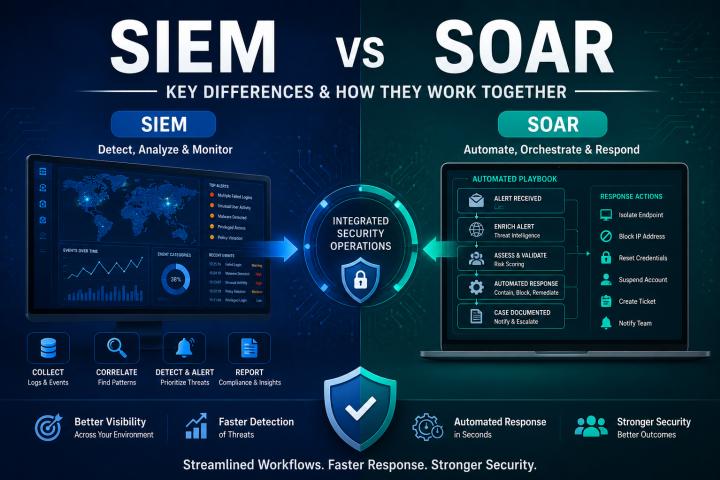
Integration with SIEMs: Out-of-the-box connectors for Splunk, QRadar, and Sentinel allow security alerts to create follow-up tasks for account managers.
Best For: Mid-sized MSSPs and incident response teams that require tight coupling between security telemetry and client communications.
2026 Update: Zoho now includes an AI agent, "Zia-Sec," which analyzes client communication patterns to predict churn based on decreased mentions of compliance checklists.
2. HubSpot for Cybersecurity (Operations Hub + Custom Objects)
HubSpot is not a vertical-specific CRM by default, but its 2026 Operations Hub allows unprecedented customization. Cybersecurity companies choose HubSpot when they need a unified platform for marketing, sales, and post-breach client retention. The secret lies in custom objects: you can model "Vulnerabilities," "Pen-Tests," and "Remediation Plans" as first-class citizens alongside contacts and deals.
Key Strengths:
Lifecycle Stages for Security Services: Move a client from "Prospect" to "Vulnerability Scan Scheduled" to "Remediation Retainer Active." These stages trigger different compliance documentation (e.g., auto-sending a NDA before the first scan).
Document Tracking with Tamper-Evidence: Every proposal, pentest report, and MSA uploaded to HubSpot gets a blockchain-based hash timestamp to prove integrity during legal disputes.
Marketplace Security: The HubSpot App Marketplace now features a "Security Verified" badge for integrations that meet CIS Benchmarks, reducing supply chain risk for the CRM itself.
Best For: Growth-stage cybersecurity SaaS vendors and consulting firms that rely heavily on inbound marketing (e.g., whitepapers on ransomware trends) to generate leads.
2026 Update: HubSpot launched "Breach Response Playbooks" – automated workflows that, when a deal stage changes to "Active Incident," pause all marketing emails to the affected contact and route communications through a dedicated secure portal.
3. Salesforce Financial Services Cloud (Configured for Cyber Risk)
While Salesforce offers a generic Sales Cloud, cybersecurity companies in 2026 are adopting the Financial Services Cloud due to its advanced risk and compliance framework. This platform is overkill for small firms but ideal for large cyber insurers, breach coaches, and enterprise-grade MSSPs managing millions in annual recurring revenue (ARR).
Key Strengths:
Dynamic Data Masking: Different Salesforce profiles (sales rep, SOC analyst, compliance officer) see different portions of the same customer record. A sales rep sees contact info and opportunity amount; a SOC analyst sees vulnerability severity scores but not billing details.
Einstein Trust Layer: Salesforce’s generative AI is segregated from the LLM training data. This allows cyber firms to use AI for drafting post-breach reports without exposing customer IP to external models.
Audit Trail Forever: Retention of all metadata changes for 10+ years, satisfying NIST 800-171 requirements for government cyber contractors.
Best For: Enterprise cybersecurity providers with over 200 employees, particularly those selling to financial institutions or the defense industrial base.
2026 Update: Salesforce now includes "Breach Cost Calculator" widgets that pull real-time data from the CRM’s historical service tickets to estimate financial exposure for prospects.
4. Pipedrive + Securicy (The Composable Stack)
Not every cybersecurity company needs a monolithic CRM. Pipedrive, known for its deal-centric interface, has become the foundation of a "composable CRM" strategy when paired with a security middleware layer like Securicy. This approach gives cyber firms full control over data residency and encryption keys.
Key Strengths:
Visual Pipeline for Incident Retainers: Pipedrive’s drag-and-drop pipeline is unmatched for tracking the lifecycle of a security assessment, from "Contract Sent" to "Log Collection" to "Draft Report" to "Client Walkthrough."
Bring Your Own Key (BYOK): Using the Securicy integration, all Pipedrive data is encrypted at rest with keys held only by the cybersecurity firm, not Pipedrive or Securicy.
Webform Security: Lead capture forms can include a cryptographic nonce to prevent bot-submitted vulnerability disclosures—a common attack vector against cyber firms’ own websites.
Best For: Boutique penetration testing firms and vCISO (virtual Chief Information Security Officer) practices that need a simple, visual pipeline without the bloat of enterprise CRM.
2026 Update: Pipedrive released "Smart Data Zones," allowing a UK-based cyber firm to ensure all client vulnerability data never leaves a European Union data region, even if the CRM vendor processes metadata in the US.
5. Monday Sales CRM (for Cyber Workflow Automation)
Monday.com’s CRM product has matured significantly, and in 2026 it excels at visualizing complex, multi-stakeholder security sales. Where traditional CRMs struggle to show a single deal involving a CISO, a legal reviewer, and a procurement officer, Monday’s relational boards provide clarity.
Key Strengths:
Automated Evidence Collection: For cybersecurity firms seeking SOC 2 or ISO 27001 certification themselves, Monday Sales CRM can automate the collection of access reviews and change logs, turning the CRM into a source of compliance evidence.
Client Portal View: Clients can be given restricted login access to see the status of their penetration test or SOC coverage without viewing internal notes or pricing.
Time Tracking for Billable Incidents: Native time tracking on CRM activities allows for automatic generation of incident response invoices based on minutes spent containing a breach.
Best For: Smaller cybersecurity teams (10–100 people) who value visual project management alongside sales. Ideal for firms offering both recurring monthly security services and ad-hoc incident response.
2026 Update: Monday launched "Threat Intel Board" – a private board where sales reps can tag competitors and emerging threat actors, linking them to lost deals for pattern analysis.
How to Choose the Right CRM for Your Cybersecurity Firm in 2026
Selecting from these top platforms requires a frank assessment of your business model:
If you sell software (SaaS): HubSpot or Salesforce, due to their subscription management and renewal forecasting.
If you sell services (pen-testing, vCISO): Pipedrive or Monday, for workflow visibility and time-to-bill tracking.
If you are an MSSP with 24/7 SOC: Zoho Shield Edition, for its native SIEM integration.
If you have government or financial clients: Salesforce with dynamic data masking, strictly for compliance audit capabilities.
The Verdict: No One-Size-Fits-All, But Specialization Wins
The era of forcing cybersecurity sales and service delivery into a generic CRM (like a vanilla Salesforce Sales Cloud or a basic ActiveCampaign) ended in 2024. In 2026, the market has spoken: specialized layers—whether Zoho’s Shield, HubSpot’s custom objects, or Pipedrive’s composable stack—are non-negotiable.
Cybersecurity companies must also vet their CRM provider’s own security posture. Before signing a contract, request the CRM vendor’s SOC 2 Type II report, penetration testing summary, and data subprocessor list. A platform that cannot secure its own infrastructure has no place managing your clients’ attack surface data.
Ultimately, the top CRM for your cybersecurity company is the one that reduces friction between your sales team and your SOC, automates compliance artifacts, and treats client data with the same rigor you sell to your customers. Choose accordingly, and your CRM will become a competitive weapon—not a liability.