
The IT industry is undergoing rapid transformation driven by cloud adoption, automation, software-defined networking, and hybrid enterprise environments. As organizations modernize their infrastructure, the need for skilled network engineers who can design, manage, and troubleshoot complex enterprise systems continues to rise.
In this evolving landscape, advanced certifications play a key role in helping professionals stay competitive and relevant. Among them, CCIE Enterprise Infrastructure remains one of the most respected credentials for enterprise networking experts.
CCIE EI Training helps network engineers develop advanced technical expertise in routing, switching, automation, SD-WAN, wireless networking, and enterprise infrastructure technologies that are essential for managing modern IT environments.
What Is CCIE EI Training?
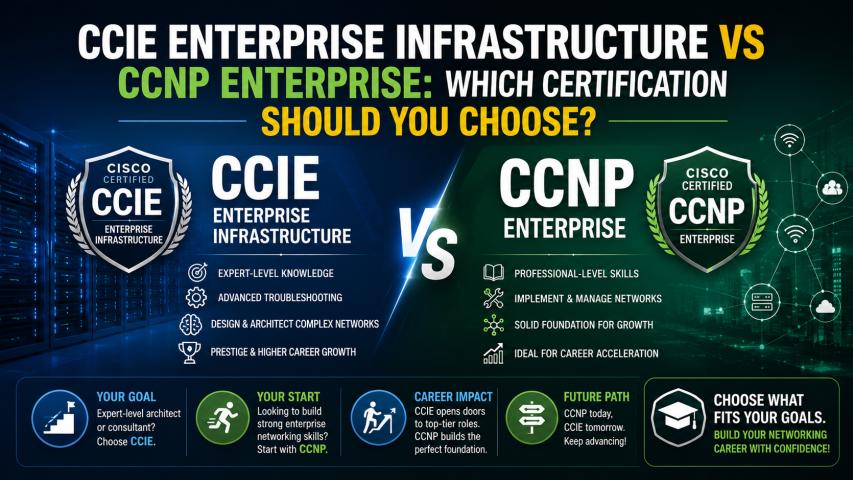
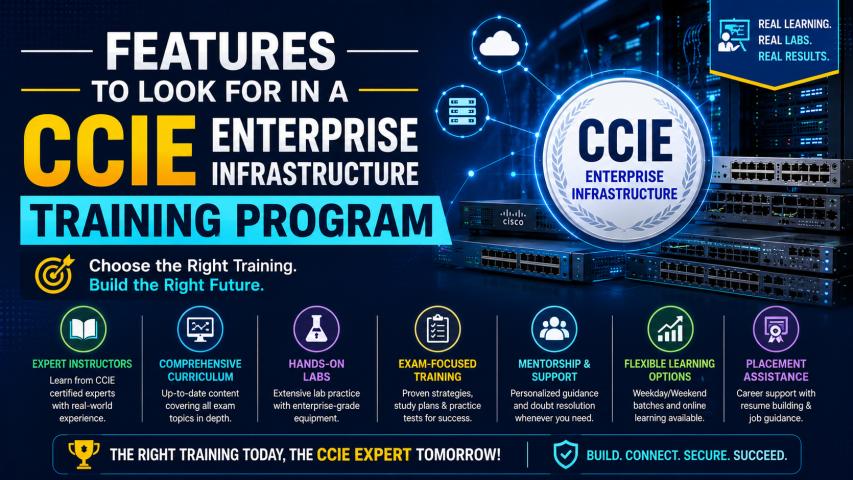
CCIE EI Training is a structured learning path designed to prepare professionals for the CCIE Enterprise Infrastructure certification offered by Cisco Systems.
It focuses on building deep technical knowledge and hands-on skills required to work in complex enterprise environments.
Core Areas Covered in CCIE EI Training
Advanced routing and switching
SD-WAN architecture and deployment
Wireless networking fundamentals
Network automation and programmability
Enterprise infrastructure design
Troubleshooting large-scale networks
High availability and redundancy
Certification Structure
The CCIE Enterprise Infrastructure certification typically includes:
Core written exam
Practical lab exam
Both components are designed to test theoretical understanding and real-world implementation skills.
Why CCIE EI Training Matters for Network Engineers
Modern enterprise networks are more complex than ever due to digital transformation and cloud integration. Network engineers must now handle hybrid environments, automation tools, and security requirements.
Increasing Network Complexity
Enterprise environments today include:
Multi-cloud infrastructure
Remote workforce connectivity
Software-defined networking
Virtualized environments
Distributed data centers
This complexity demands advanced-level expertise that CCIE EI Training helps develop.
Industry Recognition and Credibility
CCIE certification is globally recognized as a mark of expert-level networking knowledge. Employers often associate it with strong technical and troubleshooting capabilities.
Career Benefits of CCIE EI Training
CCIE EI Training provides significant career advantages for network engineers aiming to advance in enterprise IT roles.
Better Job Opportunities
Professionals with advanced enterprise networking skills are eligible for roles such as:
Enterprise Network Engineer
Network Architect
Infrastructure Consultant
Automation Engineer
Technical Solutions Architect
Network Operations Lead
Organizations prefer candidates with deep technical expertise for senior-level roles.
Salary Growth Potential
One of the key benefits of CCIE-level expertise is higher earning potential. Salary growth is influenced by:
Level of experience
Industry demand
Technical specialization
Geographic region
Automation and cloud skills
Professionals with enterprise networking and automation expertise are highly valued in the IT industry.
Global Career Scope
Enterprise networking skills are in demand across multiple industries, including:
Banking and finance
Healthcare
Telecommunications
Government organizations
Cloud service providers
IT consulting firms
This global demand makes CCIE EI Training a strong career investment.
Technical Skills Developed Through CCIE EI Training
CCIE EI Training focuses on building advanced technical competencies required in real-world enterprise environments.
Networking Fundamentals
Engineers gain deeper knowledge of:
Routing protocols like OSPF and BGP
Switching technologies
IP addressing and subnetting
Network segmentation
SD-WAN and Modern Networking
Training includes modern enterprise technologies such as:
SD-WAN architecture
Traffic optimization
Secure connectivity
Application-aware routing
Automation and Programmability
Automation is a key part of modern networking. Training covers:
Python scripting
REST APIs
JSON and YAML
Network automation tools
Wireless Networking
Professionals also learn enterprise wireless concepts such as:
Wireless LAN design
Security protocols
Access point management
Mobility solutions
Importance of Hands-On Lab Practice
Practical experience is essential in CCIE EI Training because real-world enterprise networking requires problem-solving under pressure.
Real-World Simulation
Lab environments simulate enterprise scenarios such as:
Network failures
Configuration errors
Performance issues
Connectivity problems
Skill Development Through Practice
Hands-on labs help engineers improve:
Troubleshooting speed
Technical accuracy
Analytical thinking
Infrastructure management skills
Role of Cloud Computing in Enterprise Networking
Cloud computing has significantly changed how enterprise networks are designed and managed.
Hybrid Cloud Environments
Modern organizations use:
Public cloud platforms
Private cloud systems
Hybrid cloud infrastructures
Network engineers must ensure seamless connectivity across all environments.
Multi-Cloud Challenges
Managing multiple cloud providers introduces challenges such as:
Network latency optimization
Secure data transfer
Traffic management
Infrastructure scalability
CCIE EI Training helps professionals understand these complexities.
Automation in Modern Networking
Automation is a key trend shaping enterprise networking careers.
Why Automation Is Important
Automation helps organizations:
Reduce human errors
Improve efficiency
Speed up deployments
Simplify network operations
Skills Required for Automation
Engineers must understand:
Scripting languages
API integration
Infrastructure automation tools
Configuration management
Enterprise Security Integration
Modern network engineers must also understand security principles.
Security in Enterprise Networks
Key security concepts include:
Access control
Network segmentation
Identity management
Secure remote access
Importance of Security Awareness
As cyber threats increase, organizations prefer engineers who understand both networking and security fundamentals.
Challenges in CCIE EI Training
While the certification offers many benefits, it also presents challenges.
Complex Technical Content
The training covers advanced and wide-ranging networking topics.
Time-Intensive Preparation
Candidates often spend months preparing through:
Study sessions
Lab practice
Mock exams
Real-world simulations
Work-Life Balance
Many professionals balance training with full-time jobs, requiring discipline and time management.
Future Scope of CCIE EI Training
Enterprise networking will continue evolving with technology trends.
Growing Digital Transformation
Organizations are investing in:
Cloud infrastructure
Automation platforms
AI-driven networking
Remote connectivity solutions
Long-Term Career Stability
Enterprise networking remains essential for:
Business continuity
Connectivity
Infrastructure reliability
Secure communication
This ensures strong future demand for skilled professionals.
Conclusion
CCIE EI Training plays a crucial role in shaping highly skilled network engineers capable of managing modern enterprise infrastructures. With increasing complexity in networking environments, professionals who develop advanced skills in routing, switching, automation, SD-WAN, and wireless technologies gain a strong competitive advantage in the IT industry.
The certification opens doors to better job roles, higher salaries, and global career opportunities. It also enhances technical expertise and prepares engineers for real-world enterprise challenges.
For professionals aiming to advance their careers in enterprise networking, investing in CCIE Certification Training in Bangalore can be a valuable step toward achieving long-term success in the evolving IT landscape.