Enterprise networks today are no longer defined only by routers, switches, and connectivity. They are defined by identity, context, and policy. As organizations move toward hybrid work environments, cloud adoption, and zero-trust security models, controlling “who gets access to what” has become more important than ever.
In this evolving landscape, identity-based network access control plays a central role in securing enterprise infrastructure. One of the most widely used solutions for this purpose is Cisco Identity Services Engine (ISE), which provides centralized control over network access decisions based on user identity and device posture.
Cisco ISE Training is becoming increasingly important for network engineers because it helps them understand how identity, policy, and enforcement work together in real enterprise environments.
What Makes Cisco ISE Different From Traditional Security Tools
Traditional network security tools focus mainly on blocking or allowing traffic based on IP addresses, ports, or protocols. However, modern enterprise environments require deeper intelligence.
Cisco ISE, developed by Cisco Identity Services Engine, shifts security from network-based rules to identity-based control.
Traditional Security vs Cisco ISE Approach
Traditional security: Focuses on “where traffic comes from”
Cisco ISE: Focuses on “who is accessing and under what conditions”
This shift enables organizations to apply dynamic security policies that adapt based on user role, device type, and compliance status.
High-Level Cisco ISE Architecture Overview
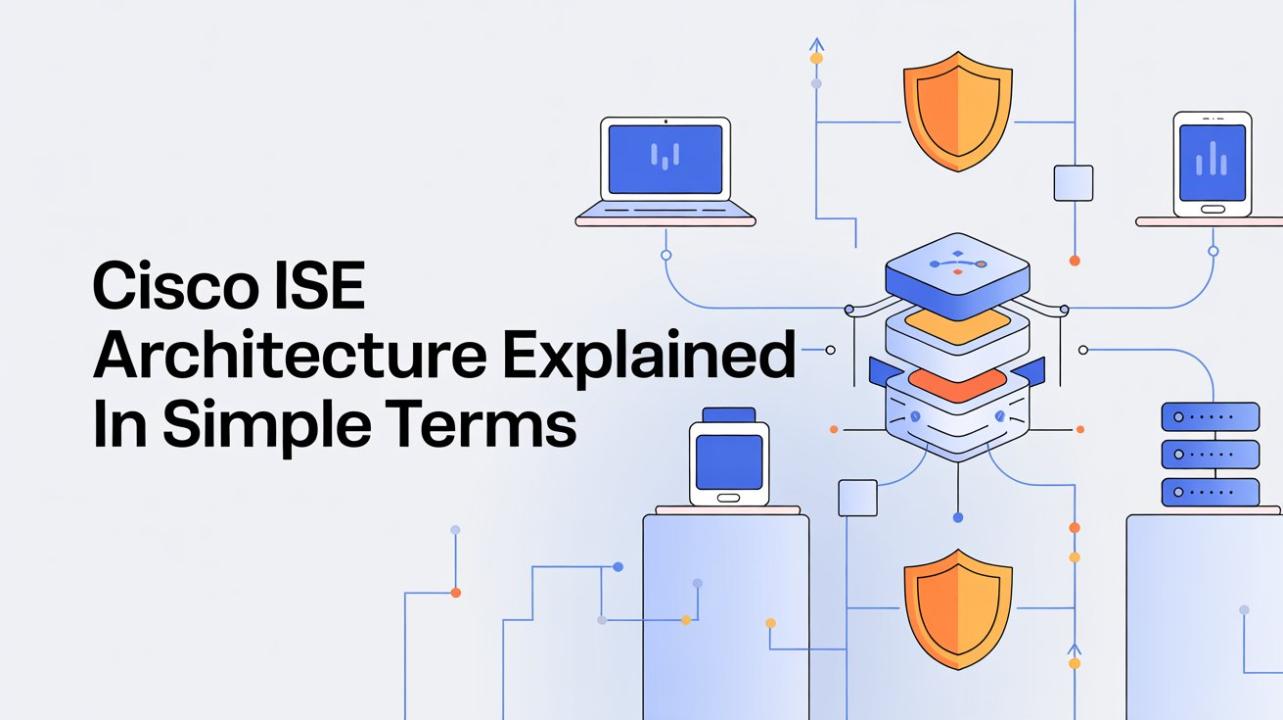
Cisco ISE is built on a distributed architecture designed for scalability, resilience, and performance. Instead of a single system handling everything, Cisco ISE splits responsibilities across multiple functional nodes.
This architecture ensures that authentication, policy enforcement, and logging are handled efficiently even in large enterprise environments.
The Three Core Personas in Cisco ISE
Cisco ISE architecture revolves around three main personas (roles). Each persona performs a specific function in the system.
Policy Administration Node (PAN)
What PAN Actually Does
The Policy Administration Node acts as the brain of Cisco ISE. It is responsible for configuration and policy management across the entire system.
Key Responsibilities of PAN
Creating and managing policies
Configuring network access rules
Managing system settings
Providing GUI access for administrators
Synchronizing configurations across nodes
Why PAN Is Important
Without PAN, administrators would not have a centralized way to define or control security policies. It ensures consistency across the entire deployment.
Policy Service Node (PSN)
Role of PSN in Real-Time Decisions
The Policy Service Node is where real-time authentication and authorization happens. It directly interacts with network devices like switches, wireless controllers, and VPN gateways.
Functions of PSN
Processing authentication requests
Evaluating access policies
Communicating with identity stores
Enforcing security decisions
Handling RADIUS and TACACS+ requests
Why PSN Is Critical
PSNs are deployed close to users and devices to reduce latency. This ensures that network access decisions happen quickly without impacting user experience.
Monitoring and Troubleshooting Node (MnT)
Purpose of MnT
The Monitoring and Troubleshooting node is responsible for visibility and reporting.
Key Functions of MnT
Collecting logs from all nodes
Generating security reports
Tracking authentication history
Monitoring system health
Supporting forensic analysis
Why MnT Matters
MnT provides the visibility needed to detect security incidents and analyze network behavior over time.
How Cisco ISE Processes a Network Access Request
To understand Cisco ISE architecture clearly, it helps to follow a real-world access scenario.
Step 1: Device Attempts to Connect
A user connects a laptop to a corporate Wi-Fi or plugs into a wired network port.
Step 2: Network Device Forwards Request
The switch or wireless controller sends authentication requests to Cisco ISE using RADIUS or 802.1X protocols.
Step 3: Identity Verification Begins
Cisco ISE checks:
User credentials
Device identity
Certificate status
Active Directory group membership
Step 4: Policy Evaluation Happens
Based on identity and context, Cisco ISE evaluates policies such as:
User role (employee, guest, contractor)
Device type (corporate or personal)
Location
Compliance status
Step 5: Access Decision Is Sent
Cisco ISE returns one of the following decisions:
Full access
Limited access
Quarantine access
Denied access
This decision is enforced immediately by the network device.
Identity as the Core of Cisco ISE Architecture
Unlike traditional network security systems, Cisco ISE is built entirely around identity.
Identity Sources Used by Cisco ISE
Cisco ISE integrates with multiple identity stores such as:
Active Directory
LDAP directories
Local user databases
Why Identity Matters
Identity ensures that access decisions are based on “who the user is” rather than just device location or IP address.
Policy Engine: The Brain Behind Access Control
Cisco ISE uses a powerful policy engine to determine access behavior.
What Policy Engine Does
It evaluates conditions such as:
User identity
Device posture
Time of access
Network location
Security compliance
Example Policy Logic
A simple rule might look like:
If user = employee AND device = compliant → full access
If user = guest → internet-only access
If device = non-compliant → quarantine network
Endpoint Visibility and Profiling
Cisco ISE does more than just authentication. It also identifies devices connected to the network.
How Profiling Works
It analyzes:
MAC addresses
DHCP requests
Network behavior
Operating system fingerprints
Why Profiling Is Useful
It helps organizations automatically detect:
Printers
IP phones
Laptops
IoT devices
This allows better control and segmentation of network traffic.
Posture Assessment and Compliance Checking
Cisco ISE checks whether devices meet security requirements before granting access.
Compliance Checks Include
Antivirus status
Firewall settings
Operating system updates
Security patches
What Happens If Device Fails
Non-compliant devices may be:
Restricted
Redirected to remediation portal
Placed in quarantine network
Cisco ISE in Modern Security Architecture
Cisco ISE is a key component in modern zero trust environments.
Zero Trust Integration
In a zero trust model:
No device is trusted by default
Every access request is verified
Continuous monitoring is enforced
Cisco ISE enables this by enforcing identity-based policies at every access point.
Integration with Enterprise Systems
Cisco ISE integrates with multiple technologies:
Firewalls
VPN gateways
Wireless controllers
SIEM platforms
Endpoint security tools
This integration improves visibility and strengthens security enforcement.
Benefits of Cisco ISE Architecture
Centralized Access Control
All policies are managed from a single platform.
Scalability for Large Enterprises
Distributed nodes allow deployment across multiple locations.
Strong Security Enforcement
Access is granted only after identity verification.
Real-Time Visibility
Organizations gain insight into:
User activity
Device behavior
Network health
Challenges in Cisco ISE Implementation
While powerful, Cisco ISE can be complex to deploy.
Configuration Complexity
Requires deep understanding of:
Network protocols
Identity systems
Policy design
Integration Effort
Connecting with existing infrastructure may require careful planning.
Ongoing Maintenance
Regular updates and monitoring are needed for optimal performance.
Future of Cisco ISE Architecture
Cisco ISE continues to evolve with modern enterprise needs.
Shift Toward Cloud-Based Identity
Hybrid and cloud-managed identity systems are becoming more common.
Increased Automation
Future systems will rely more on:
Automated policy decisions
AI-driven threat detection
Intelligent access control
Stronger Zero Trust Adoption
Cisco ISE will continue playing a key role in enterprise zero trust strategies.
Conclusion
Cisco ISE architecture provides a powerful and scalable framework for managing identity-based network access in modern enterprise environments. By separating responsibilities into policy administration, policy enforcement, and monitoring components, it ensures both performance and security at scale.
Understanding Cisco ISE is essential for network engineers who want to work in enterprise security environments where identity-driven access control is becoming the standard.
Cisco ISE Training helps professionals develop practical skills in deployment, configuration, and troubleshooting, making them more effective in real-world enterprise roles.
In conclusion Cisco ISE remains a foundational technology for implementing secure, identity-based access control in modern IT infrastructures.