Have you ever wondered why you keep returning to the same coffee shop even when a cheaper option opens nearby? Or why do you always choose the same airline, even if it costs a bit more? Chances are, a well-crafted customer loyalty program is working silently behind the scenes, and the brands involved know exactly what they’re doing.
Customer loyalty programs have become one of the most effective tools in modern business. If you are a consumer puzzled by your point collection habits or a business owner looking to reduce turnover and boost repeat sales, this guide explains everything in simple terms.
5×: Cheaper to retain a customer than acquire a new one
65%: Of a company's business comes from existing customers
84%: Of consumers say they're more likely to stick with brands that offer loyalty rewards
What are customer loyalty programs?
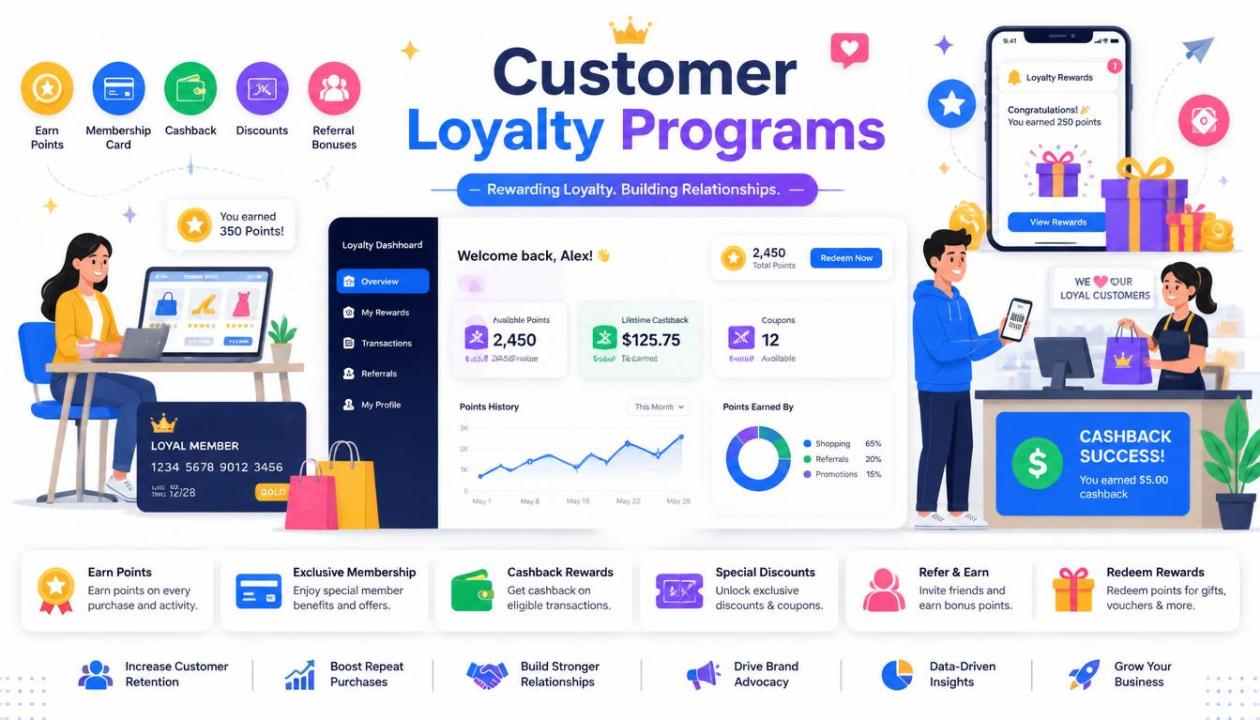
A customer loyalty program is a structured marketing strategy that rewards customers for making repeat purchases or staying engaged with a brand. Instead of treating each transaction as one-time, these programs create an ongoing connection. The more you buy or interact, the more benefits you receive.
At their heart, customer loyalty programs meet a basic human need: the desire to feel appreciated. When a brand recognizes your loyalty and offers you something in return, like a discount, a free item, or exclusive access, it strengthens your emotional bond with that brand. This isn’t by chance; it’s intentional.
Types of customer loyalty programs
Not all loyalty programs are the same. Here’s a look at the most common types, each designed for different business models and customer behaviors.
Points-based programs
The most common type: Customers earn points for every purchase, which they can later exchange for discounts, free products, or other benefits.
Tiered programs
Customers advance through reward tiers (Silver, Gold, Platinum) as they spend more. Higher tiers offer more valuable perks.
Paid (subscription) programs
Customers pay an upfront fee for premium benefits, like Amazon Prime. The value must be clear right away.
Value-based programs
Instead of direct rewards, brands donate part of purchases to causes important to the customer. This builds loyalty based on shared values.
Coalition programs
Multiple businesses collaborate to allow customers to earn and redeem rewards across various brands (like airline alliances or shopping mall points).
Referral programs
Customers receive rewards for bringing in new customers. This turns your most loyal buyers into brand advocates, creating word-of-mouth marketing automatically.
Real-world examples worth knowing
Now, let's look at a few loyalty programs that excel in execution and what makes each one effective.
Starbucks Rewards
Starbucks took a simple punch-card idea and transformed it into a fun, app-based experience. Customers earn "Stars" with purchases and can redeem them for free drinks and food. The mobile app, personalized offers, and birthday treats make members feel truly recognized, not just counted.
Why it works
Personalization + gamification + app convenience = daily habit formation. Starbucks Rewards members account for over 55% of total sales in the US.
Amazon Prime
Amazon Prime is a prime example of a paid loyalty program done right. For an annual fee, members enjoy free two-day shipping, streaming, exclusive deals, and more. The perceived value clearly surpasses the cost, and once you join, switching becomes difficult.
Why it works
Sunk cost psychology + stacked benefits + ecosystem lock-in mean Prime members spend nearly double annually compared to non-Prime customers.
Sephora Beauty Insider
Sephora's tiered program (Insider → VIB → Rouge) offers a clear aspirational ladder. As customers spend more, they unlock better perks, including birthday gifts and early access to exclusive events. The beauty community values status, and Sephora embraces that perfectly.
Why it works
Status-driven tiers satisfy the human need for recognition. Members tend to spend more per visit just to keep or advance their tier.
Key benefits of customer loyalty programs
When done thoughtfully, these programs provide real, measurable value for both the business and the customer.
Increased repeat purchases
Loyal customers don't just return; they come back more often and spend more each time. A loyalty program gives them a reason to choose you over the competition.
Higher customer lifetime value (CLV)
The longer you keep a customer, the more revenue they generate over time. Even small increases in retention rates can significantly boost customer lifetime value (CLV).
Valuable first-party data
Loyalty programs encourage sign-ups, giving brands access to purchase habits, preferences, and demographic data that is increasingly rare in a world without cookies.
Organic word-of-mouth growth
Happy, rewarded customers share their experiences. Referral and community features in loyalty programs can turn customers into active brand supporters.
Competitive differentiation
In crowded markets, a loyalty program can give you an edge, especially when the product or price is similar to a competitor's.
What makes a loyalty program actually work?
Not every loyalty program works out. Many start with excitement but lose momentum because they confuse "giving discounts" with "building loyalty." Here’s what distinguishes the effective programs from the forgettable ones.
Clear, achievable rewards
If customers feel they'll never earn enough points to redeem anything valuable, they will lose interest. The best programs provide quick initial wins to create momentum and then introduce larger, aspirational rewards.
Emotional connection, not just transactions
The most effective loyalty programs make customers feel something. This could be a sense of community (like Peloton), shared values (such as Patagonia's repair programs), or personalized recognition (like Starbucks birthday offers). Transactional rewards alone do not create loyalty; they create a habit. There’s a difference.
Simplicity and ease of use
If signing up is complicated, tracking points is unclear, or redeeming feels like a challenge, customers will disengage. The best programs are so user-friendly that participation feels effortless.
Personalization at scale
Generic offers like "earn 1 point per £1" don’t excite anyone. Using the data collected through the program to send relevant, timely, personalized rewards drives real engagement. "Happy birthday, here’s a free drink on us" feels more meaningful than "you have 50 points."
Conclusion
Customer loyalty programs, when designed with real care for the customer experience, are more than just a marketing tactic; they are a way to build relationships. Whether it’s a simple points card at a local bakery or a complex tiered app-based system from a global brand, the main idea is the same: show customers they matter, and they’ll keep coming back. The best programs reward purchases and foster a sense of belonging. That’s something no competitor can easily copy.
Frequently asked questions
What is the most common type of customer loyalty program?
Points-based programs are the most commonly used. Customers earn points with each purchase and can redeem them for discounts, free products, or other rewards. They are popular because they are easy to understand and work well in many industries, from coffee shops to airlines to e-commerce.
Do customer loyalty programs actually increase sales?
Yes, when implemented well, they do. Research consistently shows that repeat customers spend more per transaction and visit more often. Studies indicate that increasing customer retention by just 5% can boost profits by 25–95%. However, poorly designed programs that offer little value can fail to have an impact.
How do I start a customer loyalty program for a small business?
Start simple. A digital punch card through apps like Stamp Me, Loopy Loyalty, or Square Loyalty is a great low-cost option. Define the behavior you want to reward (purchases, referrals, social shares), set a clear and achievable reward goal, and make it easy for customers to sign up. As your business grows, you can add more advanced features, like tier levels or personalization.
What is the difference between a loyalty program and a rewards program?
The terms are often used interchangeably, but there is a subtle difference. A rewards program usually focuses on giving customers something tangible in return for a purchase, like discounts or free items. A loyalty program is broader; it aims to create an ongoing emotional and behavioral relationship with the customer, using rewards as one of many tools. Think of rewards as the tactic and loyalty as the goal.
Are paid loyalty programs worth it for customers?
They can be if the benefits clearly outweigh the cost. Amazon Prime is a prime example: free shipping, streaming, exclusive deals, and more for a single annual fee. The key question to consider is: "Would I save more than I pay in membership fees?" If the answer is yes in the first few months, it’s likely worth it. Many paid programs also offer free trials, allowing you to evaluate the value before committing.