Cybercrime has evolved into a highly organized global industry. Today’s attackers do not only target businesses through phishing emails, ransomware attacks, or malware campaigns. Many cybercriminals also operate in hidden online marketplaces where stolen credentials, financial records, confidential business data, and hacking tools are actively bought and sold.
This hidden part of the internet is commonly known as the Dark Web.
For businesses, the dark web represents a serious cybersecurity concern because stolen company data often appears there before organizations even realize they have been compromised.
Leaked employee credentials, customer records, payment information, and internal documents can quickly become valuable assets for cybercriminals.
This is why Dark Web Monitoring has become an essential part of modern cybersecurity strategies.
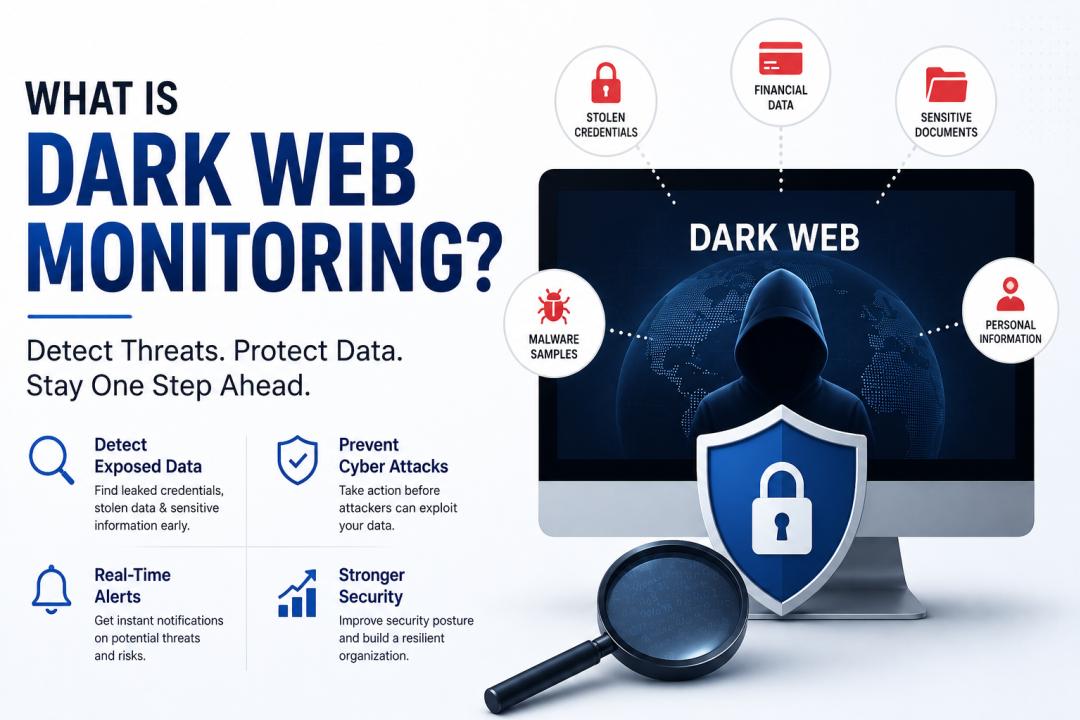
Dark Web Monitoring helps organizations identify exposed credentials, leaked data, and cybercriminal activity related to their business before attackers can cause larger damage.
In this article, we will explore:
- What the dark web is
- What dark web monitoring means
- How it works
- Why businesses need it
- Common cyber risks connected to the dark web
- Benefits of dark web monitoring
- Best practices for implementation
- The future of dark web intelligence
Understanding the Dark Web
To understand dark web monitoring, it is important to first understand what the dark web actually is.
The internet is generally divided into three layers:
Surface Web
The surface web includes websites indexed by search engines such as:
- Bing
- Yahoo
This is the publicly accessible internet most people use daily.
Examples include:
- News websites
- Social media platforms
- Company websites
- Blogs
- E-commerce stores
Deep Web
The deep web contains content not indexed by search engines.
This includes:
- Email accounts
- Banking portals
- Private databases
- Cloud storage
- Internal company systems
The deep web itself is not illegal. Most online content actually exists in this layer.
Dark Web
The dark web is a hidden section of the internet accessible through specialized software such as the Tor Browser.
Dark web platforms provide anonymity for users and website operators.
While some people use the dark web for privacy or secure communication, cybercriminals frequently use it for illegal activities such as:
- Selling stolen credentials
- Trading hacked databases
- Distributing malware
- Selling ransomware kits
- Sharing exploit tools
- Conducting fraud operations
Because of its anonymous nature, the dark web has become a major hub for cybercrime.
What Is Dark Web Monitoring?
Dark Web Monitoring is the process of continuously scanning dark web forums, marketplaces, chat groups, leak sites, and underground communities for information related to an organization or individual.
The goal is to identify:
- Stolen usernames and passwords
- Leaked customer data
- Compromised employee credentials
- Financial information exposure
- Intellectual property leaks
- Sensitive business documents
- Threat actor discussions
Dark web monitoring tools and cybersecurity analysts track these sources to detect early signs of compromise or data exposure.
When suspicious information is discovered, organizations receive alerts so they can take immediate action.
Why Dark Web Monitoring Is Important
Many organizations only discover a breach after:
- Customers report fraud
- Systems become encrypted by ransomware
- Accounts are compromised
- Data appears publicly online
By that point, attackers may already have access to sensitive systems and data.
Dark web monitoring helps organizations detect threats earlier.
This early visibility allows businesses to:
- Reset compromised passwords
- Investigate suspicious activity
- Strengthen security controls
- Prevent larger attacks
- Reduce financial and reputational damage
In many cases, dark web monitoring acts as an early warning system for cyber incidents.
Common Information Found on the Dark Web
Cybercriminals frequently buy, sell, and exchange different types of stolen information.
Compromised Credentials
Stolen usernames and passwords are among the most common items found on dark web marketplaces.
These credentials may come from:
- Phishing attacks
- Malware infections
- Third-party breaches
- Credential stuffing attacks
Compromised employee credentials can provide attackers with access to:
- Corporate email accounts
- Cloud platforms
- VPN systems
- Internal applications
Customer Data
Leaked customer records may include:
- Names
- Email addresses
- Phone numbers
- Payment information
- Account credentials
Exposed customer information increases fraud and compliance risks.
Financial Information
Dark web marketplaces often contain:
- Credit card data
- Banking details
- Cryptocurrency wallet information
Financial theft remains one of the primary motivations behind cybercrime.
Intellectual Property
Attackers may leak or sell:
- Proprietary business documents
- Source code
- Internal communications
- Product designs
- Research data
This can create long-term business and competitive risks.
Ransomware Leak Data
Modern ransomware groups often publish stolen data on dark web leak sites to pressure victims into paying ransom demands.
Dark web monitoring can help organizations detect leaked information quickly.
How Dark Web Monitoring Works
Dark web monitoring combines:
- Automated threat intelligence tools
- Data collection systems
- Human cybersecurity analysis
Monitoring platforms continuously scan dark web environments for indicators related to an organization.
These indicators may include:
- Company domains
- Employee email addresses
- Passwords
- IP addresses
- Brand names
- Customer information
When matches are identified, alerts are generated for security teams.
Main Components of Dark Web Monitoring
Threat Intelligence Collection
Cybersecurity teams gather intelligence from:
- Underground forums
- Dark web marketplaces
- Leak sites
- Messaging platforms
- Criminal communities
Data Correlation
Collected information is analyzed and correlated with organizational assets to determine relevance and severity.
Alerting and Notification
Organizations receive alerts when:
- Credentials appear online
- Sensitive data is leaked
- Threat actors mention the company
- New risks emerge
Investigation and Response
Security teams investigate findings and take remediation steps such as:
- Password resets
- Access reviews
- Incident response
- Threat hunting
- Security monitoring
Benefits of Dark Web Monitoring
Dark web monitoring provides several important cybersecurity advantages.
Early Threat Detection
Organizations can identify compromised data before attackers fully exploit it.
Reduced Risk of Account Takeover
Monitoring exposed credentials allows businesses to reset passwords quickly and prevent unauthorized access.
Faster Incident Response
Dark web intelligence improves response time by providing early visibility into potential breaches.
Improved Threat Intelligence
Security teams gain better understanding of:
- Emerging attack trends
- Threat actor behavior
- Active cybercriminal campaigns
Better Compliance and Risk Management
Dark web monitoring supports cybersecurity and privacy programs by helping organizations:
- Detect data exposure
- Reduce breach impact
- Improve incident readiness
Brand Protection
Businesses can identify unauthorized use of:
- Company names
- Executive identities
- Customer information
- Fake domains
This helps reduce reputational damage.
Industries That Benefit from Dark Web Monitoring
Dark web monitoring is important across nearly every industry, especially organizations handling sensitive information.
Industries that commonly use dark web monitoring include:
- Financial services
- Healthcare
- Government
- SaaS companies
- E-commerce businesses
- Manufacturing
- Education
- Technology providers
Any organization with customer data, intellectual property, or online systems can benefit from monitoring services.
Dark Web Monitoring and Ransomware Protection
Ransomware groups increasingly use double-extortion tactics.
This means attackers:
- Steal sensitive data
- Encrypt systems
- Threaten to leak data publicly
Dark web monitoring helps identify leaked data on ransomware portals and criminal forums.
This visibility supports:
- Faster response
- Legal coordination
- Risk assessment
- Incident management
Challenges of Dark Web Monitoring
Although valuable, dark web monitoring also presents challenges.
Anonymous Environments
Dark web communities frequently change domains and communication methods.
Massive Data Volumes
Monitoring large amounts of underground data requires advanced intelligence capabilities.
False Positives
Not every exposed credential or mention represents an active threat.
Security teams must validate findings carefully.
Encrypted Communication Channels
Some cybercriminal groups operate in private encrypted channels that are harder to monitor.
Best Practices for Effective Dark Web Monitoring
Monitor Continuously
Dark web activity changes rapidly.
Continuous monitoring provides better visibility than occasional checks.
Prioritize Credential Protection
Focus first on:
- Employee email accounts
- Administrative accounts
- Cloud credentials
- VPN access
Integrate Monitoring with Incident Response
Dark web alerts should connect directly with:
- SOC operations
- SIEM platforms
- Threat intelligence workflows
- Incident response processes
Use Multi-Factor Authentication (MFA)
Even if credentials are exposed, MFA helps reduce unauthorized access risk.
Educate Employees
Security awareness training helps reduce phishing and credential theft risks.
Future of Dark Web Monitoring
Dark web monitoring continues evolving as cyber threats become more advanced.
Future trends include:
- AI-driven threat intelligence
- Automated risk scoring
- Real-time credential monitoring
- Integration with XDR platforms
- Predictive cyber threat analytics
Organizations are increasingly combining dark web intelligence with broader cybersecurity operations to improve proactive defense strategies.
Final Thoughts
Cybercriminals increasingly use the dark web to trade stolen credentials, leaked data, ransomware tools, and sensitive business information. For modern organizations, ignoring dark web activity can create major security and operational risks.
Dark Web Monitoring provides organizations with critical visibility into hidden cyber threats before they escalate into larger incidents.
By monitoring underground marketplaces and threat actor activity, businesses can:
- Detect compromised credentials early
- Reduce breach impact
- Improve threat intelligence
- Strengthen incident response
- Protect customer trust
- Improve cybersecurity resilience
In today’s rapidly evolving threat landscape, dark web monitoring is no longer just an optional security service. It has become an important layer of proactive cyber defense.
About Securis360 Inc.
Securis360 Inc. helps organizations strengthen cybersecurity through advanced threat intelligence, dark web monitoring, managed security operations, compliance support, cloud security, and threat detection services. Our experts help businesses identify cyber risks early and build resilient security strategies designed for modern digital threats.