Cisco SD-Access is a modern network architecture designed to simplify enterprise networking through automation, segmentation, and policy-based management. It is part of the broader software-defined networking ecosystem developed by Cisco. If you are exploring enterprise networking careers or infrastructure upgrades, Cisco SDN Training can help you understand how SD-Access fits into intent-based networking models.
This guide explains Cisco SD-Access in simple terms, including its architecture, features, deployment steps, benefits, and real-world use cases.
What is Cisco SD-Access?
Cisco SD-Access (Software-Defined Access) is a network architecture that enables organizations to automate and simplify the management of wired and wireless networks. It replaces traditional manual configuration methods with centralized policy control.
Key Idea Behind SD-Access
The main goal of SD-Access is to separate the control plane from the data plane, allowing administrators to manage the network through software rather than configuring each device individually.
Intent-Based Networking Foundation
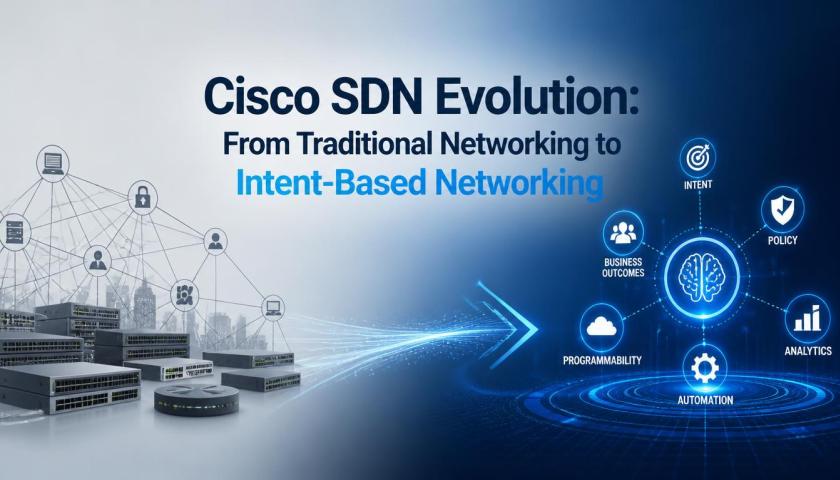
SD-Access is built on intent-based networking principles, meaning the network automatically aligns with business intent. Instead of configuring VLANs and ACLs manually, administrators define policies, and the system enforces them automatically.
Cisco SD-Access Architecture
The architecture of SD-Access is designed to support scalability, automation, and segmentation.
Core Components
1. Cisco DNA Center
Cisco DNA Center acts as the centralized management platform. It provides automation, assurance, and policy definition for the entire network.
2. Network Devices
These include switches, routers, and wireless access points that support SD-Access functionality.
3. Fabric Edge Nodes
These are access layer devices that connect endpoints such as laptops, phones, and IoT devices.
4. Fabric Control Plane Nodes
These nodes manage endpoint-to-location mapping and maintain network intelligence.
5. Fabric Border Nodes
These connect the SD-Access fabric to external networks such as the internet, data centers, or cloud environments.
6. LISP and VXLAN Technologies
SD-Access uses Locator/ID Separation Protocol (LISP) and VXLAN encapsulation to enable scalable and secure segmentation.
Key Features of Cisco SD-Access
1. Automated Network Provisioning
SD-Access eliminates manual configuration by automating device onboarding and policy assignment.
2. Micro-Segmentation
It enables granular segmentation of users and devices, improving security across the network.
3. Policy-Based Management
Administrators can define policies based on user identity, device type, or location.
4. End-to-End Visibility
Through Cisco DNA Center, organizations gain real-time insights into network health and performance.
5. Scalability
The architecture is designed to support large enterprise environments with thousands of endpoints.
6. Enhanced Security
SD-Access enforces consistent security policies across wired and wireless networks.
Cisco SD-Access Deployment Guide
Deploying SD-Access involves planning, design, and configuration phases.
Step 1: Network Assessment
Evaluate the existing network infrastructure, including hardware compatibility and topology readiness.
Step 2: Design the Fabric
Define fabric boundaries, including edge nodes, control nodes, and border nodes.
Step 3: Configure Cisco DNA Center
Set up Cisco DNA Center for centralized management, including device discovery and onboarding.
Step 4: Device Onboarding
Add network devices into the SD-Access fabric using automated provisioning methods.
Step 5: Define Policies
Create user and device policies that determine access levels and segmentation rules.
Step 6: Enable VXLAN Fabric
Activate VXLAN overlay to support scalable segmentation and routing.
Step 7: Testing and Validation
Run validation tests to ensure connectivity, policy enforcement, and security compliance.
Use Cases of Cisco SD-Access
Enterprise Campus Networks
Organizations use SD-Access to manage large campus environments with multiple departments and user roles.
Healthcare Networks
Hospitals use SD-Access to securely segment patient data, medical devices, and administrative systems.
Education Institutions
Universities implement SD-Access to manage student, faculty, and guest access securely.
Retail Environments
Retail chains use SD-Access for secure POS systems and IoT device management.
Benefits of Cisco SD-Access
Simplified Network Management
Reduces manual configuration and operational complexity.
Improved Security Posture
Micro-segmentation ensures threats are contained within isolated segments.
Faster Deployment
Automated provisioning speeds up network rollout.
Better User Experience
Consistent connectivity and performance across wired and wireless networks.
Reduced Operational Costs
Automation reduces the need for extensive manual network administration.
Challenges in Cisco SD-Access Implementation
High Initial Setup Cost
Enterprise-grade hardware and licensing can be expensive.
Complexity in Migration
Moving from traditional networks requires careful planning.
Skill Requirements
Network engineers need training in automation and intent-based networking.
Integration Issues
Legacy systems may not integrate smoothly with SD-Access environments.
Best Practices for Cisco SD-Access
Plan Before Deployment
Always conduct a detailed network readiness assessment.
Start with a Pilot Project
Begin with a small segment before full-scale rollout.
Use Automation Tools Effectively
Leverage Cisco DNA Center features for provisioning and monitoring.
Maintain Strong Security Policies
Define clear segmentation and access rules early in the design phase.
Regular Monitoring and Optimization
Continuously monitor network performance and adjust policies as needed.
Conclusion
Cisco SD-Access represents a major shift in how enterprise networks are designed and managed. By combining automation, segmentation, and policy-driven control, it simplifies complex networking environments while improving security and scalability.
As organizations continue to adopt intent-based networking, understanding SD-Access becomes essential for IT professionals and businesses aiming to modernize their infrastructure. Cisco SDN Training provides foundational and advanced knowledge required to work effectively with these technologies and implement real-world solutions.
For professionals looking to advance their careers in networking, pursuing an SDN Course can be a valuable step toward mastering next-generation network architectures and automation-driven infrastructure management.