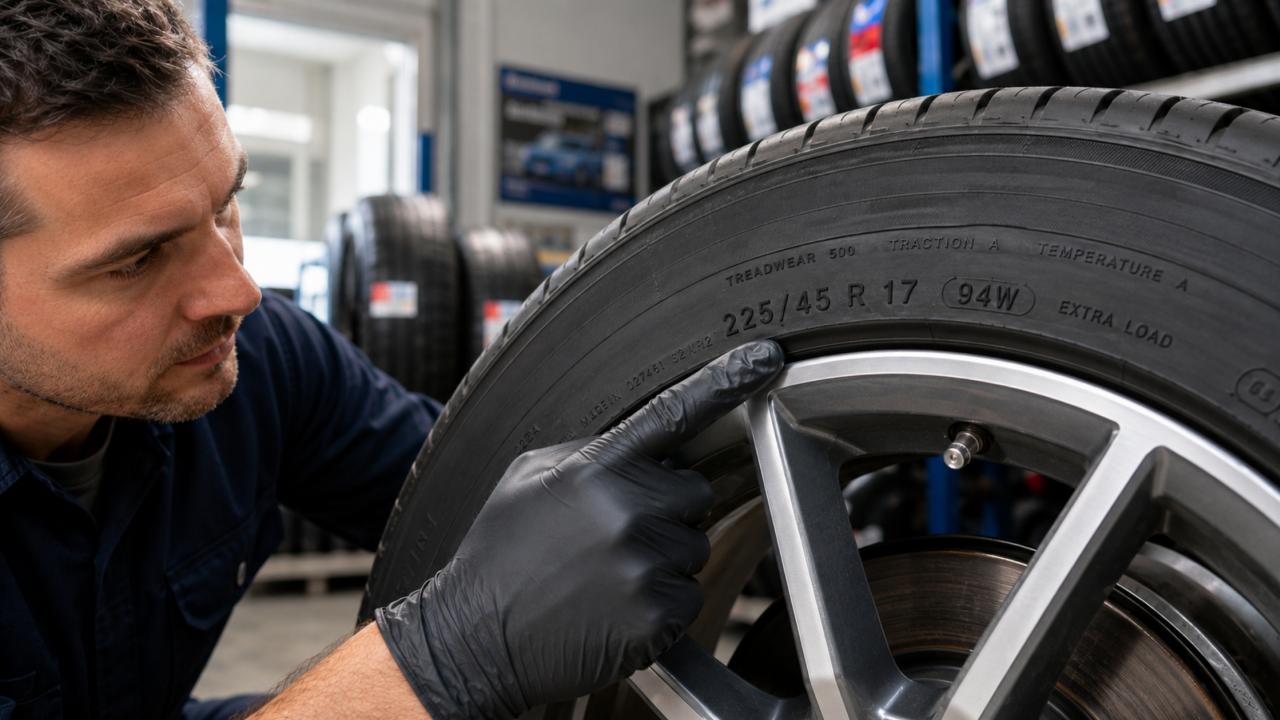
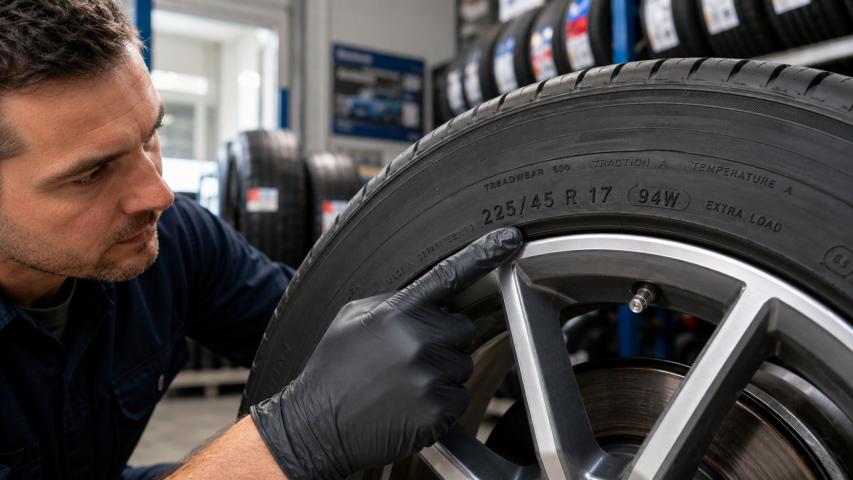
Most people walk into tire shops, stare at a wall of rubber, and just pick whatever the salesperson recommends. And honestly? That's understandable. Those strings of numbers and letters stamped into the side of a tire look like they were written for engineers, not everyday drivers.
But here's the thing, once you know how to read tire sidewall markings, the whole process stops feeling like a guessing game.
It takes maybe fifteen minutes to learn. And it could genuinely save your life someday, not just your wallet.
Your Tires Are Trying to Talk to You
Think about it this way, your tires are the only part of your car that actually touches the road. Every time you brake hard, take a sharp corner, or drive through rain, it all comes down to that small patch of rubber making contact with the ground.
The sidewall markings tell you whether your tires are actually built for what you're putting them through. Once you understand what those numbers on tires actually mean, buying a new set goes from stressful to surprisingly straightforward.
Breaking Down the Main Size Code
The most obvious marking on any tire is the size code. It usually looks something like this: P225/60R16 97V
Looks confusing at first, right? Let's go piece by piece.
P — This letter tells you the tire type.
"P" means it's built for passenger vehicles — cars, minivans, and smaller SUVs.
"LT" is for light trucks that carry heavy loads or tow frequently.
"ST" is for special trailers, and
"T" marks a temporary spare — the kind you're not supposed to drive on for more than 50 miles. No letter at all means it's a Euro-Metric tire, which may carry slightly different load capacity numbers than a P-Metric equivalent.
225 — The tire's width in millimeters, measured from one sidewall to the other. Bigger number, wider tire. Wider tires generally grip better in dry conditions but can feel slightly heavier on fuel.
60 — The aspect ratio, and it trips people up more than anything else. It's a percentage, the tire's sidewall height is 60% of its width. On a 225mm wide tire, that's about 135mm of sidewall height.
A lower aspect ratio means shorter sidewalls and sharper handling. A higher one gives you more cushion but slightly less precision in corners.
R — Radial construction. Almost every tire you'll encounter today is radial, meaning the internal cords run straight across from bead to bead. It's why modern tires handle heat and highway mileage so well.
16 — Rim diameter in inches. Non-negotiable. A 16-inch tire goes on a 16-inch wheel, period. Wrong rim diameter means the tire won't mount, no matter how close everything else looks.
Load Index and Speed Rating — Don't Skip These
Right after the size code, you'll see something like 97V. This is the service description, and it matters more than most people realize.
The number (97) is the load index. It maps to a standardized chart where each number represents a specific maximum weight capacity. A load index of 97 means the tire can carry around 730 kg.
During tire replacement, this number should always match or exceed your vehicle manufacturer's specification. Going lower is a genuine safety risk.
The letter (V) is the speed rating. It indicates the maximum speed the tire can handle under load, not just briefly, but sustained. V-rated tires are good up to around 240 km/h.
Beyond speed, this rating also reflects how the tire manages heat buildup and overall road stability. Always match or exceed what your car originally came with.
The DOT Code: Check the Birthday of Your Tires
Somewhere on the sidewall you'll find the letters "DOT" followed by a longer string of characters.
The part most drivers never look at is the last four digits, and they're actually really important. Those four digits tell you exactly when the tire was manufactured.
The first two are the week, the last two are the year. So 2322 means the tire was made in the 23rd week of 2022.
When you're comparing options at tire shops, always check this number. A heavily discounted tire that's already four years old might not be the deal it appears to be, rubber degrades whether it's been driven on or not.
Most experts recommend a close inspection at five years, and full replacement by ten years from the manufacture date, regardless of how much tread is left.
UTQG Ratings: The Scorecard Nobody Reads
Stamped somewhere near the DOT code, you'll find three grades that make up the UTQG rating. The government requires these on most passenger tires, and they're genuinely useful once you know what you're looking at.
Treadwear — A number based on a standardized government test track. The baseline is 100. A tire rated 400 theoretically lasts four times longer than that baseline. Real-world mileage depends on your driving >
Traction — Graded AA, A, B, or C. This measures how well the tire stops on wet pavement in a straight line. AA is the best. Anything below C is considered unacceptable for road use. When you're stuck choosing between two similarly priced tires, this grade often breaks the tie.
Temperature — Measures how well the tire handles heat buildup, graded A through C. Tires that run hot wear faster and are more prone to failure on long highway drives. An "A" here is worth paying for.
A Few Extra Markings Worth Knowing
Beyond the main codes, a handful of other sidewall symbols come up regularly:
M+S — Stands for Mud and Snow. The tread pattern is designed for light off-road and snowy conditions. Most all-season tires carry this, but it doesn't mean the tire has been tested in actual winter conditions. It's more of a design claim than a certified performance standard.
Three-Peak Mountain Snowflake (3PMSF) — This is the real winter certification. If you live somewhere with serious snowfall or icy roads, look for this mountain-with-snowflake symbol. It means the tire passed actual snow-traction testing.
XL or Extra Load — The tire is reinforced to carry heavier loads at higher inflation pressures. Common on performance cars and larger SUVs.
- MAX PRESS — A common misread. This is not your recommended tire pressure. It's the structural maximum the tire can handle before it becomes unsafe. Your actual recommended pressure is on the sticker inside your driver's door, always use that number.
Quick Reference: Tire Sidewall Codes at a Glance
| Marking | What It Means |
|---|---|
| P / LT / T | Tire type (Passenger / Light Truck / Temporary) |
| 225 | Section width in millimeters |
| 60 | Aspect ratio — sidewall height as % of width |
| R | Radial construction |
| 16 | Rim diameter in inches |
| 97 | Load index — weight capacity per tire |
| V | Speed rating — maximum sustained speed |
| Last 4 DOT digits | Week and year of manufacture |
| UTQG | Treadwear / Traction / Temperature grades |
| 3PMSF | Certified winter performance |
Save this table. Screenshot it. Refer to it the next time you're standing in a shop comparing two options side by side.
Ready to Buy? Here's What to Actually Do
Before you spend a single rupee on new tires, run through this checklist:
Check your door jamb sticker first — it lists the exact tire size, load index, and recommended pressure your vehicle was built for. That's your starting point.
Never go below the load index or speed rating — going higher is fine, lower is not.
Always verify the manufacture date — especially on budget or discounted stock.
Keep all four tires matched — mixing significantly different sizes affects handling, speedometer accuracy, and can damage AWD systems over time.
Think about your actual driving conditions — long highway commutes? Prioritize treadwear and temperature ratings. Rainy city roads? Focus on traction grade. Cold winters with snow? Don't settle for just M+S — look for that 3PMSF symbol.
If you're unsure about any of this, don't guess. Walk into a trusted shop, show them your door jamb sticker, and ask them to match it exactly. A good technician will walk you through your options without pressuring you into something you don't need.
Walk Into Tire Shops Knowing Exactly What Your Car Needs
Nobody's expecting you to memorize a tire engineering manual. But knowing how to read tire sidewall markings, even just the basics covered here, genuinely changes how confidently you can handle tire decisions.
Whether you're due for tire replacement, checking a spare that's been sitting in your trunk for years, or getting tire and brake repair done at a local shop, this knowledge means you're not just taking someone else's word for it.
You know what you need. You know what to ask for. And you know when something doesn't add up.
That's a pretty good place to be as a driver.