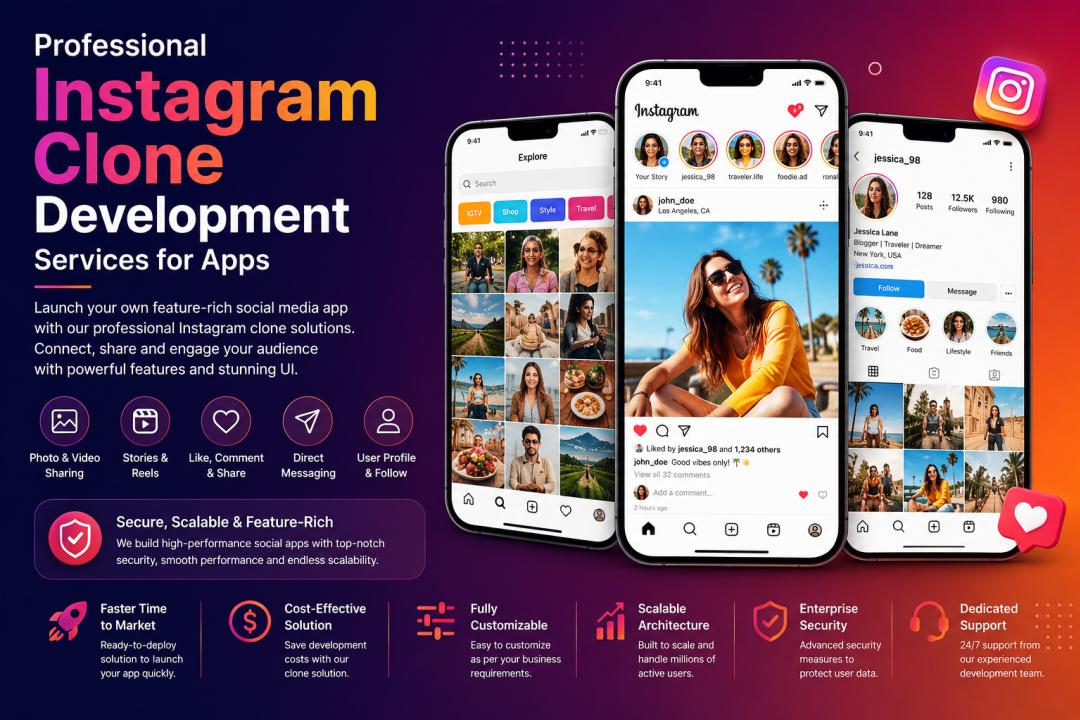
Social media applications have become an important part of everyday digital communication. Millions of users around the world spend hours browsing photos, watching short videos, interacting with creators, and sharing moments online. Businesses and startups are now investing heavily in social networking applications because these platforms offer excellent opportunities for audience engagement, brand promotion, and revenue generation.
The popularity of visual content has increased significantly in recent years. Users prefer interactive applications that provide smooth media sharing, creative editing tools, instant communication, and personalized content recommendations. This growing demand has encouraged businesses to develop feature-rich social media applications that can compete in the fast-growing digital market.
Modern social networking platforms are no longer limited to simple image sharing. Today’s applications include reels, stories, live streaming, AI-powered recommendations, messaging systems, shopping features, and creator monetization tools. These advanced functionalities improve user engagement and encourage longer app usage.
Growing Demand for Social Networking Platforms
The global social media industry continues to expand rapidly because people rely on these platforms for entertainment, communication, and business promotion. Brands use social applications to connect with customers, promote products, and build online communities.
Content creators and influencers also depend on social platforms to grow their audiences and generate income through collaborations and sponsored promotions. As digital content consumption continues to rise, startups are finding new opportunities to launch innovative social networking solutions.
The increasing use of smartphones and high-speed internet has further accelerated the growth of media-sharing applications worldwide. Users now expect seamless access to content from any location and device.
Essential Features of a Modern Social Media App
A successful social networking application requires engaging features that improve interaction and user retention. Some essential features include:
- User registration and profile management
- Photo and video uploading
- Stories and reels functionality
- Live streaming support
- Real-time notifications
- Instant messaging and chat
- Like, comment, and share options
- Hashtag and search functionality
- AI-powered content recommendations
- Privacy and account security controls
These features help create interactive user experiences while increasing engagement across the platform.
Importance of User Experience in Social Apps
User experience plays a major role in determining the success of a social networking platform. Users prefer visually attractive applications with smooth navigation and fast content loading speeds.
A cluttered interface or poor app performance can reduce engagement and increase uninstall rates. Modern social applications focus on minimalistic layouts, responsive design, and intuitive controls to improve usability.
Personalized content feeds also improve user satisfaction because audiences can quickly discover content that matches their interests and viewing habits.
Role of Artificial Intelligence in Social Platforms
Artificial intelligence has become a powerful technology in modern social networking applications. AI systems analyze user activity, interests, search patterns, and engagement behavior to deliver personalized content recommendations.
AI-powered tools also improve spam detection, image recognition, content moderation, and targeted advertising. These technologies help businesses improve platform performance while providing better experiences for users.
Machine learning algorithms continuously optimize social feeds and recommendation systems based on audience interactions.
Security and Privacy in Social Networking Applications
Privacy and data protection are extremely important for social media platforms because users share personal information, photos, and videos through these applications. Secure authentication systems and encrypted communication help protect sensitive user data.
Modern applications also include advanced privacy settings that allow users to control account visibility, comments, followers, and shared content. Businesses must comply with international data protection regulations to maintain user trust and platform credibility.
Strong cybersecurity measures also help prevent hacking attempts, fake accounts, and unauthorized access.
Cloud Integration and Platform Scalability
Social networking applications handle large amounts of user-generated content daily. Cloud infrastructure helps businesses manage photos, videos, live streams, and messages efficiently while maintaining high app performance.
Cloud-based systems improve scalability, storage management, and media delivery speed. Content delivery networks ensure faster loading times and better viewing experiences for users across different geographical locations.
Scalable infrastructure also allows businesses to expand their platforms without affecting performance or reliability.
Benefits of Clone App Development
Building a social networking application from scratch can require significant investment, technical expertise, and development time. Many startups choose clone app solutions because they offer faster deployment and reduced development costs.
Clone applications provide ready-made frameworks with advanced social media features while allowing businesses to customize the design, branding, and functionality according to their goals.
At this stage, many startups and enterprises are investing in Instagram Clone Development solutions to create visually engaging social networking applications with modern photo-sharing and short-video features. This development approach helps businesses launch scalable social media platforms quickly while maintaining flexibility for customization and future expansion.
Advantages of Launching an Instagram-Inspired Platform
Instagram-inspired platforms offer several advantages for startups and businesses. These applications support advanced media-sharing features, short-form videos, stories, reels, filters, and creator engagement tools.
Businesses can also integrate eCommerce functionality into the platform, allowing users to explore and purchase products directly through the app. This combination of social networking and online shopping creates additional revenue opportunities.
Advanced analytics tools also help businesses understand audience behavior, engagement trends, and content performance.
Monetization Opportunities for Social Media Platforms
Social networking applications offer multiple monetization opportunities for businesses and startups. Common revenue models include:
- In-app advertising
- Sponsored content promotions
- Influencer collaborations
- Premium subscriptions
- Brand partnerships
- Virtual gifts and badges
- eCommerce integrations
These monetization methods help businesses generate sustainable revenue while expanding their user communities.
Multi-Platform Compatibility and Accessibility
Modern users expect social media applications to work seamlessly across smartphones, tablets, desktops, and web browsers. Cross-platform compatibility ensures consistent user experiences regardless of the device being used.
Responsive design and optimized app performance improve accessibility and engagement across multiple operating systems and screen sizes.
Challenges in Social Media App Development
The social media industry is highly competitive, making innovation and performance essential for success. Businesses face challenges such as data privacy concerns, user retention, content moderation, and cybersecurity threats.
To remain competitive, companies must continuously improve their platforms with advanced features, AI technologies, and engaging content experiences.
Providing unique functionality and maintaining platform reliability are important factors for long-term success in the social networking industry.
Future Trends in Social Networking Applications
The future of social media platforms includes AI-driven personalization, augmented reality filters, immersive virtual experiences, blockchain-based identity systems, and enhanced creator monetization tools.
Short-form video content and live streaming are expected to remain dominant trends in the coming years. Businesses investing in innovative social networking technologies today can achieve strong competitive advantages in the evolving digital market.
Conclusion
Social networking applications have transformed digital communication, entertainment, and online branding. Businesses investing in scalable and feature-rich social media platforms can build strong online communities and generate long-term growth opportunities.
Launching a successful social networking application requires advanced technology, secure infrastructure, and engaging user experiences. By focusing on innovation, scalability, and audience engagement, businesses can establish a strong presence in the growing social media industry.