The Toyota Camry is one of the
best-selling sedans in American automotive history, and for good reason. It's
practical, comfortable, fuel-efficient, and built around engines engineered to
last. But even the most reliable powerplant can eventually succumb to neglect,
overheating damage, or the inevitable wear of high mileage. When that happens,
replacing the engine rather than the entire car is often the most financially
sensible path forward.
If you're searching for used Toyota Camry engines, you're entering a market with a wide range of options and a wide range of quality. This guide breaks down what you need to know to
make a confident, informed purchase.
Why the Camry Is One of the Best Engine Replacement
Not every vehicle makes sense to
repair after a major engine failure. High-mileage cars with deteriorating
interiors or rust issues might not justify the investment. The Camry is
different for several compelling reasons.
•
High Resale Value: Even older Camrys hold their value
well. A 10-15-year-old Camry in good condition with a fresh engine can fetch
$6,000-$10,000 in private sales.
•
Exceptional Build Quality: The Camry's transmission,
suspension, and electrical systems tend to age gracefully. A failed engine on
an otherwise solid car is genuinely worth fixing.
•
Wide Engine Availability: Millions of Camrys were built
across multiple decades, making used engines among the most plentiful in the
replacement market.
•
Low Labor Complexity: Camry engines are straightforward
to work on, translating to lower labor costs at most independent shops.
Camry Engine Generations: Knowing What You Need
5S-FE (2001) — 2.2L Four-Cylinder
The standard four-cylinder
option through the fifth-generation Camry. Reliable and easy to find as a used
replacement, though availability is decreasing as vehicles from this era age
out of the market.
2AZ-FE (2002–2011) — 2.4L Four-Cylinder
Arguably the most in-demand used
Toyota Camry engine. Used across the sixth and seventh-generation Camry, RAV4,
and several other platforms, the 2AZ-FE is known for strong torque, good fuel
economy, and widespread availability. Note that some 2006-2009 examples had
documented oil consumption issues — a point to scrutinize carefully when
shopping used.
2AR-FE (2012–Present) — 2.5L Four-Cylinder
The modern evolution of the AZ
engine family, the 2AR-FE resolved many oil consumption concerns of its
predecessor. It delivers improved fuel efficiency and is the current benchmark
for Camry four-cylinder performance. Used examples from 2012-2017 vehicles are
now entering the market at favorable prices.
2GR-FE (2007–2017) — 3.5L V6
For drivers who opted for the V6
Camry, the 2GR-FE provides noticeably stronger acceleration and smoother power
delivery. It's available as a used replacement, though pricing reflects its
higher demand across multiple Toyota and Lexus platforms.
Common Reasons Toyota Camry Engines Fail
•
Oil Sludge Accumulation: Particularly in early 2000s
Camrys, infrequent oil changes led to sludge buildup that starved internal
components of lubrication. Look for sludge deposits on the underside of the
valve cover or around the oil fill cap.
•
Overheating and Head Gasket Failure: A single
overheating event can warp the cylinder head. Signs include milky oil,
excessive white exhaust smoke, and coolant loss without a visible external
leak.
•
Timing Chain Wear: Irregular oil changes accelerate
chain and tensioner wear. A rattling noise at startup that quiets as the engine
warms is a classic symptom.
•
High-Mileage Ring and Valve Wear: After 180,000-200,000
miles, naturally aspirated engines begin to show decreased compression from
worn piston rings and valve seats.
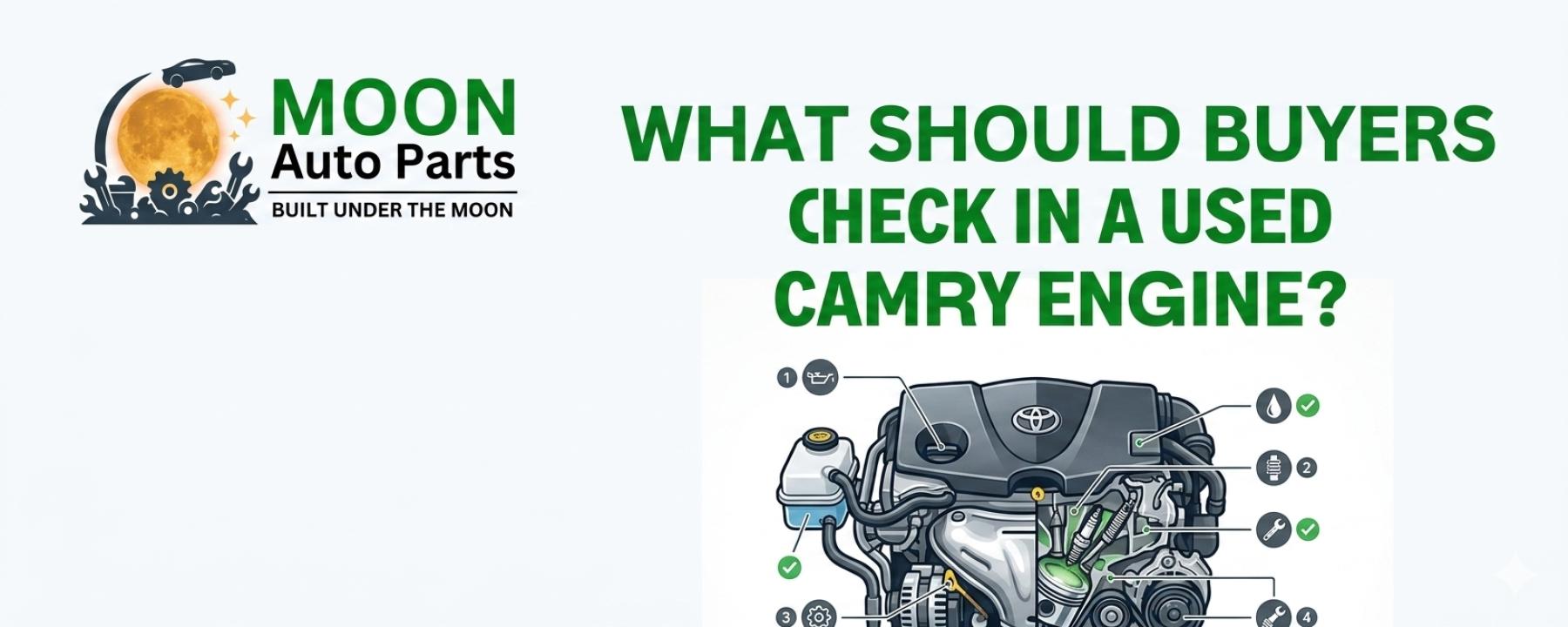
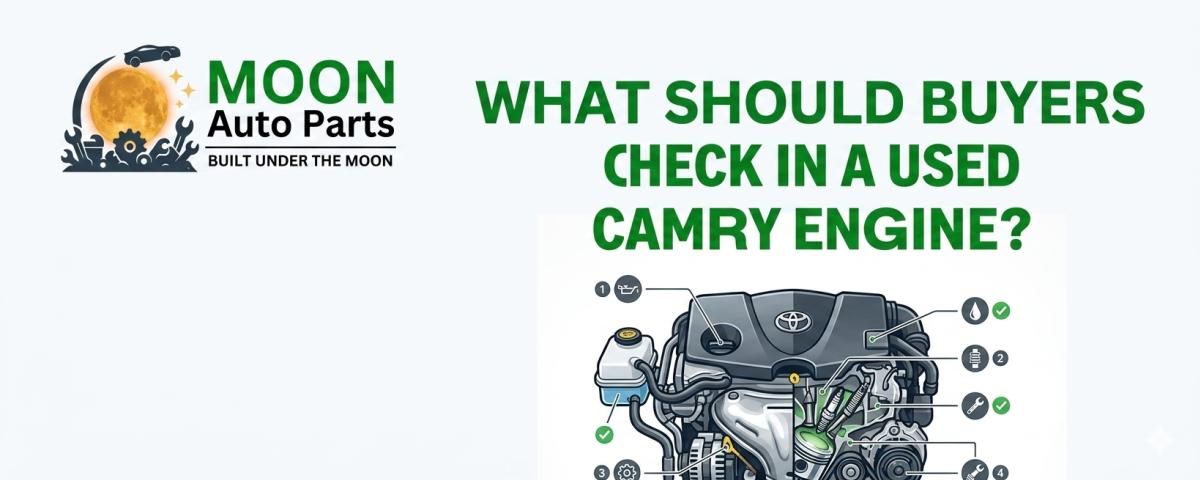
What to Look for When Buying a Used Camry Engine
Effective shopping for a used
Toyota Camry engine requires evaluating the right factors:
•
For a 2AZ-FE or 2AR-FE, engines under 100,000 miles
represent solid value. Engines in the 100,000-140,000 mile range can still be
reliable choices with documented maintenance history.
•
If inspection is possible, remove the oil fill cap and
look inside. Clean, honey-toned surfaces indicate good maintenance. Black
sludgy buildup is a warning sign.
•
Ask whether the engine came from a rear-end collision
vehicle (engine compartment intact) versus a front-end collision where the
engine may have sustained impact.
•
Request compression test results — a healthy Camry
four-cylinder should show above 150 PSI on all cylinders, within 10-15% of each
other.
•
Verify the part number against your vehicle's VIN to
confirm the correct engine variant.
The True Cost Comparison: Used Engine vs. New Vehicle
|
Option |
Estimated
Cost |
|
Used
replacement engine (labor included) |
$1,500 –
$3,500 |
|
Rebuilt/remanufactured
engine (labor included) |
$3,000 –
$5,500 |
|
New OEM
engine |
$6,000 –
$10,000+ |
|
Replacing
with a comparable used Camry |
$7,000 –
$15,000 |
For a Camry in otherwise good
condition, a used engine replacement is almost always the most financially
rational choice.
Installation Best Practices
•
Replace all accessory drive belts and idler pulleys
•
Install a new thermostat and all coolant hoses
•
Replace the PCV valve and all gaskets
•
Flush and refill with fresh Toyota SLLC coolant
•
Use fresh full-synthetic motor oil (Toyota recommends
0W-20 in most modern Camrys)
• Inspect and replace motor mounts if worn
Read more - How Do You Avoid Mistakes When Buying a Mitsubishi Used Engine?