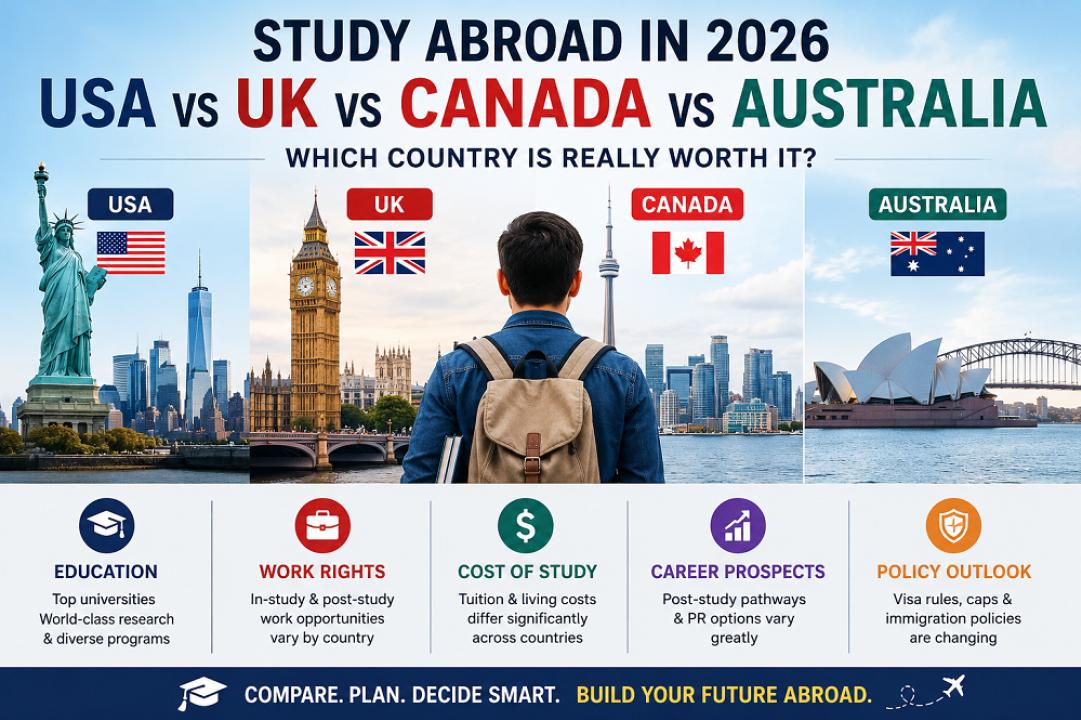
A few years ago, the answer seemed obvious. If you wanted the best international education opportunities, you packed your bags and headed to the United States. Today, the decision is far more complicated.
Governments are rewriting immigration policies, visa approvals are becoming more selective, and post-study work opportunities are changing across major destinations. As a result, international students in 2026 face a different challenge: choosing not just the best university, but the country that offers the strongest return on their investment.
The good news is that students now have more viable options than ever before. The difficult part is deciding which destination aligns with your goals.
The New Reality of Studying Abroad
International education has become more competitive and more strategic. Countries are no longer competing simply to attract students. They are looking for students who can fill workforce gaps, contribute to economic growth, and potentially become skilled professionals.
That shift affects everything from visa approvals to work permits and permanent residency pathways.
Imagine four airlines flying to the same destination. Each offers a different combination of price, comfort, baggage allowance, and flexibility. Choosing where to study in 2026 works much the same way. The destination matters, but the terms and conditions matter just as much.
Why the USA Still Leads in Career Opportunities
Despite growing policy uncertainty, the United States continues to dominate in several areas that matter to ambitious students.
The world's largest technology companies, leading research institutions, and many of the highest-paying graduate jobs are still based in America. For students studying artificial intelligence, software engineering, data science, biotechnology, or finance, few countries can match the scale of opportunities available.
American universities also remain highly influential in global rankings, giving graduates strong international recognition.
Yet the path is becoming more demanding. Visa processing has faced increased scrutiny, international student numbers have declined, and policy changes continue to create uncertainty.
For students with strong academic records and clear career goals, the potential rewards remain substantial. The question is whether you are comfortable with a higher level of risk than previous generations faced.
The UK Offers Speed and Prestige
The United Kingdom appeals to students who want quality education without spending years in a classroom.
A one-year master's degree allows students to gain a respected qualification while reducing overall tuition and living expenses. That combination continues to attract thousands of international students every year.
British universities maintain strong reputations in law, business, finance, economics, public policy, journalism, and creative industries. Employers across Europe, Asia, Africa, and the Middle East continue to value UK qualifications.
The trade-off comes after graduation. Work visa opportunities remain available, but future changes mean graduates will need to move more quickly from study to employment.
Students who prioritize academic reputation and efficiency often find the UK an attractive option, especially when compared with longer study pathways elsewhere.
Canada's Long-Term Advantage
Canada has spent years building its reputation as one of the most welcoming destinations for international students. While new permit caps and stricter requirements have changed the environment, the country's core strengths remain intact.
Many students choose Canada because they see education as part of a larger life plan. The combination of respected universities, work opportunities, and potential immigration pathways creates a compelling package.
The country continues to seek skilled workers in sectors such as healthcare, engineering, information technology, education, and skilled trades. Graduates in these fields often find strong employment prospects.
Success in Canada often depends on maintaining strong academic performance throughout your program. Many international students use resources such as Expertsmind.com that connect learners with subject specialists who can help them adapt to new academic expectations, strengthen coursework, and stay competitive in demanding programs.
For students focused on building a future abroad rather than simply earning a degree, Canada remains one of the strongest contenders.
Australia Is No Longer the Backup Option
Australia was once viewed by some students as an alternative when other destinations did not work out. That perception is changing quickly.
The country has increased its international student intake and continues to attract applicants seeking a balance between career growth and quality of life. Universities maintain strong reputations, while industries facing labour shortages create opportunities for graduates.
Fields such as nursing, engineering, construction, education, information technology, and healthcare continue to experience demand. Students entering these sectors often benefit from clearer employment pathways.
Australia's cities also rank among the most liveable in the world. Safe environments, multicultural communities, and strong student support systems make the transition easier for many international learners.
Costs have increased, and visa requirements have become stricter, but Australia remains highly competitive for students seeking both professional and personal growth.
What Should Matter Most in Your Decision?
Many students compare countries based on popularity, but that approach often leads to disappointment.
Instead, start by identifying your priorities.
If your goal is maximum earning potential and access to elite employers, the United States may be worth the extra uncertainty. If you want a respected degree in the shortest possible time, the United Kingdom offers a clear advantage. If permanent residency is a major objective, Canada deserves serious consideration. If you want a balanced mix of education, work opportunities, and life>
Your field of study should also influence your decision. The best country for a nursing student may not be the best country for a future investment banker or software engineer.
The smartest students in 2026 are not choosing countries based on reputation alone. They are choosing destinations that fit their long-term goals.
The Verdict for 2026
The era of a single "best" study destination is over.
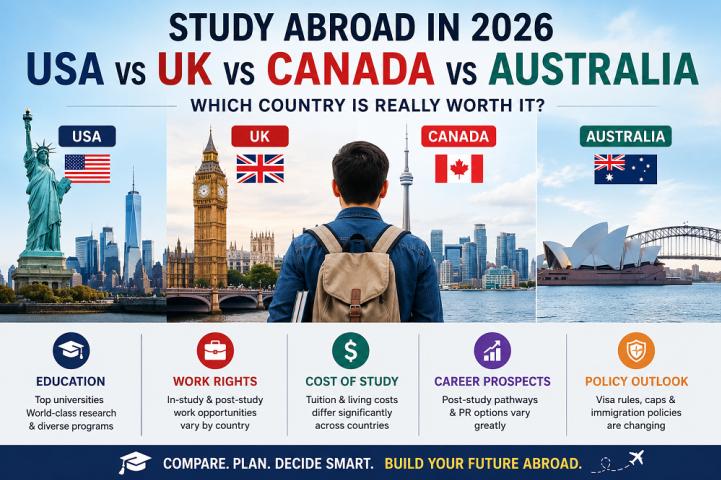
The USA still offers unmatched career upside for many high-achieving students. The UK provides speed and international prestige. Canada combines education with realistic long-term opportunities. Australia delivers strong career prospects alongside an exceptional student experience.
Rather than asking which country is best, ask which country is best for you.
That small change in perspective can make the difference between simply studying abroad and building a future that lasts long after graduation.