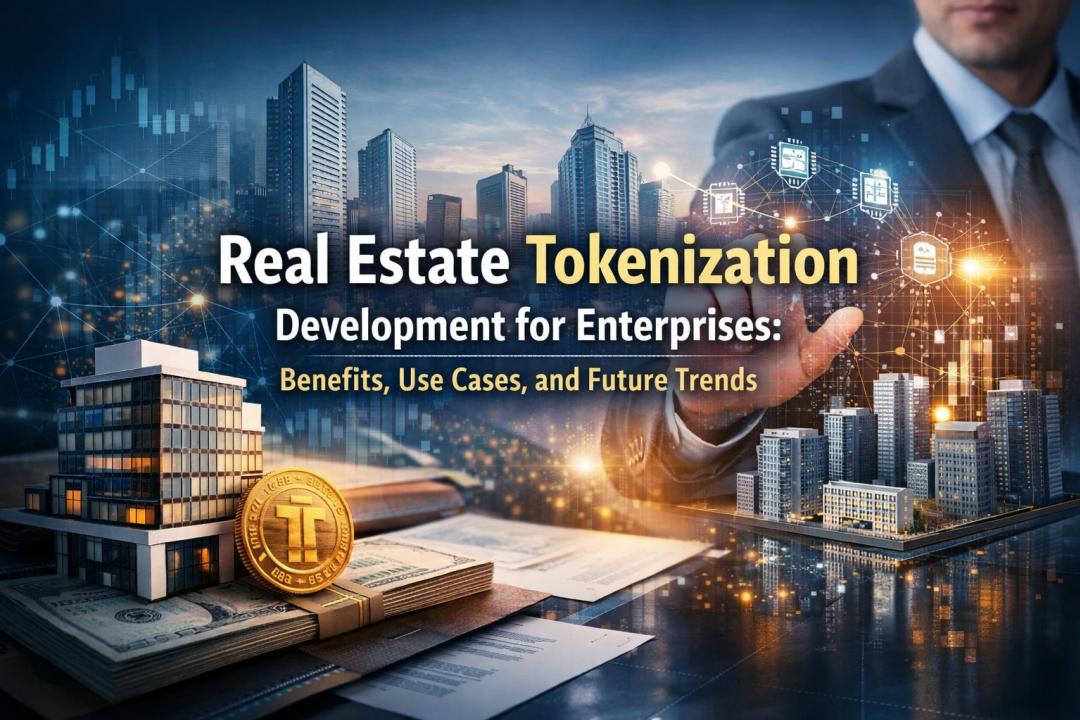
The real estate industry has historically been characterized by illiquid assets, lengthy transaction cycles, fragmented ownership structures, and significant administrative overhead. As digital asset infrastructure matures, enterprises are increasingly exploring blockchain-powered solutions to modernize property investment and asset management. Real estate tokenization development has emerged as a strategic approach that enables organizations to convert ownership rights in physical properties into digital tokens that can be issued, transferred, and managed on distributed ledger networks.
Rather than viewing tokenization as merely a technological innovation, enterprises are beginning to recognize it as a transformative financial framework that enhances capital efficiency, improves transparency, and expands investor participation. From commercial buildings and residential developments to industrial parks and hospitality assets, tokenized real estate models are creating new opportunities for both asset owners and investors.
Why Enterprises Are Investing in Real Estate Tokenization Development
Enterprise adoption is being driven by the need to overcome longstanding inefficiencies within conventional property markets. Traditional real estate transactions often involve multiple intermediaries, extensive paperwork, and settlement delays that can increase operational costs and reduce investment agility.
Through blockchain-enabled token issuance, organizations can digitize ownership interests while maintaining transparent and immutable records of transactions. Smart contract automation further streamlines processes such as dividend distribution, compliance verification, ownership transfers, and investor onboarding.
As institutional interest in digital assets continues to grow, enterprises are viewing tokenization as a scalable mechanism for improving asset accessibility and unlocking previously inaccessible pools of capital.
Key Benefits for Enterprise Real Estate Ecosystems
Real estate tokenization development delivers several strategic advantages that extend beyond simple digitization.
- Enhanced liquidity through fractional ownership structures that allow assets to be divided into smaller investment units.
- Increased transparency through tamper-resistant transaction records and auditable ownership histories.
- Reduced administrative costs by automating manual workflows using smart contracts.
- Faster settlement processes compared to conventional real estate transactions.
- Broader investor participation by lowering capital entry barriers for qualified investors.
These benefits collectively contribute to a more efficient asset management environment while creating new fundraising opportunities for developers, property managers, and investment firms.
Enterprise Use Cases Driving Market Adoption
The practical applications of tokenized real estate continue to expand across multiple segments of the property sector. Organizations are deploying tokenization frameworks to optimize both investment and operational strategies.
One of the most prominent use cases involves commercial property syndication. Office buildings, retail centers, and mixed-use developments can be divided into digital ownership units, allowing investors to participate without acquiring an entire property.
Another significant application is private real estate funds. Fund managers can leverage blockchain infrastructure to streamline subscription management, investor reporting, and distribution processes while maintaining regulatory oversight.
Additional enterprise use cases include:
- Fractional ownership of premium real estate assets.
- Cross-border property investment platforms.
- Real estate investment trust (REIT) modernization initiatives.
- Hospitality and resort asset financing.
- Infrastructure and industrial property funding models.
As regulatory frameworks evolve, enterprises are increasingly integrating the tokenization of real estate into broader digital transformation strategies aimed at improving capital market efficiency.
Technology Components Behind Tokenized Property Platforms
Successful implementation requires more than a blockchain network alone. Enterprise-grade real estate tokenization platforms rely on a sophisticated technology stack designed to support security, compliance, and scalability.
Smart contracts serve as the operational foundation by automating ownership transfers, revenue distribution mechanisms, and governance functions. Identity verification systems support Know Your Customer (KYC) and Anti-Money Laundering (AML) requirements, ensuring regulatory compliance throughout the investment lifecycle.
Additionally, token management modules, digital asset custody solutions, investor dashboards, and reporting engines contribute to a comprehensive ecosystem capable of supporting institutional-grade operations. Interoperability features are also becoming increasingly important as organizations seek integration with existing financial systems and digital asset marketplaces.
The convergence of these technologies enables enterprises to create secure and transparent investment environments while maintaining operational control over complex real estate portfolios.
Future Trends Shaping Enterprise Real Estate Tokenization
The next phase of market evolution will likely be influenced by regulatory maturation, institutional participation, and advancements in blockchain infrastructure. As governments and financial authorities introduce clearer digital asset regulations, enterprises may gain greater confidence in deploying large-scale tokenization initiatives.
Artificial intelligence and advanced analytics are expected to play an increasing role in asset valuation, risk assessment, and investor intelligence. Meanwhile, programmable compliance frameworks could automate regulatory enforcement across multiple jurisdictions, reducing legal complexity for global investment platforms.
Another emerging trend involves the integration of tokenized real estate with decentralized finance ecosystems, creating opportunities for collateralized lending, secondary market trading, and enhanced liquidity mechanisms. Furthermore, interoperability standards may facilitate seamless movement of tokenized assets across multiple blockchain networks.
As enterprise adoption accelerates, real estate tokenization development is poised to become a foundational component of the digital asset economy. Organizations that strategically embrace this transition may benefit from improved operational efficiency, expanded capital access, and greater flexibility in managing real estate investments within an increasingly digitized financial landscape.