The blockchain industry is evolving at an incredible pace, and Web3 technology is becoming a major part of the digital future. From decentralized finance and NFT marketplaces to gaming ecosystems and enterprise applications, blockchain networks are handling more transactions than ever before. However, as blockchain adoption grows, challenges such as high transaction fees, network congestion, and scalability limitations continue to affect performance.
To solve these issues, Layer 2 blockchain solutions have emerged as one of the most important innovations in the blockchain ecosystem. These technologies are designed to improve transaction speed, reduce costs, and enhance scalability without compromising the security of the underlying blockchain network. As businesses continue to build modern Web3 applications, Layer 2 development is becoming essential for creating fast, efficient, and user-friendly decentralized platforms.
Understanding Layer 2 Blockchain Technology
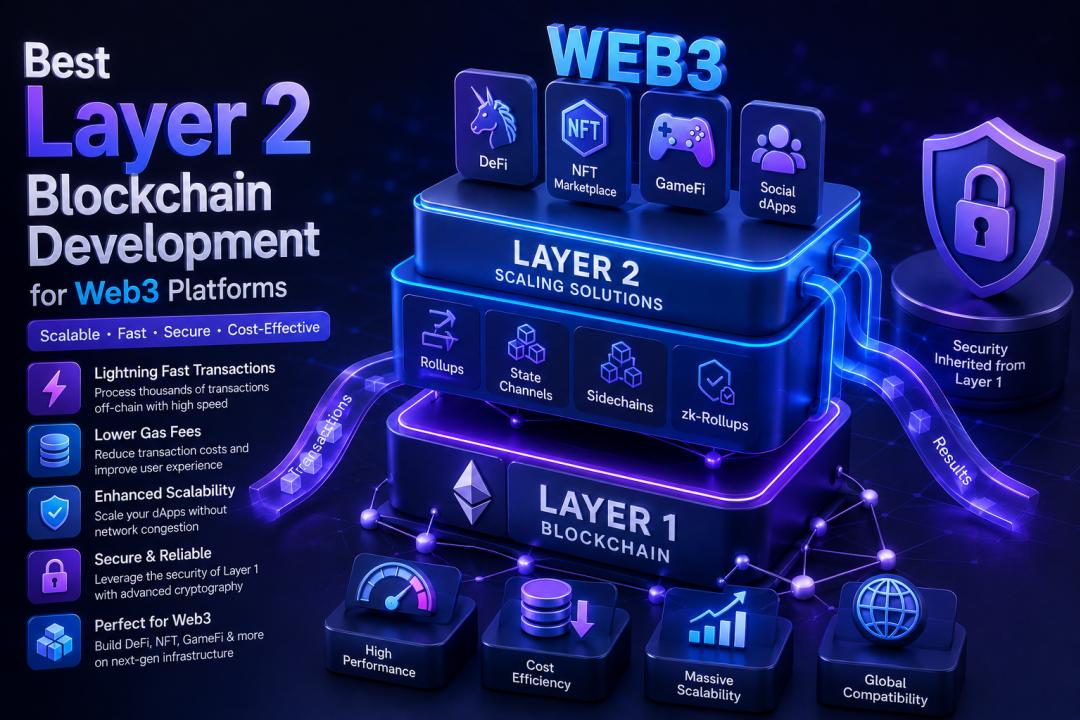
Layer 2 refers to secondary frameworks or protocols built on top of existing blockchain networks such as Ethereum. Instead of processing every transaction directly on the main blockchain, Layer 2 solutions handle transactions off-chain and later finalize them on the primary network.
This approach significantly reduces congestion on the main blockchain while improving overall network efficiency. By processing transactions more efficiently, Layer 2 solutions allow blockchain platforms to scale and support a much larger number of users and applications.
Popular Layer 2 technologies include rollups, sidechains, state channels, and plasma frameworks. Each solution is designed to optimize blockchain performance while maintaining decentralization and security.
Why Scalability Matters in Web3
Scalability is one of the biggest challenges in blockchain technology. Traditional blockchain networks can process only a limited number of transactions per second, which often leads to slow transaction speeds and high gas fees during periods of heavy network activity.
For Web3 applications to achieve mainstream adoption, users need fast and affordable digital experiences. Whether users are trading NFTs, interacting with decentralized finance platforms, or playing blockchain-based games, performance and usability are critical factors.
Layer 2 solutions address these problems by improving transaction throughput and reducing operational costs. This allows businesses to create decentralized applications that deliver smooth user experiences while supporting large-scale adoption.
Key Features of Layer 2 Blockchain Development
Modern Layer 2 development solutions offer advanced features that improve blockchain performance and scalability.
Faster Transactions
Layer 2 technologies process transactions more efficiently, reducing waiting times and improving overall platform performance.
Lower Gas Fees
By moving transactions away from the main blockchain, users can perform transactions at significantly lower costs.
Enhanced Scalability
Layer 2 solutions increase transaction capacity, allowing blockchain platforms to support millions of users and applications.
Improved User Experience
Fast transactions and affordable fees create a better user experience, encouraging wider adoption of Web3 applications.
Strong Security
Most Layer 2 solutions inherit the security of the underlying blockchain network, ensuring safe and reliable transactions.
Types of Layer 2 Solutions
Different Layer 2 technologies are designed to solve scalability challenges in unique ways.
Rollups
Rollups bundle multiple transactions together before submitting them to the main blockchain. Optimistic Rollups and Zero-Knowledge Rollups are among the most widely used solutions for Ethereum scalability.
Sidechains
Sidechains operate independently while remaining connected to the main blockchain. They offer flexibility and faster transaction processing.
State Channels
State channels allow users to perform multiple off-chain transactions before recording the final result on the blockchain.
Plasma
Plasma frameworks create smaller blockchain chains connected to the main network, improving scalability and transaction efficiency.
Growing Demand for Layer 2 Development
As Web3 adoption expands globally, businesses are increasingly investing in scalable blockchain infrastructure to improve platform performance. In the middle of this rapid technological transformation, companies are adopting Layer 2 Blockchain Development solutions to build faster, more scalable, and cost-efficient decentralized applications for modern Web3 ecosystems.
Industries such as gaming, finance, healthcare, and digital commerce are actively exploring Layer 2 solutions to improve user experiences and support large transaction volumes. Startups and enterprises alike are recognizing the importance of scalable blockchain infrastructure for future growth.
Benefits of Layer 2 Solutions for Businesses
Layer 2 blockchain technology provides several important advantages for businesses developing Web3 applications.
Reduced Operational Costs
Lower transaction fees help businesses reduce operational expenses and improve affordability for users.
Better Network Efficiency
Off-chain transaction processing reduces blockchain congestion and improves overall network performance.
Increased Adoption
Affordable and fast blockchain interactions encourage more users to adopt decentralized platforms.
Flexibility for Developers
Layer 2 solutions provide developers with more flexibility when building scalable decentralized applications.
Sustainable Growth
Improved scalability allows blockchain platforms to grow without sacrificing speed or performance.
Use Cases of Layer 2 Blockchain Technology
Layer 2 solutions are being used across multiple industries and blockchain applications.
Decentralized Finance (DeFi)
Layer 2 technology enables faster and cheaper financial transactions, improving accessibility for DeFi users.
NFT Platforms
NFT marketplaces use Layer 2 solutions to reduce minting costs and improve transaction speed.
Blockchain Gaming
Gaming platforms require fast transactions and smooth user experiences, making Layer 2 technology ideal for blockchain-based games.
Payment Solutions
Businesses are using Layer 2 systems to enable instant and affordable crypto payments.
Enterprise Applications
Organizations are adopting scalable blockchain solutions for secure data management, supply chain tracking, and digital identity systems.
Choosing the Right Layer 2 Development Partner
Building a scalable Layer 2 blockchain solution requires technical expertise and deep understanding of blockchain ecosystems. Businesses should partner with experienced developers who specialize in smart contracts, decentralized applications, and blockchain infrastructure.
A reliable development company provides end-to-end services, including blockchain consulting, architecture planning, security testing, deployment, and post-launch maintenance. Customization capabilities and scalability support are also important factors when selecting a development partner.
Future of Layer 2 Blockchain Solutions
The future of Layer 2 technology looks highly promising as blockchain networks continue to expand. Innovations in zero-knowledge proofs, cross-chain interoperability, and decentralized infrastructure are expected to further improve blockchain scalability and efficiency.
Major blockchain ecosystems are increasingly integrating Layer 2 technologies to support mass adoption of decentralized applications. As Web3 platforms continue to grow, Layer 2 solutions will become a foundational component of modern blockchain infrastructure.
The combination of faster transactions, reduced fees, and scalable performance positions Layer 2 development as a key driver of the next generation of decentralized digital platforms.
Conclusion
Layer 2 blockchain technology is transforming the way Web3 applications operate by solving critical scalability and performance challenges. Businesses adopting Layer 2 solutions can create faster, more efficient, and user-friendly decentralized platforms capable of supporting large-scale adoption.
From DeFi applications and NFT marketplaces to gaming platforms and enterprise systems, Layer 2 development provides the scalability needed for the future of blockchain innovation. As digital ecosystems continue to evolve, businesses investing in advanced Layer 2 infrastructure will be better positioned to succeed in the competitive Web3 landscape.
By leveraging scalable blockchain technologies, companies can deliver high-performance decentralized experiences while reducing operational costs and improving customer satisfaction.