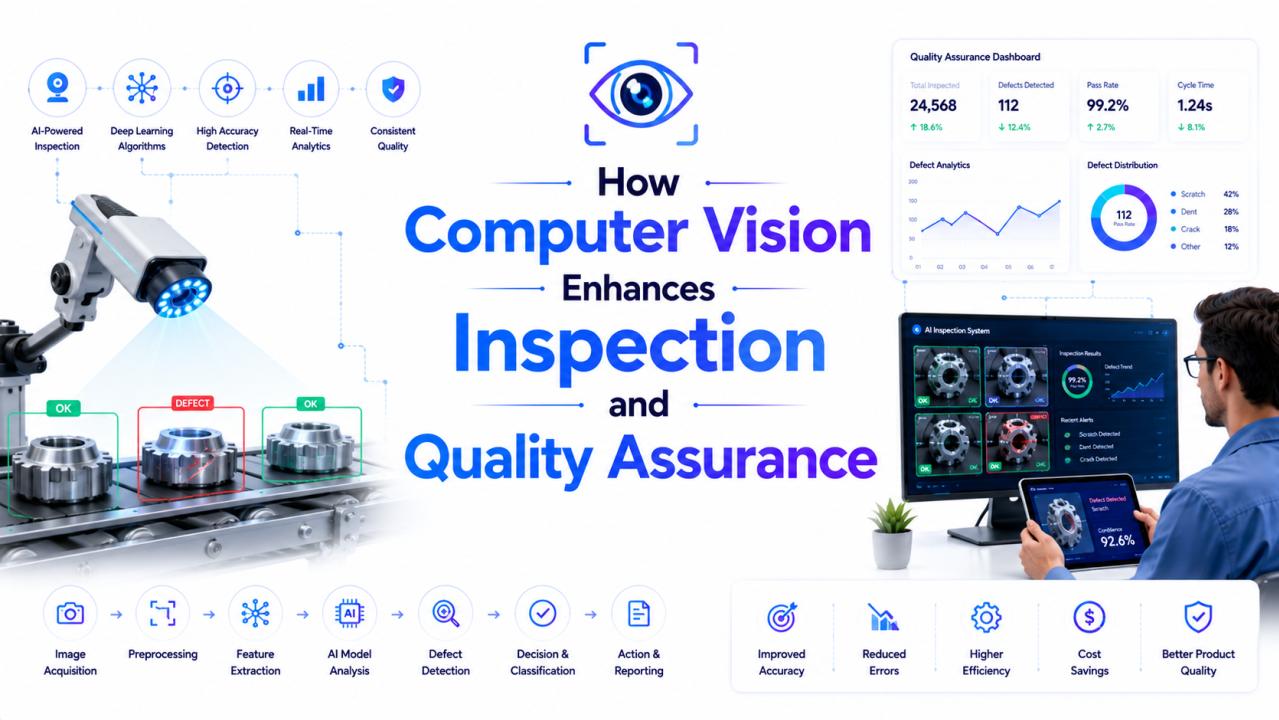
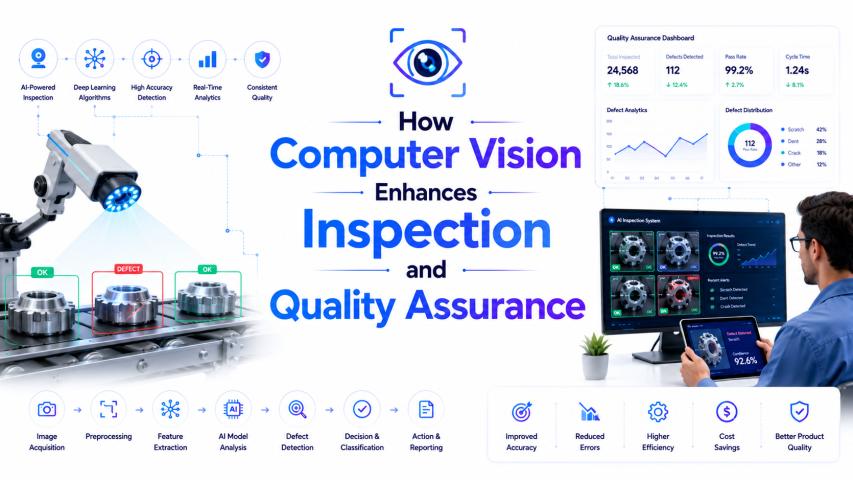
Success in current manufacturing depends heavily on reliable quality control. Still, older checking techniques depend too much on people — slower, less predictable, and inconsistent results follow. With digital image processing, computer vision defect detection enables machines to examine items nonstop — one flaw at a time — without breaks. Cameras combined with smart algorithms detect irregularities once missed during routine checks. Precision rises when automation supports human oversight across production lines. Consistency becomes possible not through effort alone, but through constant electronic monitoring instead.
Computer Vision in Quality Checks
From digital eyes to smart analysis, one form of machine learning handles visuals captured by devices. When applied to checking products, these setups rely on lenses, detection tools, and adaptive logic. Flaws become visible through automated scrutiny rather than human sight alone. Size checks occur without manual instruments due to programmed precision. What meets the sensor must match predefined criteria. Compliance follows when outputs align with set benchmarks automatically.
With growing frequency, companies turn to robust AI development services for computer vision applications. Efficiency in operations gains support through such integration. Product dependability improves alongside technological adoption. Progress unfolds quietly behind updated systems.
Automated Defect Detection and Inspection
Among the key benefits of computer vision lies its capacity to spot flaws often missed by people during inspection. With speed far beyond manual methods, it reviews items using digital analysis. Issues like surface marks or structural fractures become visible through pattern recognition. Missing parts show up clearly when compared to reference models. Variations in shade or alignment appear without delay under automated review. Even subtle mismatches in assembled units get flagged reliably.
Throughout production cycles, computer vision systems maintain steady output because they do not tire as human inspectors might. Organizations that pair these systems with Artificial Intelligence development solutions see fewer flawed items pass through in manufacturing settings, which leads to better results across finished goods.
Improving Accuracy and Consistency
Assurance of quality depends on exactness, along with steady execution. Where expertise among human examiners differs, outcomes tend to shift unexpectedly. Tiredness or surroundings might weaken attention during manual checks. Systems using computer vision apply uniform rules, without deviation, from one item to the next.
When organizations adopt AI development services, precision in inspections often increases alongside notable reductions in operating expenses. Quality consistency during high-volume manufacturing tends to support stronger client trust, which gradually strengthens public perception of the company.
Live Tracking and Quick Choices
Production line oversight becomes possible through computer vision, offering instant feedback on output standards. When flaws emerge, they are spotted while fabrication continues, not afterward. Corrective steps follow swiftly, thanks to live data flow from visual systems. Immediate detection shifts the timeline of intervention forward significantly.
Because of early intervention, less material gets discarded, while expenses tied to corrections go down. Efficiency during manufacturing rises at the same time. Teams that implement AI development solutions find that forecasting potential issues becomes possible through smarter software systems. Ongoing improvements to operations happen without pause because of learning algorithms working behind the scenes.
Improving Work Efficiency in Different Fields
Across sectors like manufacturing, healthcare, transport, and supply chains, computer vision finds application. With precision held steady, inspection speeds reach into the thousands each hour by such setups.
When companies grow, reliance on intelligent systems grows too. Custom AI development services enable custom inspection setups shaped by specific needs. Productivity rises because of these tools. Meeting sector rules becomes more certain, and quality targets are addressed more precisely because of how carefully tasks are handled.
Skilled Development Teams Matter
Getting computer vision systems to work well depends on skill in artificial intelligence, alongside experience in machine learning. Image analysis techniques matter just as much, combined with strong abilities in connecting software components. Organisations aiming to gain the most from such technology tend to bring in focused development experts. These individuals usually hold a deep understanding of automated visual checking powered by AI models.
Companies that choose to hire dedicated developer talent for intelligent inspection systems benefit from solutions that reflect precise business aims alongside daily operations. Training comes after careful design, ensuring deployment fits real-world demands. Workflow integration emerges as a quiet priority throughout each phase. Specific goals guide decisions — not trends or assumptions. Deployment follows only once alignment is confirmed through testing.
Computer Vision Defect Detection: Smart Fixes for Today's Testing Challenges
Computer vision defect detection proves especially valuable where one-size-fits-all checks fall short. Across sectors, standards for quality differ. Particularities in design or production can slip through broad inspection tools. Compliance demands often expose these gaps. Specific methods handle what generic approaches cannot.
Here, working with a trusted AI development company becomes essential. Rather than generic tools, systems designed for visual analysis adjust to recognize unique flaws tied to specific sectors. These setups handle detailed examination tasks while fitting into current manufacturing workflows without disruption. Through such technology, companies gain flexibility, responding to shifting inspection demands over time. Integration occurs smoothly, allowing operations to maintain continuity alongside improved precision.
Computer Vision in Future Inspection and Quality Control
What lies ahead for computer vision depends heavily on progress within artificial intelligence alongside machine learning. With new tools arriving, inspection methods grow sharper, swifter, yet also able to manage intricate checks more reliably. Better ability to interpret visuals, foresee equipment needs, along with insightful data processing — these shape ongoing change in multiple fields.
With growing use, computer vision development services continue to matter for groups aiming to apply advanced visual computing methods. Quality oversight improves when these tools appear. Costs go down at the same time. Positioning among peers grows stronger because of it.
Conclusion
Inspection methods change when machines see like humans. Accuracy grows once errors get spotted without delay. Real-time oversight becomes possible through automated analysis instead of manual checks. Efficiency rises because systems respond faster than people. Across sectors, companies adopt these tools to meet tighter requirements. Production flows improve even under complex conditions. With advances in machine learning, visual recognition gains deeper capabilities. Consistency in output links closely to intelligent observation techniques. Growth follows where reliability strengthens over time. Future outcomes depend on how well systems interpret what they observe.