
Vertical Farming Market Enters a New Era of Sustainable Food Production and Smart Agriculture
Vertical Farming Emerges as a Strategic Solution for Global Food Security
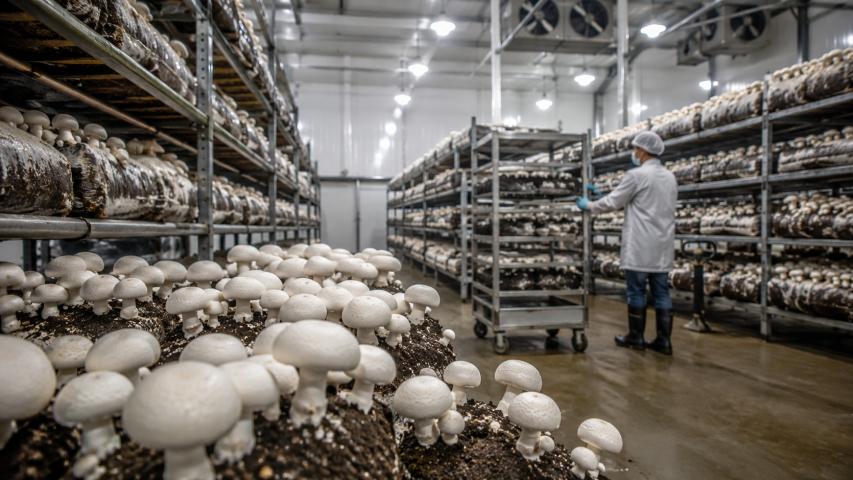
The global agricultural landscape is undergoing a significant transformation as governments, investors, food producers, and technology companies seek innovative solutions to address growing concerns surrounding food security, climate change, urbanization, and resource scarcity. Among the most promising developments reshaping modern agriculture is vertical farming—a technology-driven cultivation method that enables food production in controlled indoor environments using vertically stacked growing systems.
As the global population continues to rise and available arable land decreases, vertical farming is becoming an essential component of future food production strategies. The ability to grow crops year-round regardless of climate conditions, while reducing water consumption and minimizing land requirements, is positioning vertical farming as one of the most important agricultural innovations of the decade. Industry developments indicate that vertical farming is transitioning from experimental projects to commercially viable farming operations capable of supporting urban food ecosystems and sustainable supply chains.
𝐃𝐨𝐰𝐧𝐥𝐨𝐚𝐝 𝐏𝐃𝐅 𝐁𝐫𝐨𝐜𝐡𝐮𝐫𝐞 @ https://www.maximizemarketresearch.com/request-sample/15221/
The Future of Agriculture Is Moving Closer to Cities
Traditional agriculture faces increasing pressure from unpredictable weather patterns, prolonged droughts, soil degradation, and rising transportation costs. These challenges are encouraging governments and private organizations to invest in localized food production systems that can operate independently of external environmental factors.
Vertical farming offers a practical answer to these challenges by enabling food cultivation within urban centers, industrial buildings, warehouses, and purpose-built facilities. By producing food closer to consumers, businesses can significantly reduce transportation distances, improve product freshness, lower food waste, and create more resilient food distribution networks.
Urban agriculture initiatives across North America, Europe, Asia-Pacific, and the Middle East are increasingly integrating vertical farming technologies into long-term sustainability plans. As cities continue to expand, local food production will become a strategic necessity rather than a supplementary agricultural approach.
Technology Is Driving the Next Wave of Market Expansion
The vertical farming industry is rapidly benefiting from advancements in automation, artificial intelligence, robotics, Internet of Things (IoT) platforms, sensor technologies, and energy-efficient LED lighting systems.
Modern vertical farms are capable of monitoring and controlling environmental conditions in real time, including temperature, humidity, nutrient delivery, carbon dioxide levels, and lighting intensity. These technologies allow operators to maximize crop yields while minimizing resource consumption.
Artificial intelligence is increasingly being deployed to optimize planting schedules, predict crop growth cycles, identify plant diseases, and improve resource allocation. Automated harvesting systems and robotic maintenance solutions are further enhancing operational efficiency while reducing labor dependency. These technological innovations are expected to improve profitability and scalability, making vertical farming more accessible to commercial growers worldwide.
Hydroponics Continues to Lead Commercial Adoption
Among the various cultivation methods used in vertical farming, hydroponics remains the most widely adopted system due to its efficiency, scalability, and proven commercial success. Hydroponic systems enable plants to grow without soil by utilizing nutrient-rich water solutions, resulting in higher yields and lower water consumption compared with traditional farming practices.
The widespread adoption of hydroponic technologies reflects the industry's focus on maximizing productivity while maintaining environmental sustainability. At the same time, aeroponic and aquaponic systems are gaining traction among technology-focused growers seeking even greater resource efficiency and crop performance.
Future investments are expected to focus on improving cultivation methods, reducing operating costs, and expanding crop diversity within controlled-environment agriculture facilities.
Sustainability Is Becoming a Core Business Priority
Environmental sustainability has become one of the strongest growth drivers for the vertical farming industry. Consumers, governments, and corporate organizations are increasingly prioritizing environmentally responsible food production systems that reduce resource consumption and carbon emissions.
Vertical farming significantly decreases water usage compared with conventional farming methods and minimizes the need for pesticides and herbicides. Controlled indoor environments also help eliminate crop losses caused by adverse weather conditions and agricultural pests.
As environmental regulations become stricter and sustainability commitments gain importance across industries, vertical farming is expected to play a vital role in helping countries achieve food security goals while reducing agriculture-related environmental impacts. Organizations adopting vertical farming technologies today are positioning themselves to meet future regulatory expectations and sustainability standards.
Investment Momentum Continues to Accelerate
Global investor interest in vertical farming remains strong as the industry demonstrates its potential to address long-term food production challenges. Venture capital firms, institutional investors, technology companies, and agricultural corporations are actively investing in vertical farming startups and infrastructure projects.
Investments are increasingly directed toward automation systems, AI-powered farm management platforms, energy optimization technologies, and advanced cultivation techniques. Strategic partnerships between agricultural companies and technology providers are accelerating innovation and creating new opportunities for commercial expansion.
The increasing availability of funding is helping companies scale operations, improve production economics, and expand into new regional markets. As operational efficiencies improve, the industry is expected to attract additional investment from both public and private sectors.
Regional Markets Showcase Strong Growth Potential
North America continues to lead the global vertical farming industry, supported by technological innovation, strong investment activity, and increasing demand for locally produced food. The United States remains a key market due to its advanced agricultural technology ecosystem and growing focus on food resilience.
Europe is witnessing substantial growth as governments promote sustainable agriculture and urban food production initiatives. Countries such as Germany, the Netherlands, and the United Kingdom are investing heavily in controlled-environment agriculture technologies to strengthen food security and reduce import dependency.
Asia-Pacific represents one of the fastest-growing opportunities for the industry. Rapid urbanization, population growth, limited agricultural land availability, and government support programs are driving adoption across China, Japan, Singapore, South Korea, and India. The region's emphasis on technological innovation and food self-sufficiency is expected to create significant opportunities for vertical farming companies over the coming years.
Strategic Business Outlook for Industry Stakeholders
The future of vertical farming extends far beyond crop production. Industry stakeholders are increasingly viewing vertical farming as part of a broader ecosystem that integrates agriculture, technology, sustainability, energy management, and urban infrastructure.
For technology providers, the industry offers opportunities in automation software, AI platforms, robotics, climate control systems, and agricultural analytics. For investors, vertical farming presents exposure to high-growth sectors focused on sustainability and food innovation. For governments, it provides a practical solution for improving domestic food production capabilities and reducing supply chain vulnerabilities.
Businesses entering the market should prioritize technology integration, energy efficiency, operational scalability, and strategic partnerships. Long-term success will depend on the ability to balance production costs with yield optimization while continuously adapting to evolving consumer preferences and regulatory requirements.
Organizations that establish strong technological capabilities today are likely to become future leaders in controlled-environment agriculture.
The Road Ahead: Building the Farms of Tomorrow
The vertical farming industry is moving toward a future where food production becomes more localized, efficient, and sustainable. As technological advancements continue to reduce operational costs and improve productivity, vertical farming will become increasingly integrated into mainstream agricultural systems.
Future facilities are expected to leverage renewable energy sources, advanced automation platforms, predictive analytics, and AI-driven farm management systems to create highly efficient food production ecosystems. The industry's long-term trajectory points toward greater commercialization, broader crop diversification, and expanded global adoption.
Vertical farming is no longer simply an alternative agricultural method. It is rapidly becoming a strategic pillar of modern food production, capable of supporting growing populations while addressing some of the world's most pressing environmental and food security challenges.
For full access to the comprehensive strategic report, visit: https://www.maximizemarketresearch.com/market-report/global-vertical-farming-market/15221/
About Maximize Market Research
Maximize Market Research is a leading market research and business consulting firm delivering strategic industry intelligence across diverse sectors including agriculture, food technology, healthcare, manufacturing, energy, information technology, chemicals, and advanced technologies. The company provides comprehensive market assessments, competitive intelligence, growth opportunity analysis, and customized consulting solutions that help organizations make informed business decisions and achieve sustainable growth.
Through a combination of primary research, secondary research, industry expertise, and data-driven methodologies, Maximize Market Research supports businesses, investors, and policymakers in understanding market dynamics and identifying emerging opportunities across global markets.
Contact Information
Maximize Market Research Pvt. Ltd.
3rd Floor, Navale IT Park Phase 2
Pune-Bangalore Highway, Narhe
Pune, Maharashtra 411041
India
Website: www.maximizemarketresearch.com