
Buying a brand-new vehicle is an
exciting milestone, but before you can legally drive it on public roads, it
must comply with registration rules laid down by the Regional Transport Office
(RTO). One of the first things many new vehicle owners notice is a red
number plate, which serves as a temporary registration until
the permanent registration number is issued. Understanding Red Number Plates in India
is essential for every new vehicle buyer, as they play a crucial role in
ensuring legal compliance during the registration process.
What
Is a Red Number Plate?
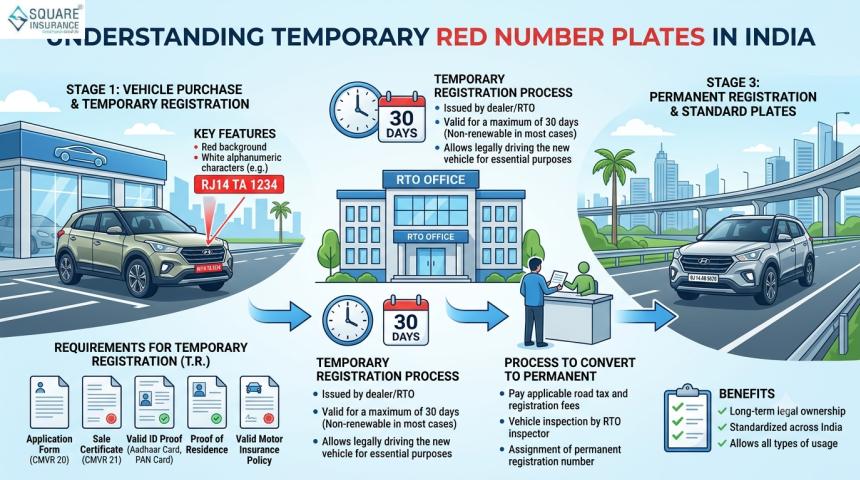
A red number plate is a temporary
registration plate issued to a newly purchased vehicle before permanent
registration is completed. It allows the owner to legally drive the vehicle for
a limited period while the required documentation and verification for
permanent registration are being processed.
The temporary registration is
generally arranged by the vehicle dealer or can be obtained through the
concerned RTO, depending on the applicable procedures.
Why
Is a Red Number Plate Issued?
The primary purpose of a red number
plate is to provide legal permission for operating a newly purchased vehicle
until the permanent registration certificate is generated.
It helps in situations such as:
- Driving the vehicle from the dealership to your home.
- Transporting the vehicle for registration formalities.
- Completing insurance and documentation procedures.
- Allowing limited legal road usage before receiving the
permanent registration number.
Without valid temporary or permanent
registration, driving a new vehicle on public roads may attract penalties under
applicable motor vehicle laws.
Who
Can Get a Red Number Plate?
A red number plate can be issued to:
- Individuals purchasing a new two-wheeler.
- Buyers of new private cars.
- Commercial vehicle purchasers awaiting permanent
registration.
- Businesses acquiring fleet vehicles.
- Organizations purchasing new transport vehicles.
The vehicle must be newly purchased
and eligible for temporary registration under the applicable RTO guidelines.
Documents
Required for a Red Number Plate
While documentation requirements may
vary slightly across states, applicants generally need:
- Invoice or sale certificate from the dealer.
- Identity proof of the owner.
- Address proof.
- PAN card or Form 60, where applicable.
- Valid motor insurance policy.
- Application for temporary registration.
- Applicable registration fee payment receipt.
The dealership often assists buyers
in preparing these documents during vehicle delivery.
Step-by-Step
Process to Get a Red Number Plate
1.
Purchase the Vehicle
The process starts after purchasing
a new vehicle from an authorized dealer. The dealer prepares the sale documents
and initiates registration-related paperwork.
2.
Obtain Motor Insurance
Before registration, every vehicle
must have at least third-party motor insurance as mandated by law. Many buyers
also opt for comprehensive insurance coverage for broader protection.
3.
Submit Temporary Registration Application
The dealer or vehicle owner submits
the application for temporary registration to the competent authority with the
required supporting documents.
4.
Pay Applicable Fees
The prescribed temporary
registration charges must be paid. The fee structure depends on state
regulations and vehicle category.
5.
Receive Temporary Registration Number
After verification, a temporary
registration number is allotted, and the vehicle is provided with a red number
plate displaying the temporary registration details.
6.
Apply for Permanent Registration
The owner must complete permanent
registration before the temporary registration expires. Once approved, the
permanent registration number replaces the temporary plate.
How
Long Is a Red Number Plate Valid?
In most cases, a temporary
registration remains valid for 30 days from the date of issue.
This period allows sufficient time
for completing permanent registration formalities. However, exceptional
circumstances may permit extensions according to applicable legal provisions,
subject to approval by the authorities.
Vehicle owners should avoid allowing
temporary registration to expire without obtaining permanent registration.
Can
You Drive Anywhere with a Red Number Plate?
Generally, a vehicle with valid
temporary registration can be driven legally during its validity period,
subject to applicable rules.
However, owners should:
- Carry temporary registration documents.
- Keep valid insurance documents available.
- Follow all traffic laws.
- Complete permanent registration before expiry.
For interstate movement or
long-distance travel, checking specific regulatory requirements is advisable.
Importance
of Motor Insurance During Temporary Registration
Many buyers assume registration
alone is sufficient, but insurance is equally important.
A valid insurance policy protects
against financial liabilities arising from accidents, theft, natural disasters,
and third-party damages. Comprehensive motor insurance can also provide
coverage for own damage, depending on policy terms.
Driving without valid insurance may
result in legal penalties and financial risks.
Common
Mistakes New Vehicle Owners Should Avoid
Delaying
Permanent Registration
Waiting until the last moment can
create unnecessary complications if documentation issues arise.
Driving
Without Insurance
Even temporary registration does not
exempt owners from mandatory insurance requirements.
Ignoring
Document Verification
Ensure all information on invoices,
insurance papers, and registration applications matches correctly.
Missing
Registration Expiry
Expired temporary registration can
attract penalties and legal consequences.
Not
Carrying Supporting Documents
Always keep copies of registration
papers and insurance while driving the vehicle.
Tips
for a Smooth Registration Process
- Verify dealer documentation before signing.
- Purchase insurance before vehicle delivery.
- Keep identity and address proof updated.
- Submit applications promptly.
- Track permanent registration status regularly.
- Preserve all receipts and acknowledgment documents
safely.
Does
the Dealer Handle the Process?
In many cases, authorized automobile
dealers manage temporary registration and assist with permanent registration
formalities as part of the purchase process.
However, buyers should confirm:
- Whether temporary registration fees are included.
- Whether insurance has been activated.
- The expected timeline for receiving the permanent
registration certificate.
- Any pending documentation required from the owner.
Staying informed helps avoid delays
and compliance issues.
Conclusion
Getting a red number plate for a new
vehicle in India is an essential step that enables legal road use while
permanent registration is under process. Understanding the documentation,
validity period, legal responsibilities, and insurance requirements ensures a
hassle-free ownership experience.
Equally important is securing
adequate motor insurance from a trusted provider to protect your investment
from unexpected risks. At Square
Insurance, vehicle owners can explore suitable insurance solutions that
complement the registration process and help safeguard their new vehicle with
confidence.
Frequently
Asked Questions
1.
What does a red number plate indicate in India?
A red number plate indicates that
the vehicle has been issued temporary registration and is awaiting permanent
registration.
2.
How long is a red number plate valid?
Typically, it remains valid for 30
days, although specific provisions may vary depending on applicable
regulations.
3.
Is motor insurance mandatory for obtaining a red number plate?
Yes. At least third-party motor
insurance is generally required before registration and legal road usage.
4.
Can I drive outside my city with a temporary red number plate?
You can generally drive during the
validity period while complying with legal requirements, but it is advisable to
verify interstate regulations before long-distance travel.
5.
Who issues the red number plate?
The temporary registration is
usually processed through the authorized dealer in coordination with the
Regional Transport Office (RTO).
6.
What happens if the temporary registration expires?
Driving with expired temporary
registration may lead to penalties and legal action. Permanent registration
should be completed before expiry.