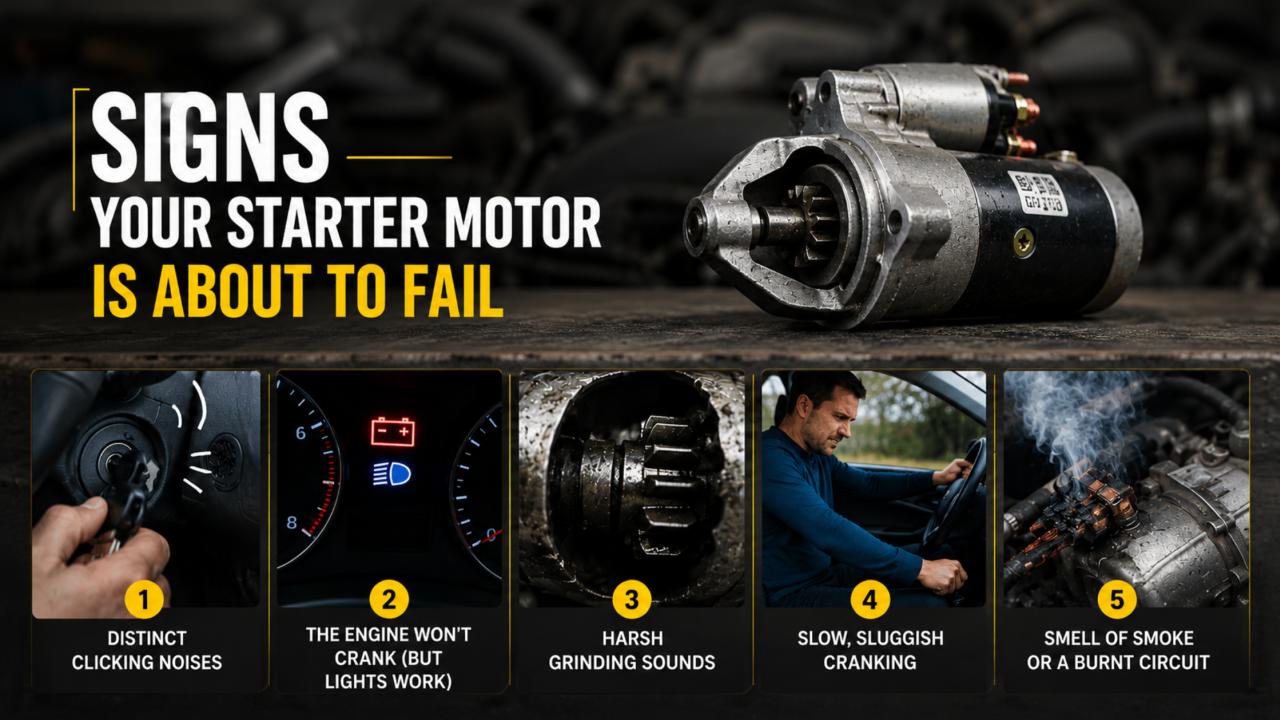
Every time you start the engine with the key or by pressing the button, the vehicle starter motor does heavy lifting. It requires enormous amounts of electricity to crank a static engine. While people take care of their batteries all the time, the starter is usually ignored until the day you can't get your car moving.
Fortunately, starter motors rarely die without warning. Catching these early symptoms can save you from an expensive tow truck bill and an unexpected breakdown.
If you are a driver who needs dependable Southport auto repair services, knowing the signs of a failing starter motor can help keep your vehicle safe and reliable.
What Does a Starter Motor Do?
The starting system relies on a tight partnership between your battery, a solenoid (an electrical relay switch), and the starter motor itself. When you initiate the ignition, the solenoid shoots a small pinion gear forward to mesh perfectly with the engine’s massive flywheel.
At the same time, it transfers a large volume of high-voltage current directly from the battery to spin the motor. With such mechanical effort applied, the engine begins to move until combustion becomes effective.
5 Critical Signs of a Failing Starter Motor
1. Distinct Clicking Noises
Pay close attention to the click you hear when you turn the key:
A single, loud click: This usually indicates that the solenoid is working and throwing the gear forward, but the electric motor itself is burnt out or jammed and cannot spin.
Rapid, machine-gun clicking: Clicking sounds that sound similar to a machine gun are caused either by a failing battery or damaged battery terminals. In this case, the battery produces enough energy to open the circuit of a starter solenoid. Still, it immediately loses voltage once the engine motor is demanded by pulling current from the battery, resetting the process.
2. The Engine Won't Crank(But Lights Work)
A common point of confusion is when the dashboard, headlights, and radio turn on perfectly, but the engine is dead silent.
It only takes about 10 to 12 amps of current to power your vehicle's electronics. However, turning over a cold engine requires between 150 and 350+ amps.
If your lights are bright but the engine won't even try to spin, the starter motor has likely suffered an internal electrical failure.
3. Harsh Grinding Sounds
If you hear a sound resembling a missed gear shift in a manual transmission, your starter's pinion gear or the engine's flywheel teeth are badly worn down. When these teeth fail to mesh cleanly, they violently grind against each other. Ignoring this will eventually destroy the flywheel, a repair that requires removing the entire transmission to fix.
4. Slow, Sluggish Cranking
If your vehicle makes it evident that it's struggling to move, and you notice that cranking becomes significantly slower, you should check your car's starter. As internal carbon brushes and bearings wear down, the motor has to draw excessive electrical current to spin the engine, mimicking a dead battery.
5. Smell of Smoke or a Burnt Circuit
The vehicle starter is meant to be used only for a few seconds during each start attempt. In the case of continuous engine cranking due to problems with the fuel system, or a sticking starter relay, the starter spins too fast, overheating quickly and melting internal wiring insulation, creating a burning electrical smell or smoke.
What Causes Starter Motor Failure?
Heat and Age
Standard motors generally do a good job for 100,000 to 150,000 miles. The inner soldered contacts are degraded with heat and aging.
Solution: Regular maintenance monitoring.
Electrical Issues
Due to corrosion or vibrations, the path of the electric current in a starter gets narrower, making the motor consume extra current that leads to burnouts.
Solution: Clean battery terminals and ground wires annually.
Oil or Fluid Contamination
If your starter contacts the engine fluids, it will damage the carbon brushes and the wiring inside the motor.
Solution: Immediately address any leakages from valves or oil filters.
Don't Wait Until You're Stranded
Starter issues never get better on their own. Continually forcing a failing starter to crank places massive electrical strain on your battery, easily shortening its lifespan and leaving you with two broken components instead of one.
If your vehicle is exhibiting any of these warnings, it's time to skip the guesswork. A professional technician car repair near me can hook your vehicle up to a diagnostic system tester to isolate exactly whether your starting issue stems from the battery, the alternator, or the starter motor itself.
The Real Cost of Ignoring a Dying Starter
It is tempting to ignore a hesitant start or an occasional strange noise, especially if your car eventually fires up on the second or third try. However, playing "starter roulette" is a losing game. A failing starter motor doesn't just threaten to leave you stranded in a grocery store parking lot or late for work; it actively damages other parts of your vehicle.
Every time you start a motor, it uses extra amounts of electricity, exhausting the battery faster. Moreover, misalignment of the internal gear with your car's motor causes wear of your flywheel. Repairing starters is fairly inexpensive; on the other hand, replacing the flywheel after starter damage requires disassembly of the transmission, making the repair much more expensive.
Car maintenance is much cheaper in advance compared to urgent repairs. When your vehicle tells you something is wrong with the ignition system, you should pay attention to it. Scheduling a vehicle electrical system diagnostics check is the best thing you can do.